

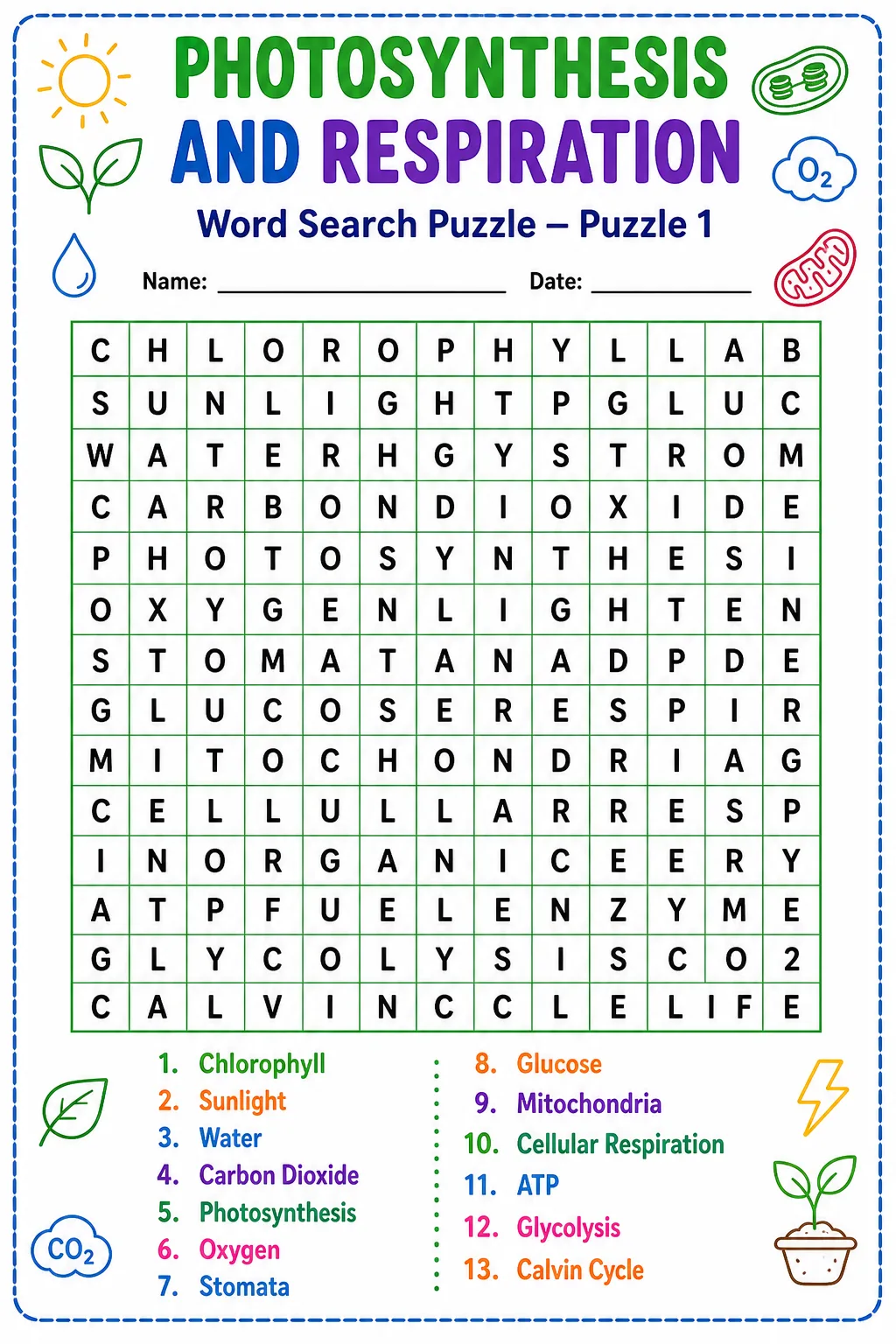
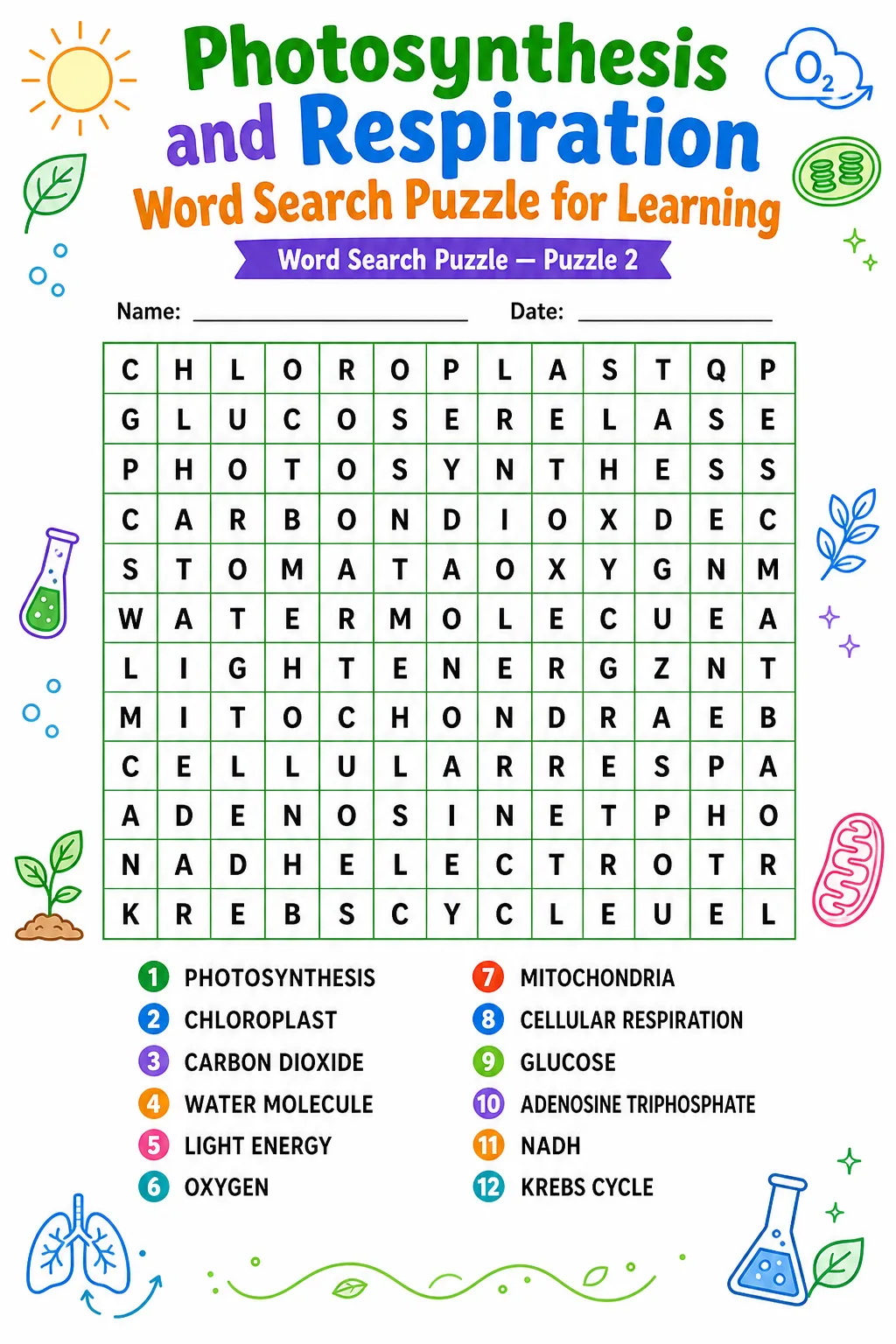
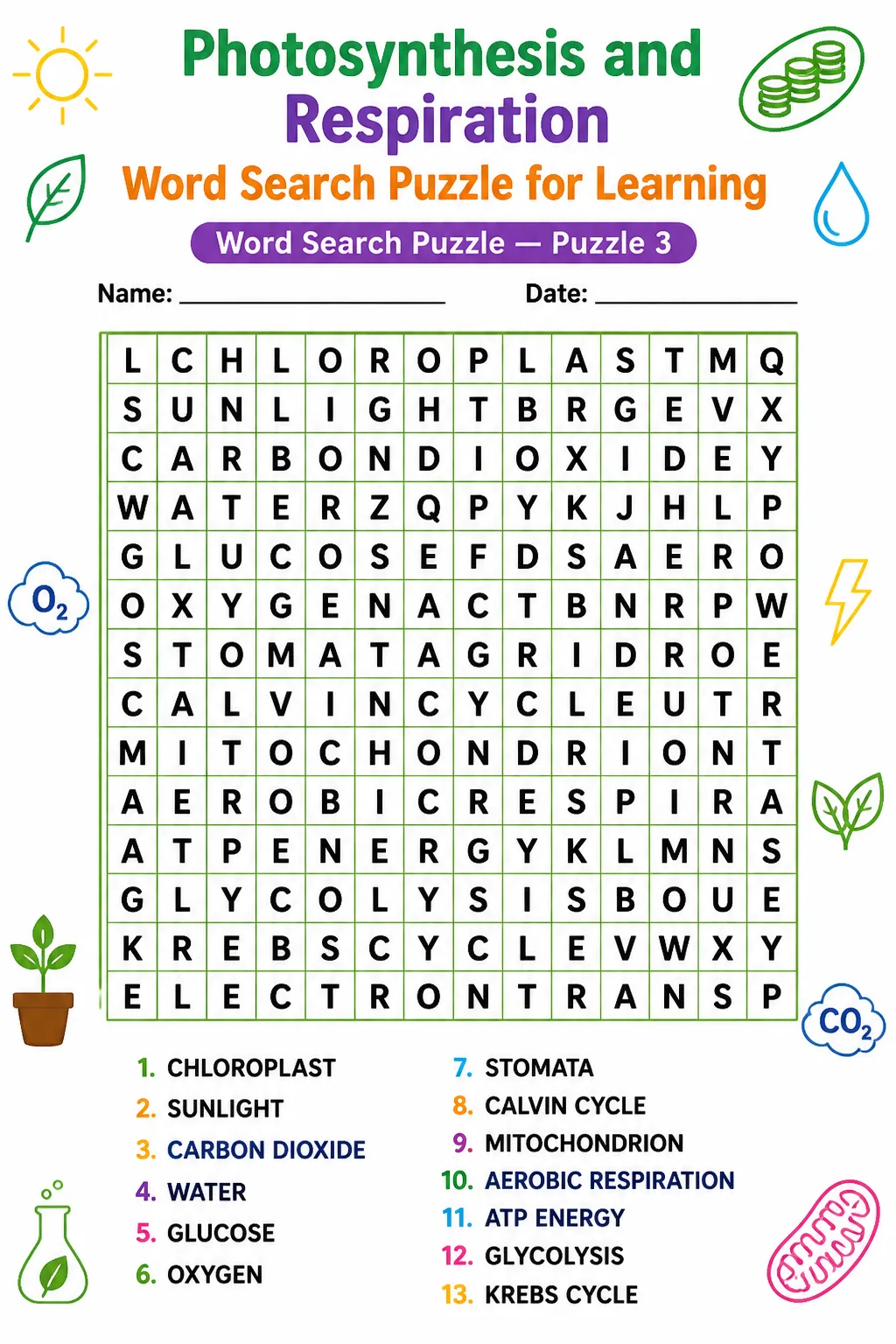
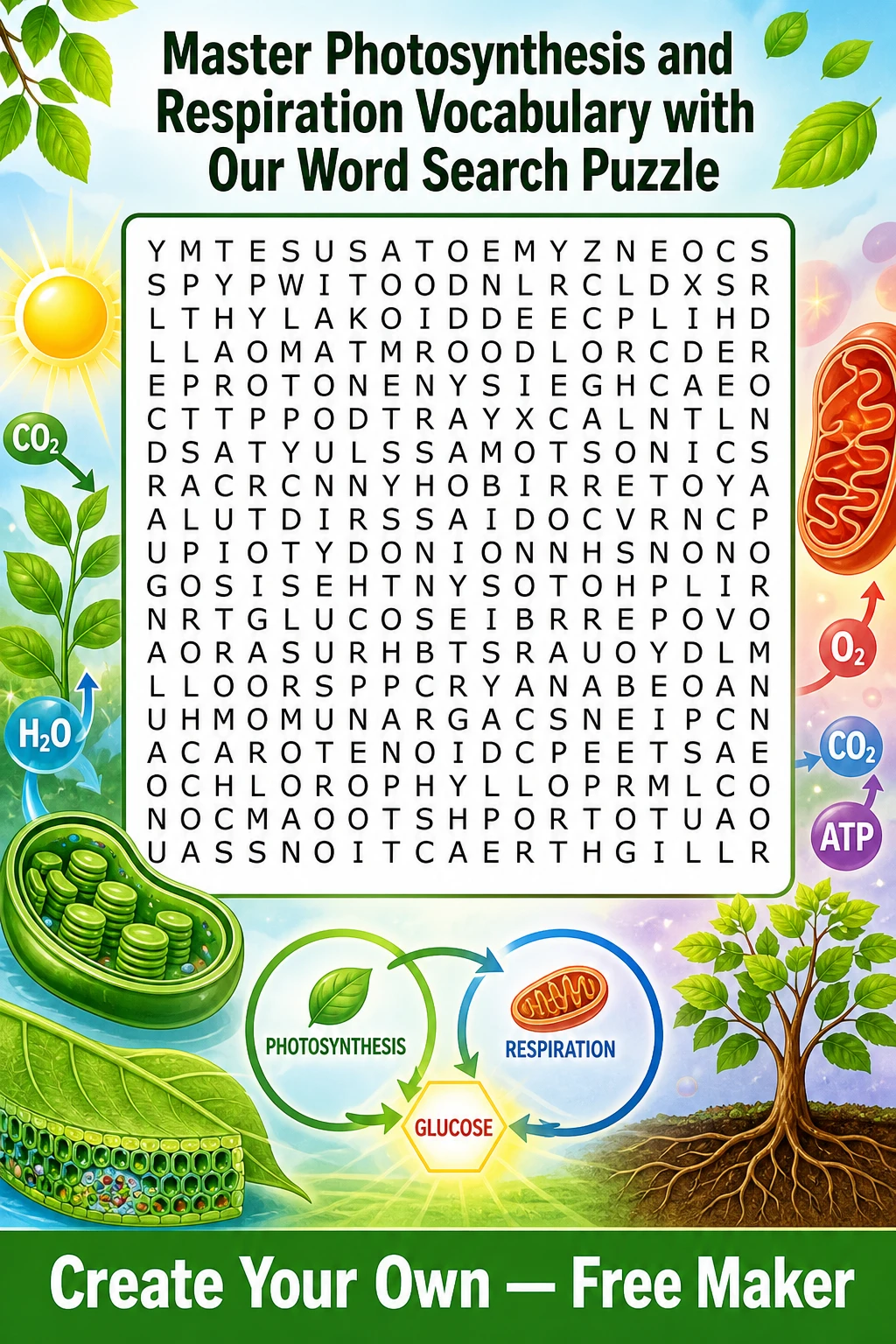
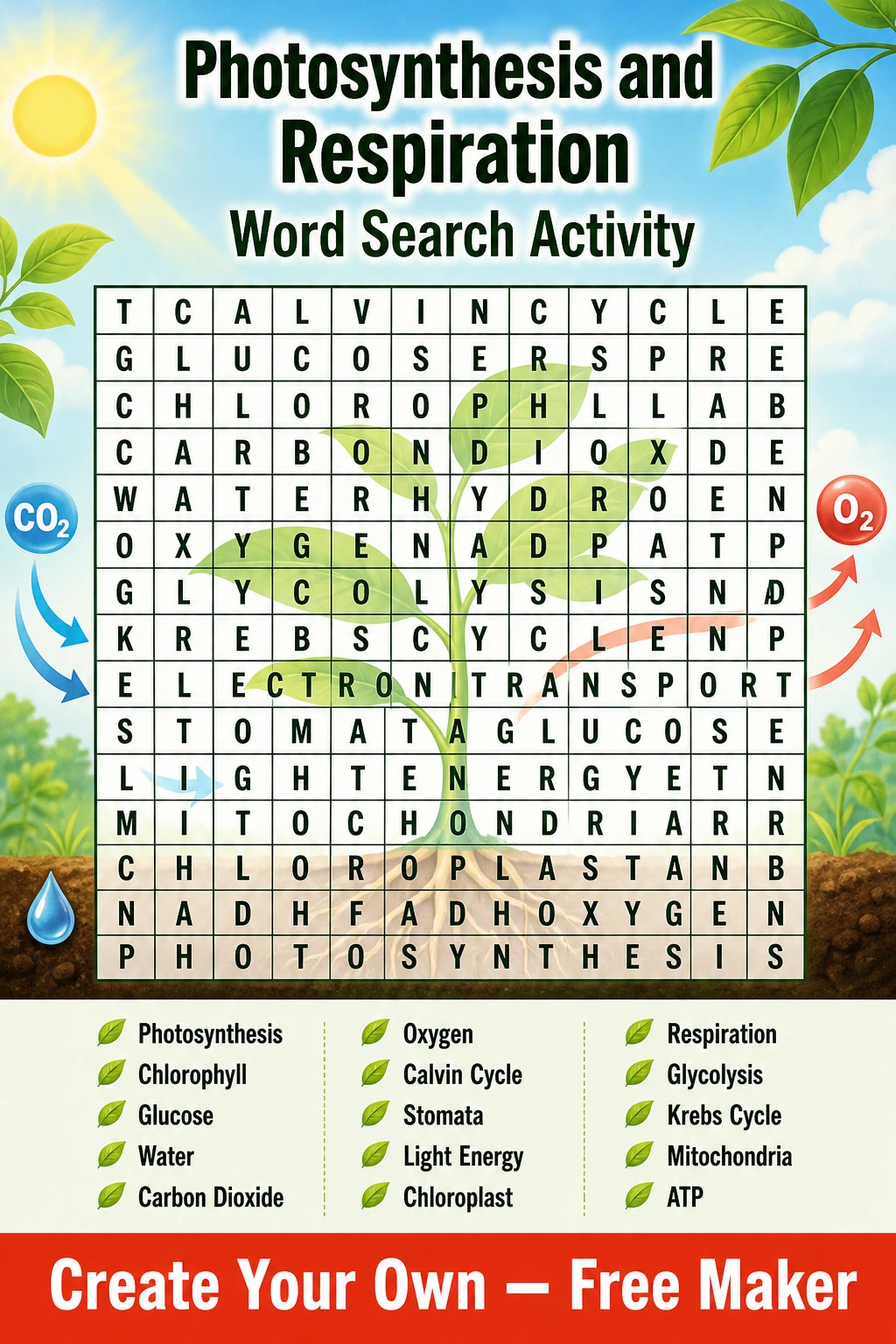
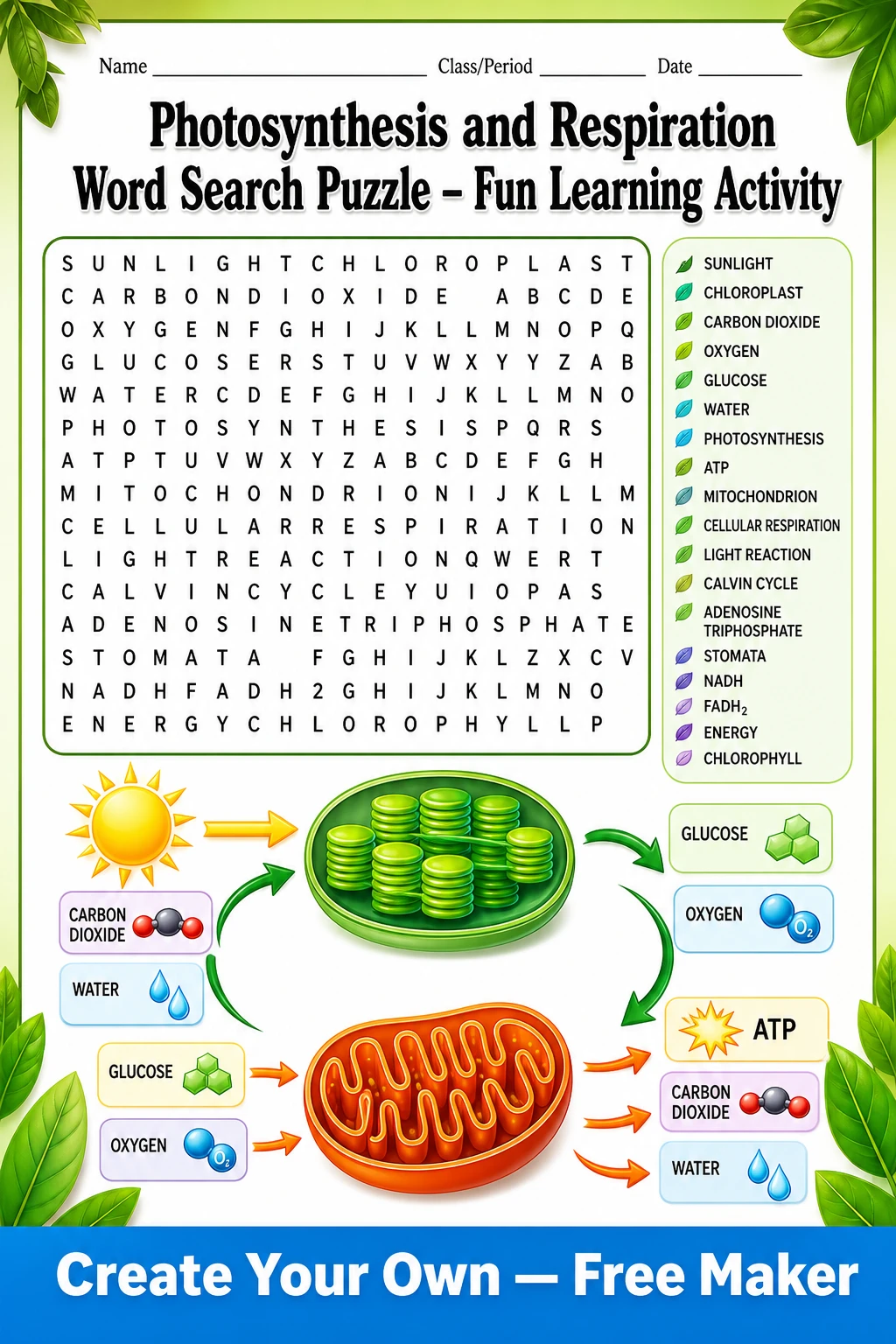
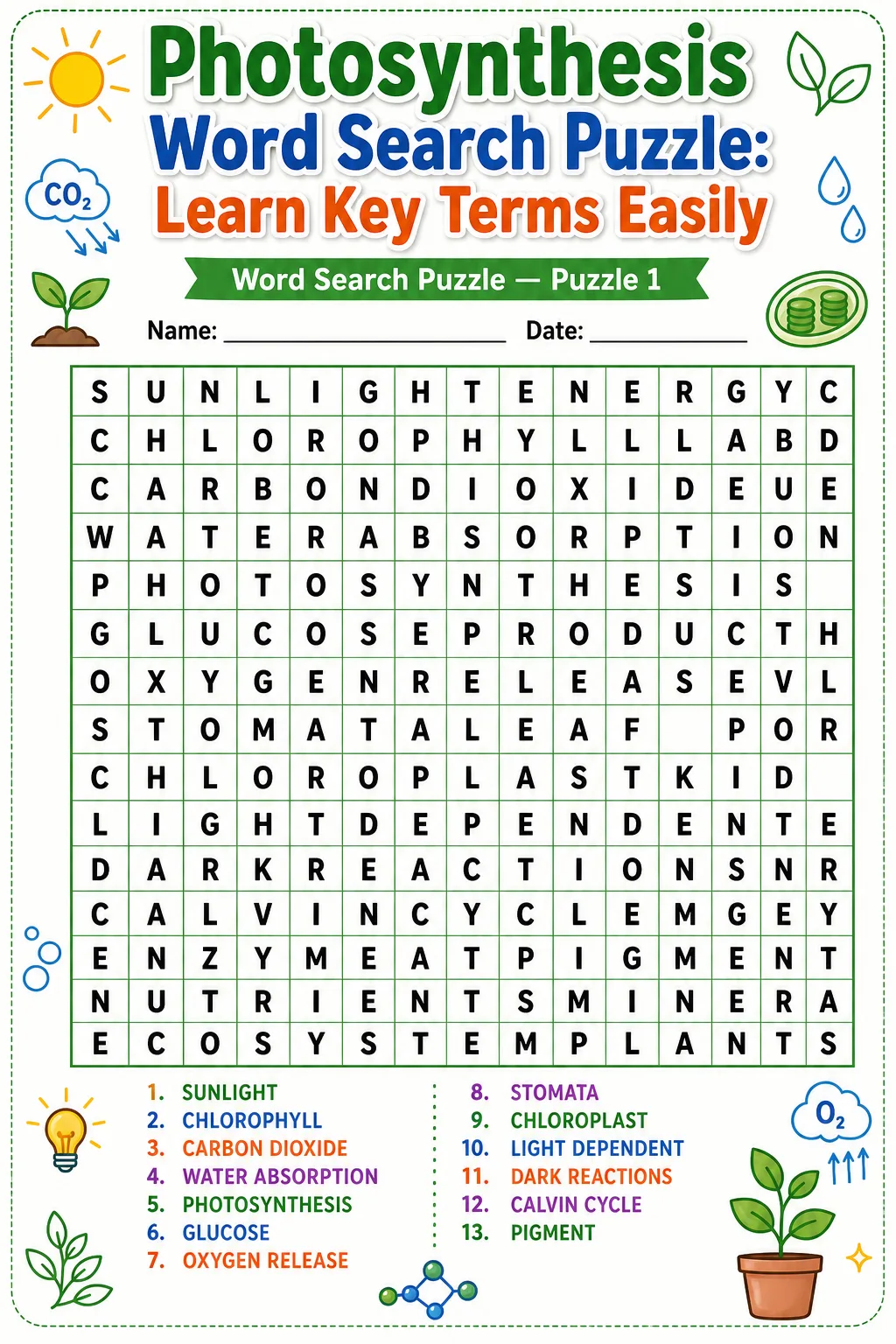
This photosynthesis and respiration word search introduces key scientific terms in a fun and engaging way. Perfect for students and educators, this printable puzzle helps reinforce vocabulary related to plant biology and cellular processes, making learning interactive and enjoyable.
Introduction
Photosynthesis and respiration word search puzzles are an excellent tool for students to familiarize themselves with important biological concepts. These puzzles combine learning with play, helping learners memorize terms related to how plants produce energy and how cells use it. By searching for words like chlorophyll, glucose, and mitochondria, players reinforce their understanding of these processes in a relaxed setting.
Using word searches in education encourages focus and improves spelling skills while making complex topics more approachable. This article will guide you through creating your own custom word search puzzle on photosynthesis and respiration, explain why such puzzles are effective, and offer tips to maximize their educational value.
Story
One rainy afternoon in my classroom, I wanted to find a way to help my students better understand the complex processes of photosynthesis and respiration. Instead of a typical worksheet, I decided to create a word search puzzle featuring important terms related to these topics. The students were instantly engaged, excited to find words like chlorophyll and mitochondria hidden in the grid. This activity sparked lively discussions and helped solidify their grasp of the subject in a playful way. Since then, the photosynthesis and respiration word search has become a favorite learning tool, combining fun with education.
Seeing how much the students enjoyed this puzzle inspired me to share the idea with other educators and parents. It’s a simple yet effective way to reinforce scientific vocabulary and concepts, especially for visual and hands-on learners. The puzzle format encourages focus and attention to detail, making it a valuable supplement to traditional lessons on plant biology and cellular processes.
How To Do It
Why This Works
Word search puzzles like the photosynthesis and respiration word search are effective educational tools because they engage multiple cognitive skills simultaneously. Searching for words requires attention to detail, pattern recognition, and reinforces spelling, all of which support memory retention. This method makes abstract scientific concepts more tangible by associating terms with an interactive activity.
Moreover, this guide provides a clear, step-by-step approach to creating custom puzzles tailored to different age groups and learning levels. It explains how to select words, adjust difficulty, and design puzzles that are both challenging and accessible. By following this guide, educators and parents can create personalized learning experiences that keep students motivated and deepen their understanding of plant biology and cellular respiration.
Finally, the inclusion of pro tips and common mistakes helps avoid pitfalls that can make puzzles frustrating or less educational. This comprehensive approach ensures that the photosynthesis and respiration word search puzzles created using this guide are not only fun but also effective learning aids.
FAQ
Pro Tips
Common Mistakes to Avoid
Final Thoughts
Creating and using photosynthesis and respiration word search puzzles is a fantastic way to make learning biology fun and interactive. These puzzles help reinforce key vocabulary and concepts while improving focus and spelling skills. By following the steps and tips outlined in this article, educators and parents can design effective puzzles tailored to their learners’ needs. Whether for classroom use or home study, these word searches provide an engaging supplement to traditional teaching methods. Dive in and start crafting your own puzzles to support deeper understanding of these essential scientific processes.
Keep the word list relevant and focused on key terms to maximize educational value.
Use a clean, readable font when printing to ensure clarity for all players.
Include a brief explanation of each word’s meaning to enhance learning beyond the puzzle.
Rotate puzzle difficulty based on the age and skill level of your audience for best engagement.
Gallery
Create puzzle
To create your own custom photosynthesis and respiration word search puzzle, start by choosing a clear theme and compiling a list of relevant words. Focus on terms that are essential to understanding these biological processes, such as "chloroplast," "oxygen," "glucose," and "ATP." The word list should be appropriate for the age group you are targeting, balancing familiar and challenging words.
Next, select a grid size that fits the number of words you want to include. For younger students, a 10×10 grid with 10-15 words works well, while older students can handle larger grids with more words. The difficulty can be adjusted by including words placed diagonally or backward, which requires more careful searching.
When placing words, avoid very long terms or those with spaces or special characters, as these can be difficult to fit neatly into the grid. Once all words are placed, fill the remaining empty spaces with random letters to complete the puzzle. Finally, provide the word list alongside the puzzle to guide players. This approach ensures your custom word search is both fun and educational.



Leave a Reply