
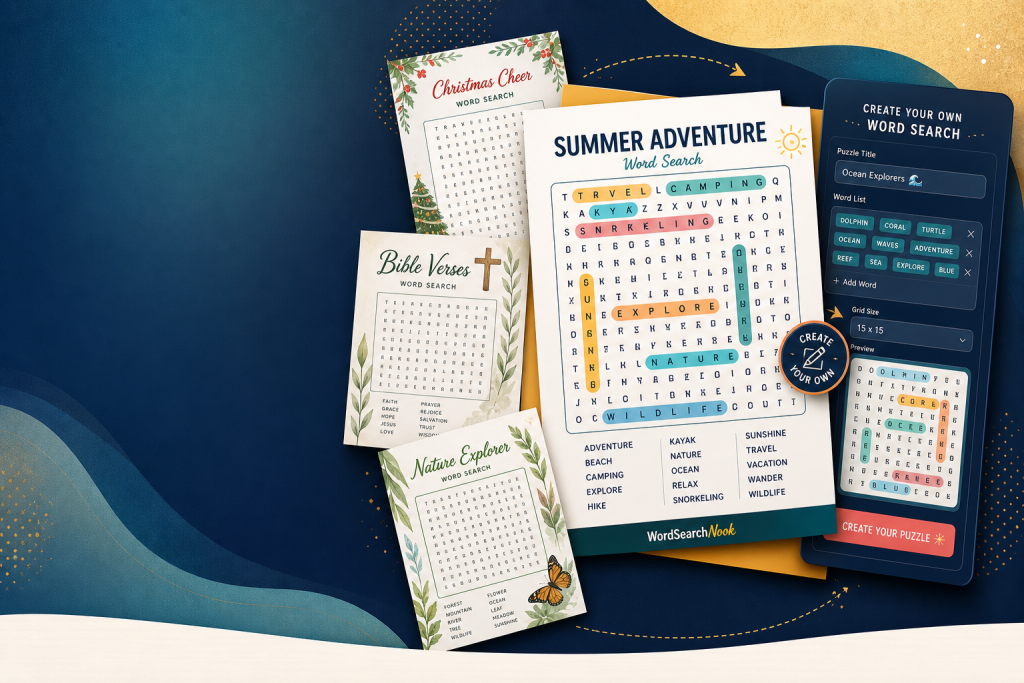
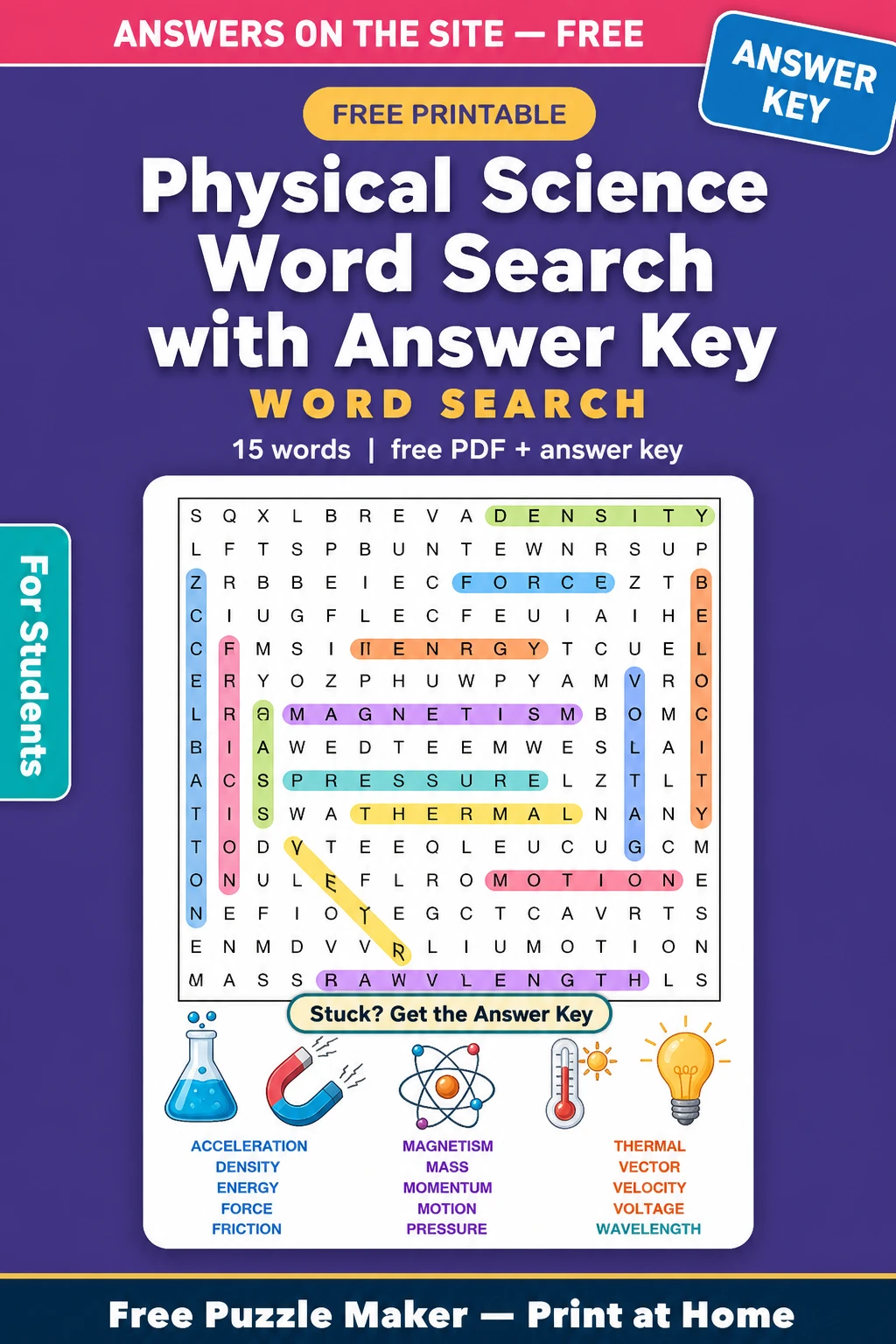
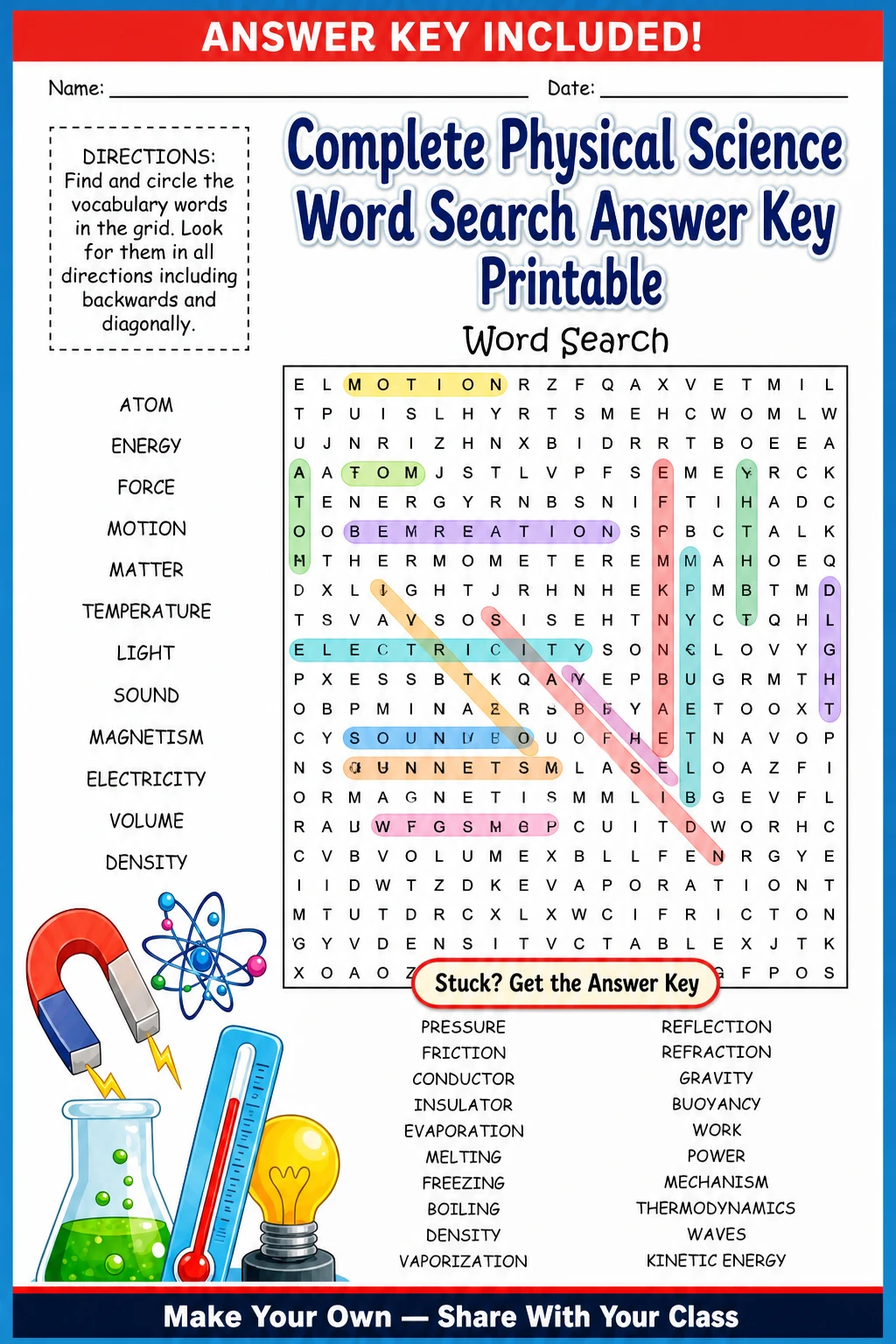
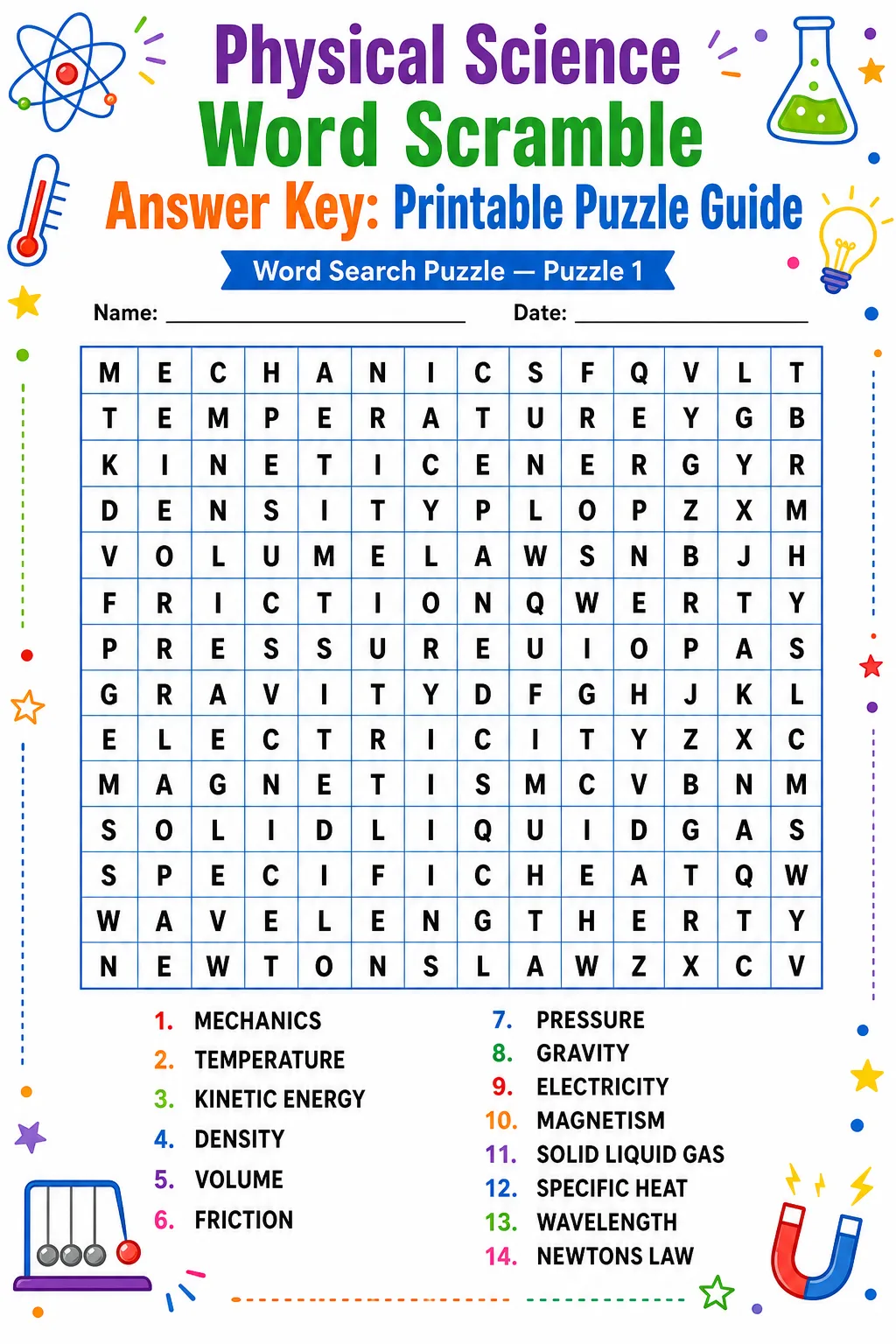
The physical science word search answer key helps educators and puzzle enthusiasts verify solutions quickly and accurately. This article explores how to create, understand, and use custom printable word search puzzles focused on physical science terms. Learn step-by-step instructions, pro tips, and common mistakes to avoid when designing your own puzzles for educational or recreational use.
Introduction
Understanding the Physical Science Word Search Answer Key
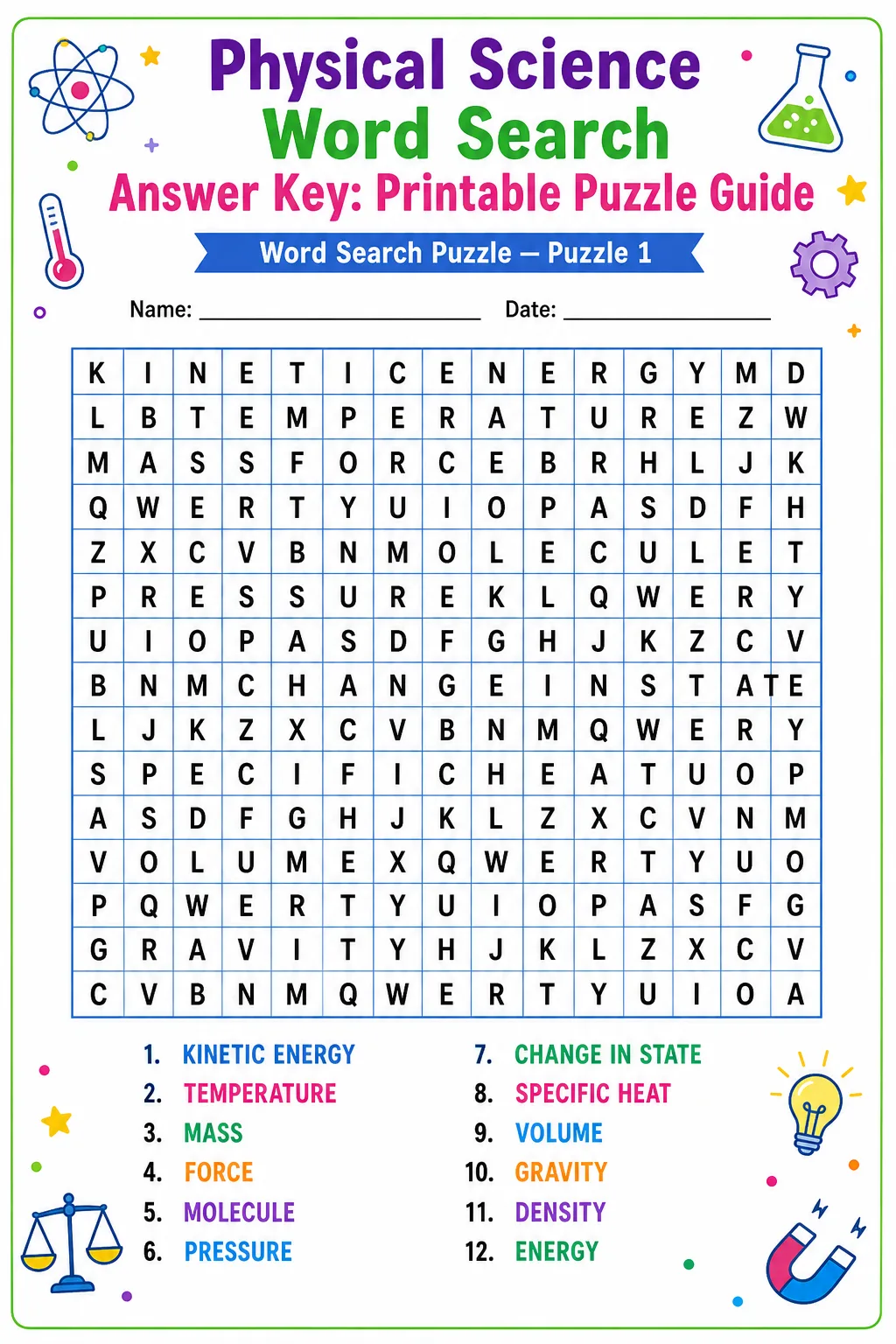
Physical science word search puzzles are an engaging way to reinforce vocabulary and concepts related to physics and chemistry. This article introduces the physical science word search answer key, which is essential for checking solutions and ensuring accuracy. Whether you are a teacher preparing classroom activities or a parent looking for educational fun, understanding how to create and use these puzzles can enhance learning.
In addition to providing the answer key, this guide walks you through the process of making your own custom printable word search puzzles. We cover everything from selecting appropriate terms to adjusting difficulty levels, making it easier to tailor puzzles to different age groups and skill levels. By the end, you'll have the tools to create effective and enjoyable physical science word searches that support learning and critical thinking.
Story
How the Physical Science Word Search Answer Key Came to Be
During a particularly rainy afternoon in my classroom, I wanted to find a fun way to help my students review physical science vocabulary. I created a word search puzzle filled with terms from our latest lessons, hoping it would engage them more than traditional flashcards. As they worked through the puzzle, I realized the importance of having a clear answer key to quickly check their progress and provide immediate feedback.
That day sparked my interest in designing custom printable word search puzzles focused on physical science. I began refining the process, selecting appropriate words and adjusting the grid size to suit different age groups. The answer key became an essential part of this, ensuring accuracy and helping students learn from their mistakes. This hands-on activity has since become a favorite in my teaching toolkit, combining fun with effective learning.
How To Do It
Why This Works
Benefits of Physical Science Word Search Puzzles
Physical science word search puzzles offer a fun and interactive way to learn complex scientific vocabulary. They encourage players to focus on spelling, pattern recognition, and concentration, which are essential skills for mastering scientific terms. This guide works well because it not only provides a ready-made answer key but also empowers readers to create their own puzzles tailored to specific learning goals.
By explaining the creation process and offering practical tips, the post makes it accessible for educators and parents who may not have experience designing puzzles. It also highlights common pitfalls to avoid, ensuring that puzzles are both challenging and fair. The inclusion of a detailed FAQ addresses typical questions, helping users troubleshoot and optimize their puzzle-making experience. Overall, this article supports educational engagement through a well-structured, easy-to-follow approach to physical science word searches.
FAQ
Pro Tips
Common Mistakes to Avoid
Final Thoughts
Creating and using physical science word search puzzles with a clear answer key is a valuable tool for educators and learners alike. These puzzles make learning scientific vocabulary enjoyable and accessible, helping players develop important skills such as attention to detail and spelling. By following the instructions and tips provided, anyone can design effective puzzles tailored to their audience’s needs.
Whether for classroom use, homeschooling, or casual learning, these word searches provide a hands-on approach to mastering physical science terms. We encourage you to try creating your own puzzles and share them with others to inspire curiosity and confidence in science. Happy puzzling!
Start with a themed word list to maintain focus and relevance.
Use software or online tools to help arrange words efficiently in the grid.
Test your puzzle by solving it yourself or having someone else try it before finalizing.
Keep the font clear and readable when printing to enhance user experience.
Gallery
Create puzzle
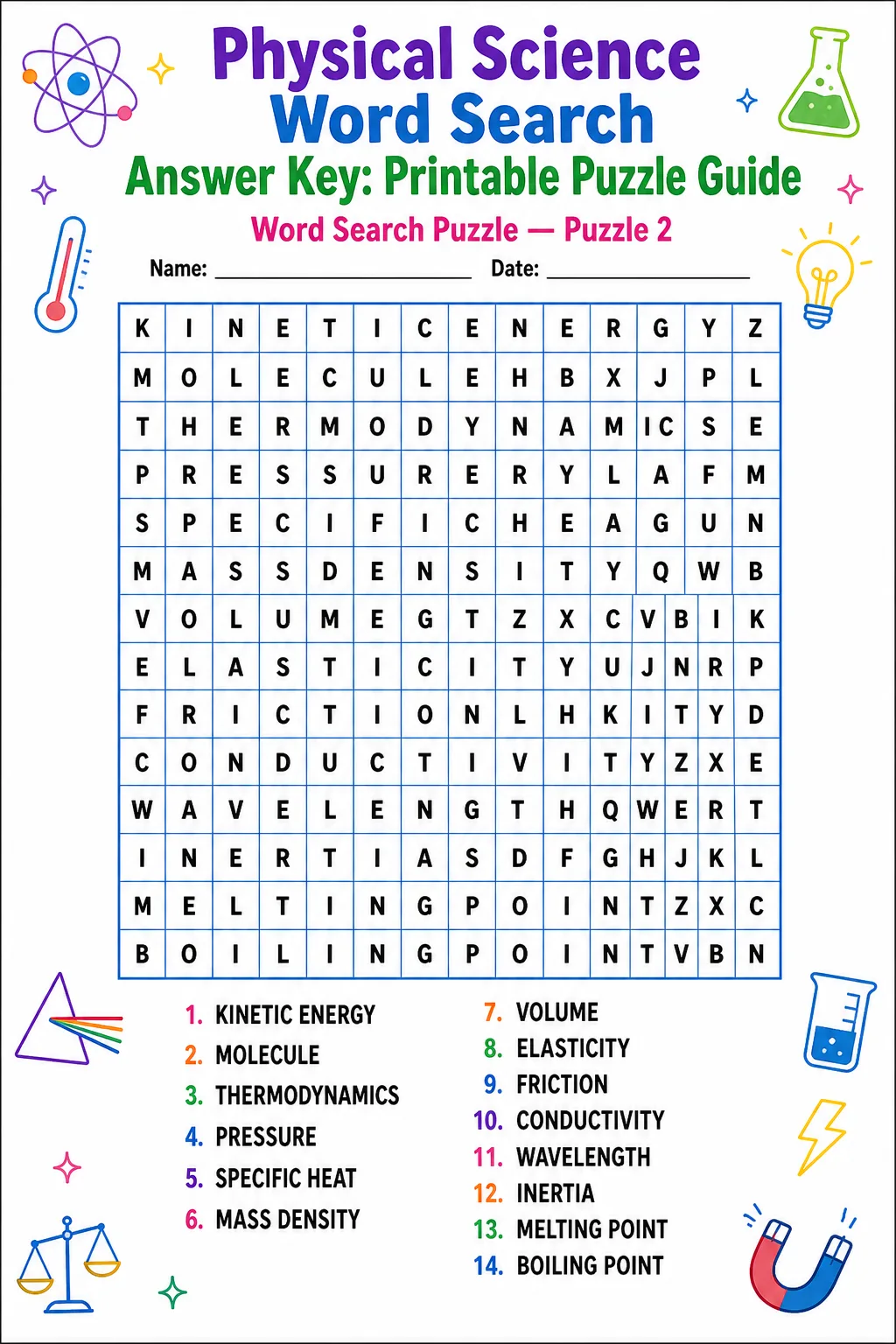
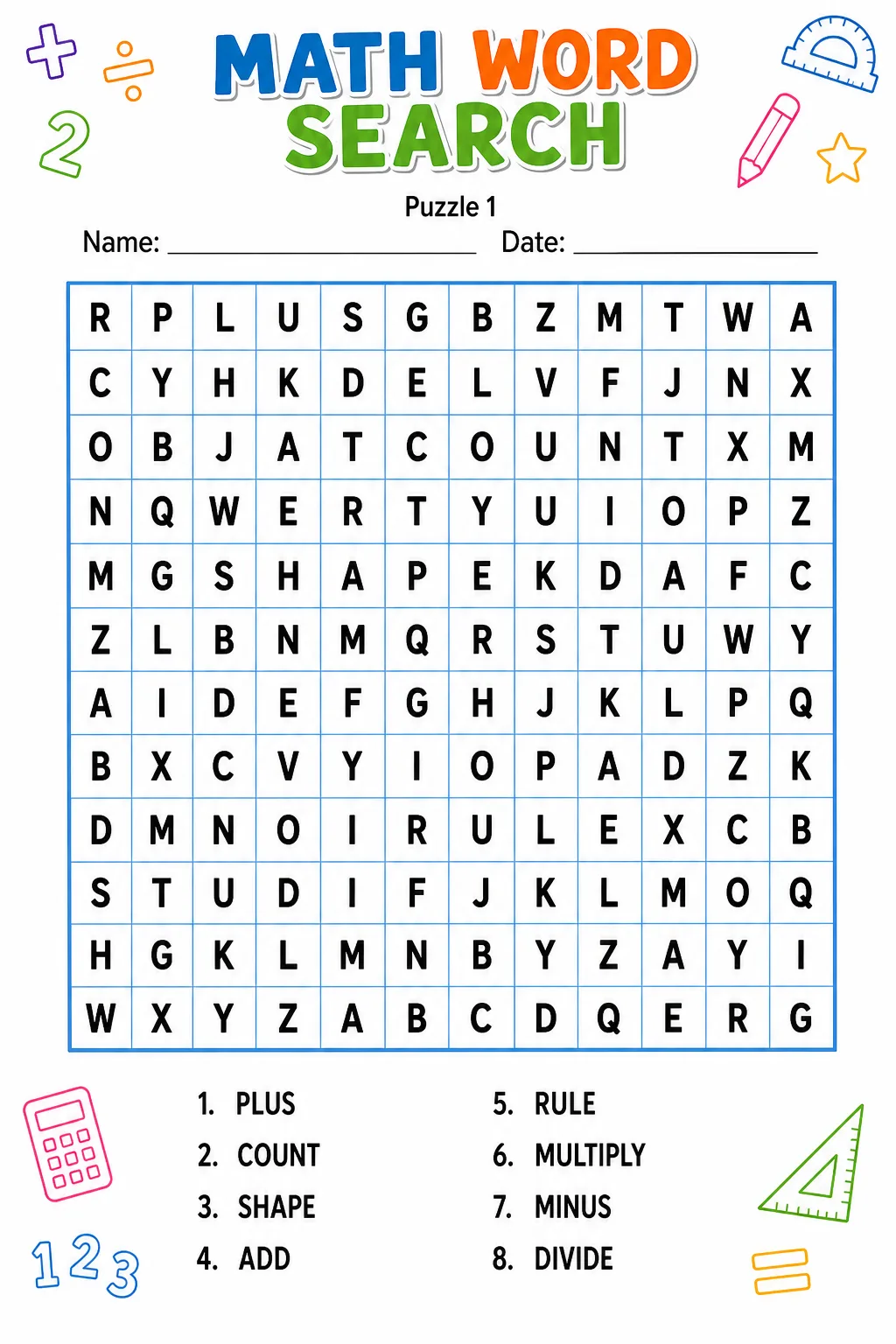
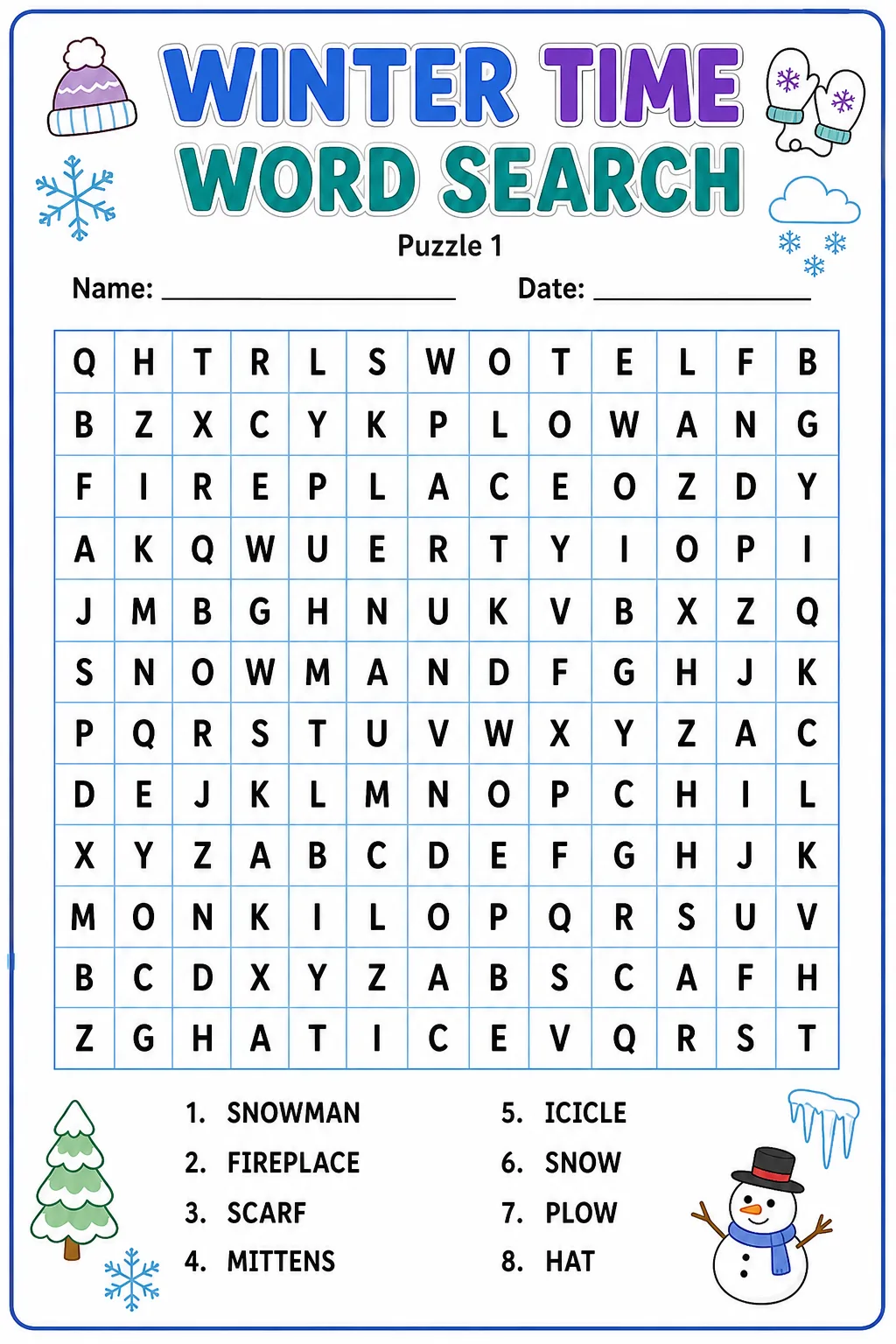
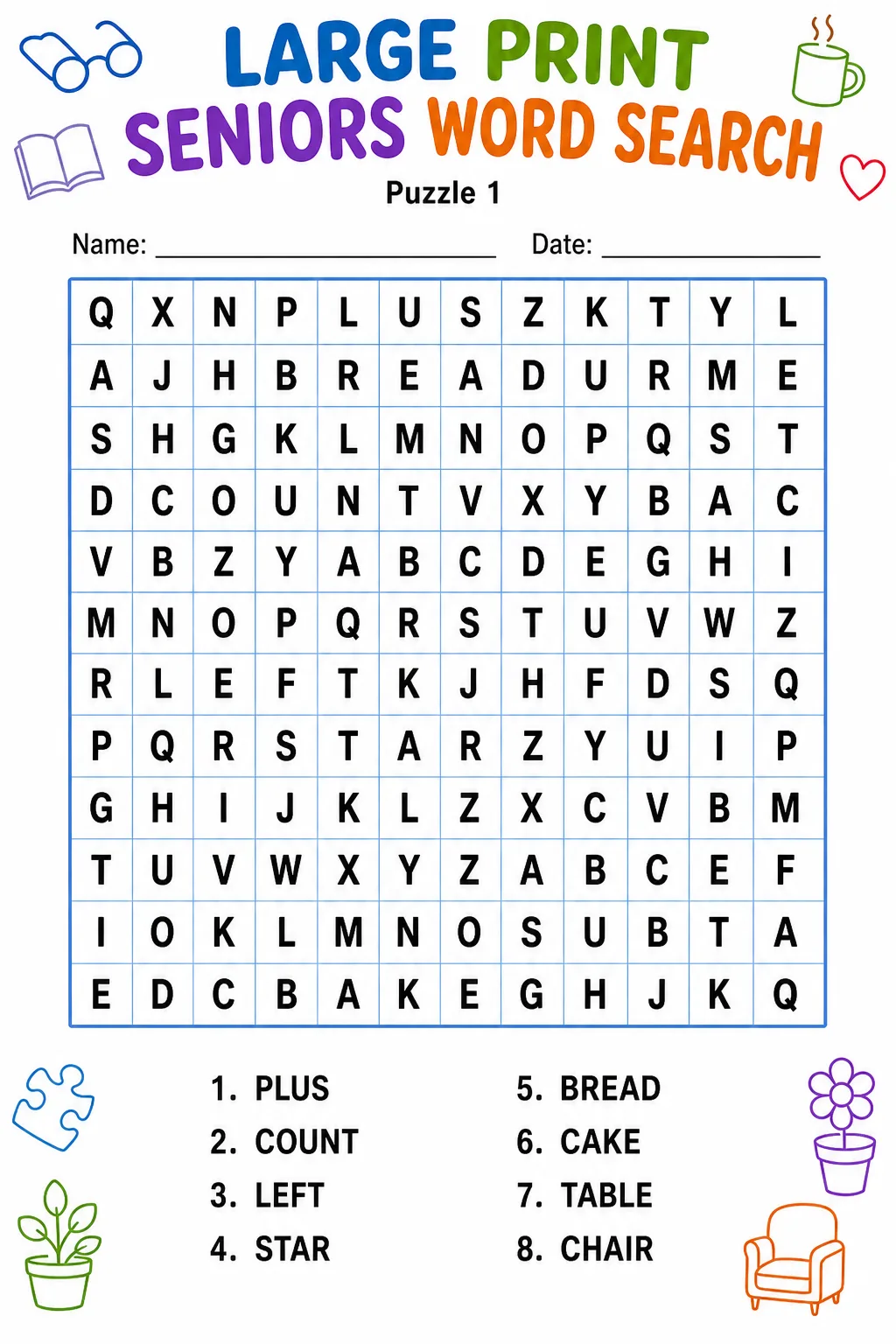
To make a custom physical science word search, start by choosing a clear theme within the subject, such as forces, energy, or states of matter. Compile a list of relevant vocabulary words that fit this theme, ensuring they are appropriate for your audience’s age and knowledge level.
Next, decide on the puzzle’s grid size. For younger players, a smaller grid with fewer words works best, while older students can handle larger grids with more words. The difficulty can be increased by including words placed diagonally or backwards, which adds complexity and challenge.
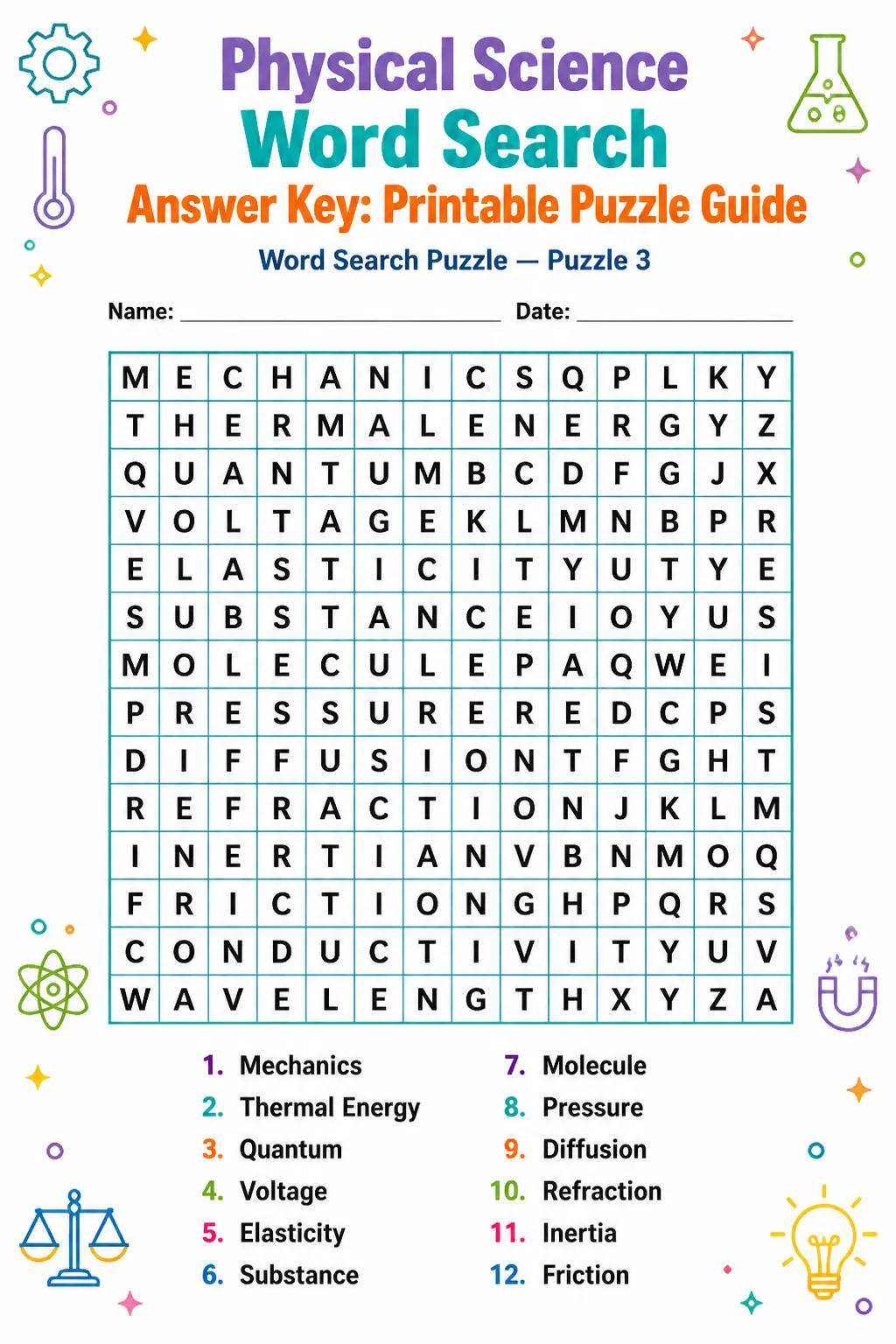
When placing words, avoid very long terms or those containing spaces or symbols, as these can disrupt the puzzle’s layout. Instead, focus on words that fit neatly into the grid and intersect with others to maximize space. After arranging all words, fill the remaining empty spaces with random letters to complete the grid.
Finally, create an answer key by marking the exact locations of each word. This key is crucial for checking answers and helping players who need assistance. Print both the puzzle and answer key on separate pages to distribute during your activity. With these steps, you can design a fun and educational physical science word search puzzle tailored to your needs.
Leave a Reply