What Is the Easiest Way to Find Words in a Word Search Puzzle

Build a puzzle in 3 steps, send the link to your family, or print, no watermark.

Discover the easiest way to find words in a word search puzzle with this detailed guide. Learn step-by-step instructions, helpful tips, and common mistakes to avoid when solving or creating word search puzzles. This article also explains why word searches are beneficial and how to customize them for different skill levels.
Post

Introduction

Understanding what is the easiest way to find words in a word search can make the puzzle-solving experience much more enjoyable and less frustrating. Word search puzzles are popular for all ages because they challenge the brain while offering a fun activity. In this article, we will explore effective methods to spot hidden words quickly and efficiently. Whether you are a beginner or an experienced puzzler, these strategies will help you improve your skills. Additionally, we will cover how to create your own custom word search puzzles, making the process both creative and educational.

Story

I first discovered the joy of word search puzzles on a rainy afternoon with my family. We wanted a simple activity that everyone could enjoy together, so I created a custom word search based on our favorite hobbies. As we searched for words, I realized how important it was to know the easiest way to find words in a word search to keep the game fun and engaging. This experience inspired me to develop clear strategies and tips to help others enjoy word searches as much as we did. Since then, I've shared these puzzles with friends and classrooms, seeing how they bring people together while sharpening their minds.

How To Do It
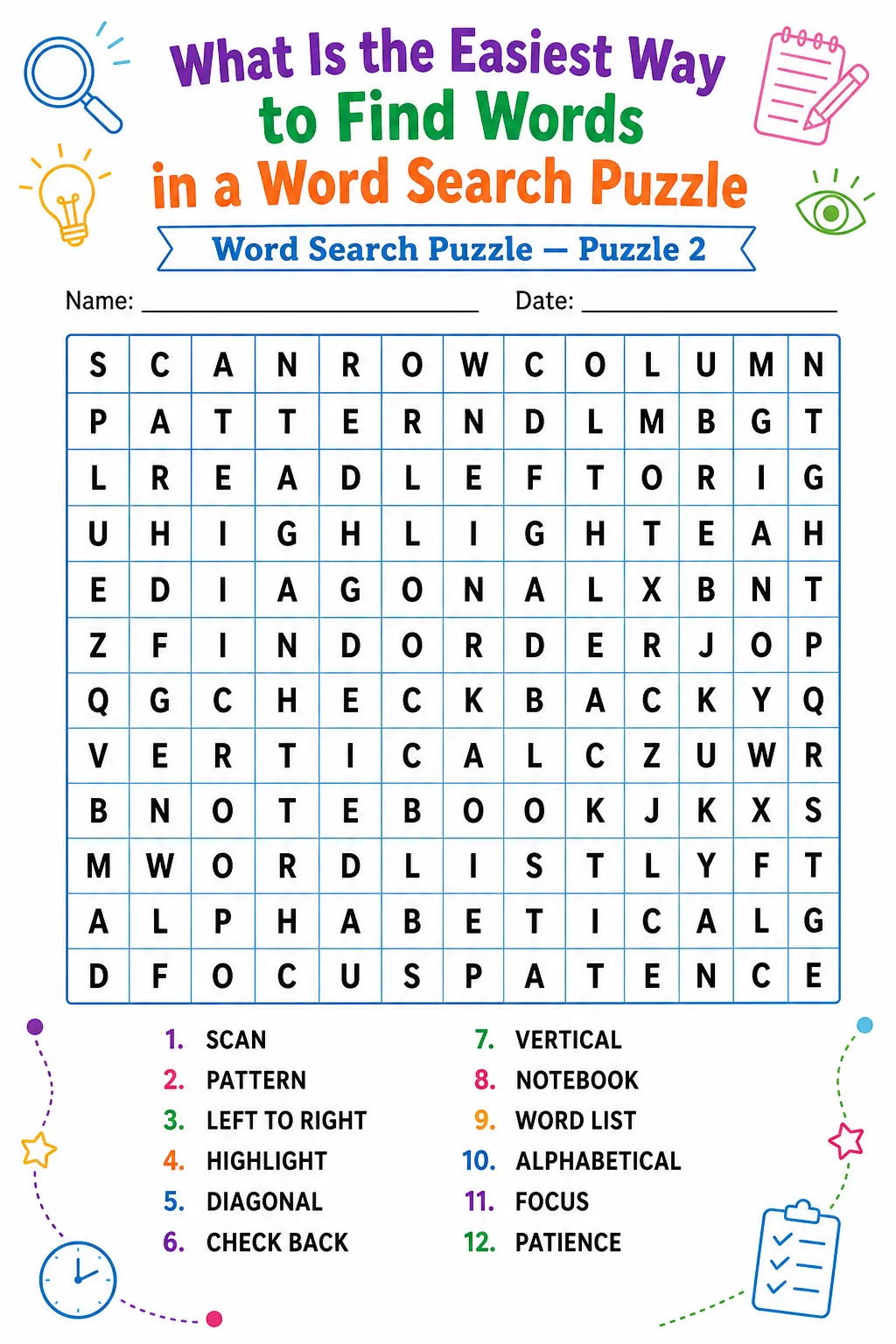
Step 1
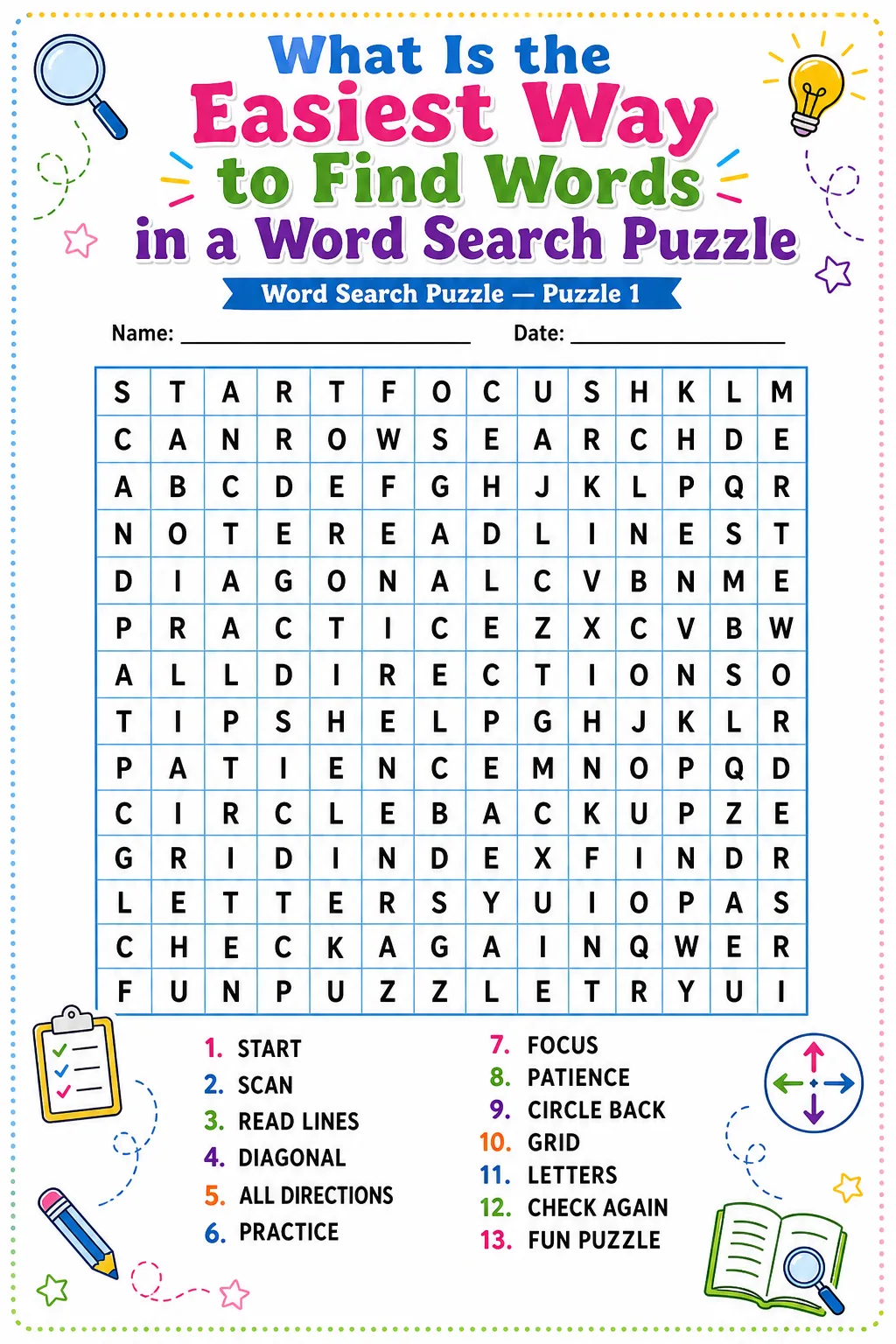
Start by scanning the word list carefully and familiarize yourself with the words you need to find. Knowing the exact spelling and length of each word helps you spot patterns in the puzzle grid. Next, look for the first letter of each word in the grid, as this is often the easiest way to begin locating the word. Focus on one word at a time to avoid confusion and increase your chances of success.
Step 2
Once you find the first letter of a word, check all possible directions around that letter. Words in word searches can be placed horizontally, vertically, diagonally, forwards, or backwards. Carefully trace each direction to see if the following letters match the word you are searching for. Using a finger or a pencil to follow the letters can help maintain focus and reduce mistakes.
Step 3
If you get stuck, try looking for unique or uncommon letters in the word, such as Q, X, or Z, which are easier to spot in the grid. Also, consider searching for shorter words first to build confidence and clear space on the puzzle. Taking breaks and returning with fresh eyes can improve your ability to find words quickly and reduce fatigue.
Post step 2

Why This Works

Benefits of Word Search Puzzles

Word search puzzles offer a fun and engaging way to boost vocabulary, improve concentration, and develop pattern recognition skills. They are accessible to people of all ages and can be tailored to different difficulty levels. This guide works well because it combines practical solving strategies with clear instructions on how to create personalized puzzles. By understanding the easiest way to find words in a word search, readers can enjoy the challenge without feeling overwhelmed.

How This Guide Helps

This post breaks down the process into manageable steps, making it easier for beginners to follow. It also shares pro tips and common mistakes to avoid, which can save time and frustration. The inclusion of a story and a detailed section on creating custom puzzles adds a personal and creative touch. Overall, this guide supports both puzzle solvers and creators by offering comprehensive, easy-to-understand advice that enhances the word search experience.

FAQ

What is the easiest way to find words in a word search puzzle quickly?
The easiest way to find words in a word search puzzle quickly is to first scan the word list carefully, then look for the first letter of each word in the grid. Check all directions around that letter, including backward and diagonal, to locate the full word. Using a systematic approach helps reduce guesswork and speeds up the process.
How can I improve my skills at solving word search puzzles?
Improving your word search skills involves practicing regularly and using strategies such as focusing on unique letters, searching for shorter words first, and marking found words clearly. Taking breaks when stuck and approaching the puzzle with fresh eyes also helps maintain concentration and accuracy.
Are there ways to make a word search puzzle easier or harder?
Yes, you can adjust the difficulty of a word search puzzle by changing the grid size, the number of words, and the directions allowed for word placement. Including diagonal, backward, or overlapping words increases difficulty, while limiting words to horizontal and vertical directions makes it easier.
Why do some words in word search puzzles get skipped or omitted?
Very long words or words containing spaces and symbols are often skipped when creating word search puzzles because they are difficult to fit neatly into the grid. Such words can disrupt the puzzle’s flow and make it harder for solvers to find them, so simpler words are preferred.
Can word search puzzles help with learning new vocabulary?
Absolutely. Word search puzzles encourage recognition of word patterns and spellings, which reinforces vocabulary learning. They are especially useful for language learners and children because the puzzle format makes studying words more engaging and interactive.
What tools or methods can help find words faster in a printable word search?
Using a pencil to lightly mark found words, a ruler to follow lines, and highlighting the word list are effective tools. Additionally, focusing on unique letters and systematically scanning the grid row by row or column by column can speed up word detection.

Pro Tips

Highlight or underline the word list before starting to keep track of found words.
Use a ruler or straight edge to help follow rows and columns precisely.
Start by searching for words with unique letters to find them faster.
Circle or mark found words lightly so you don’t lose your place in the puzzle.
Adjust the puzzle difficulty by changing grid size or allowing diagonal and backward words.
Post step 3

Common Mistakes to Avoid

Ignoring the word list and trying to find words randomly, which wastes time.
Overlooking backward or diagonal words because they are less obvious.
Not double-checking letters after finding a potential match, leading to errors.
Choosing words with spaces or symbols when creating puzzles, which can confuse solvers.

Final Thoughts

In summary, knowing what is the easiest way to find words in a word search puzzle can transform the experience from frustrating to fun. By following the clear steps and tips provided, anyone can improve their puzzle-solving skills. Creating custom puzzles also adds an enjoyable creative element to this activity. Whether you are solving or designing word searches, these strategies will help you get the most out of every puzzle. So grab a pencil, pick your favorite theme, and start exploring the hidden words today!

Choose a clear and concise word list that fits the puzzle theme well.

Limit puzzle grid size according to the age and skill level of the solver.

Use pencil marks lightly to avoid cluttering the puzzle grid.

Include a mix of word directions to balance challenge and solvability.

Gallery
Post image 1
Post image 2
Post image 3
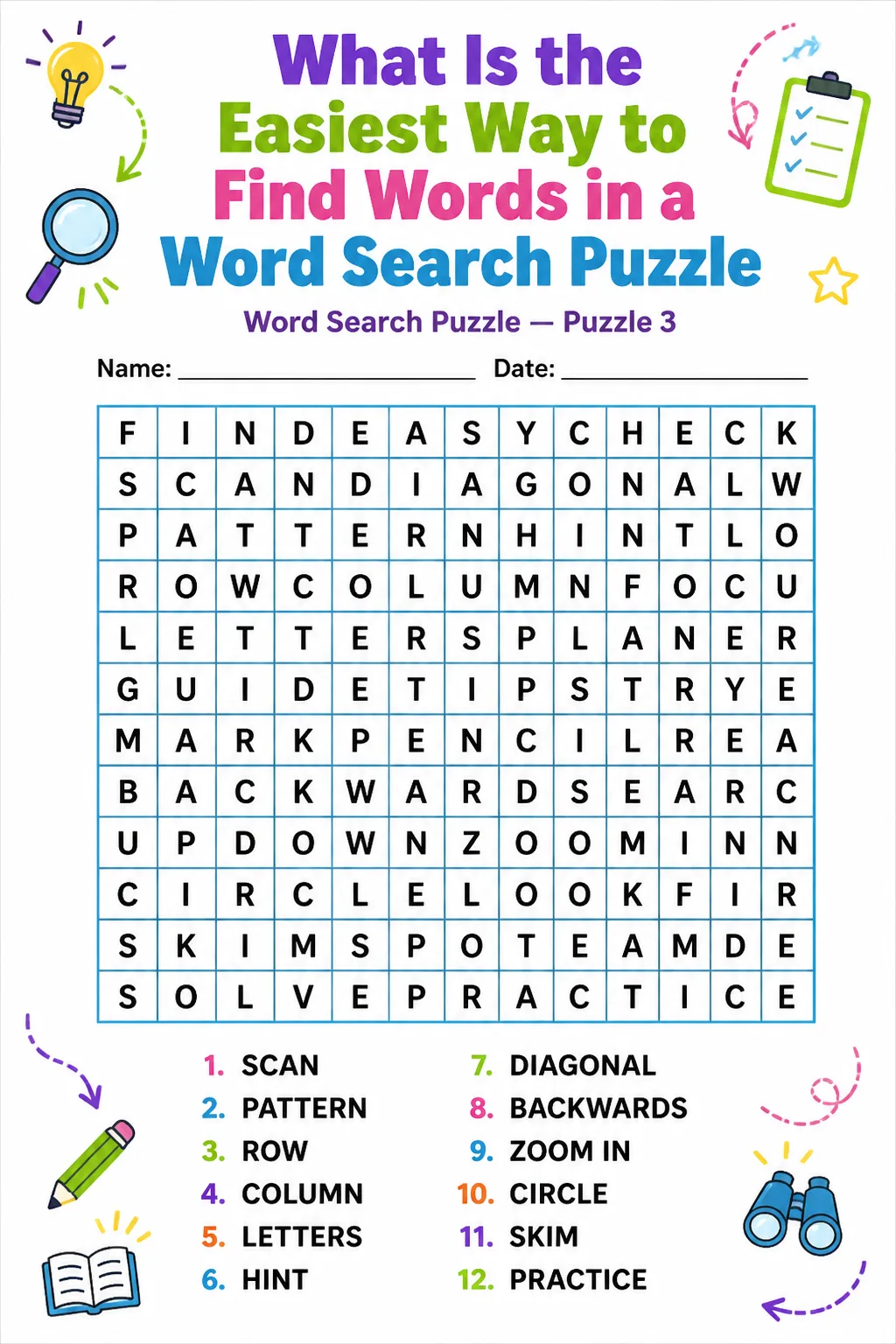
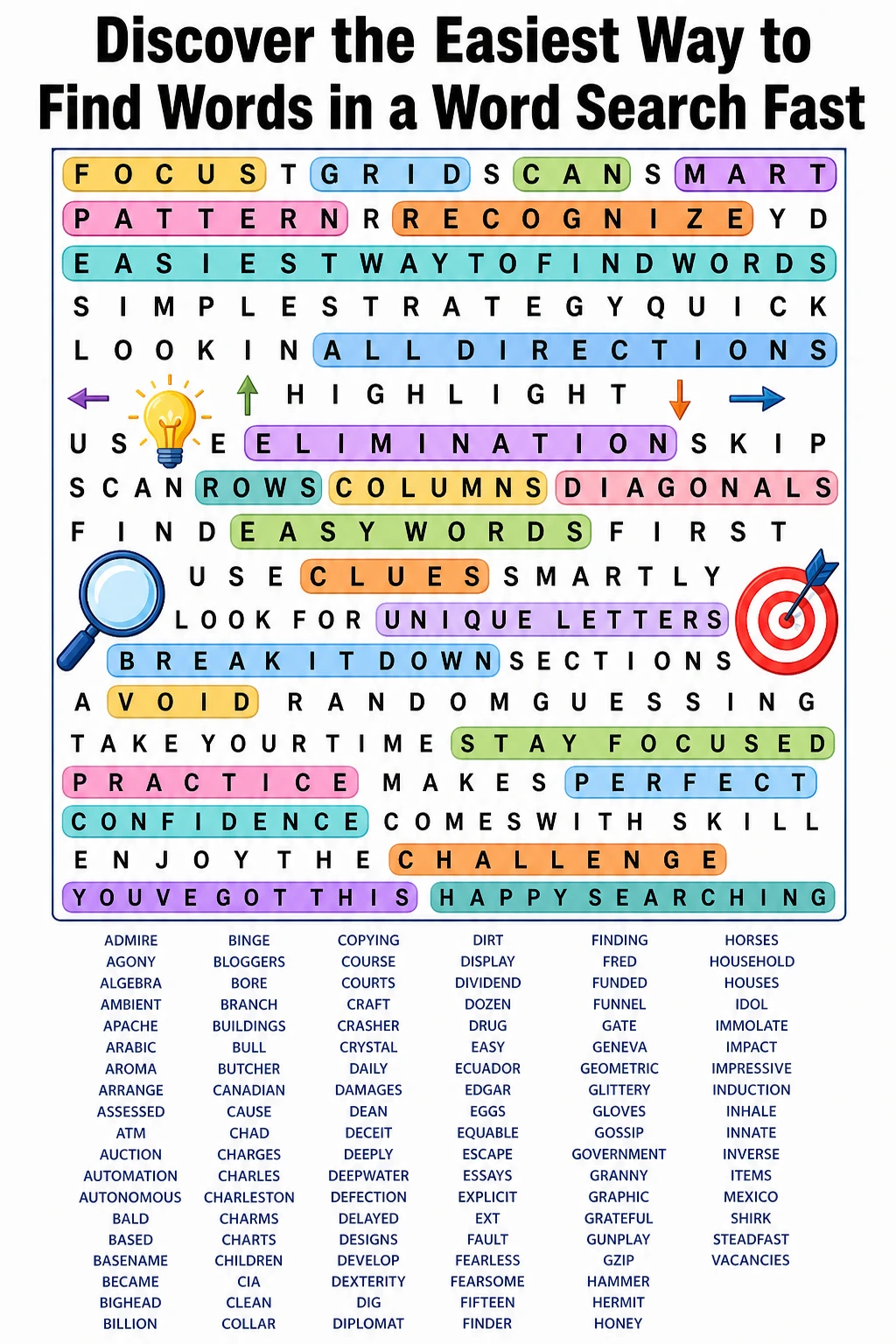
Discover the Easiest Way to Find Words in a Word Search Fast
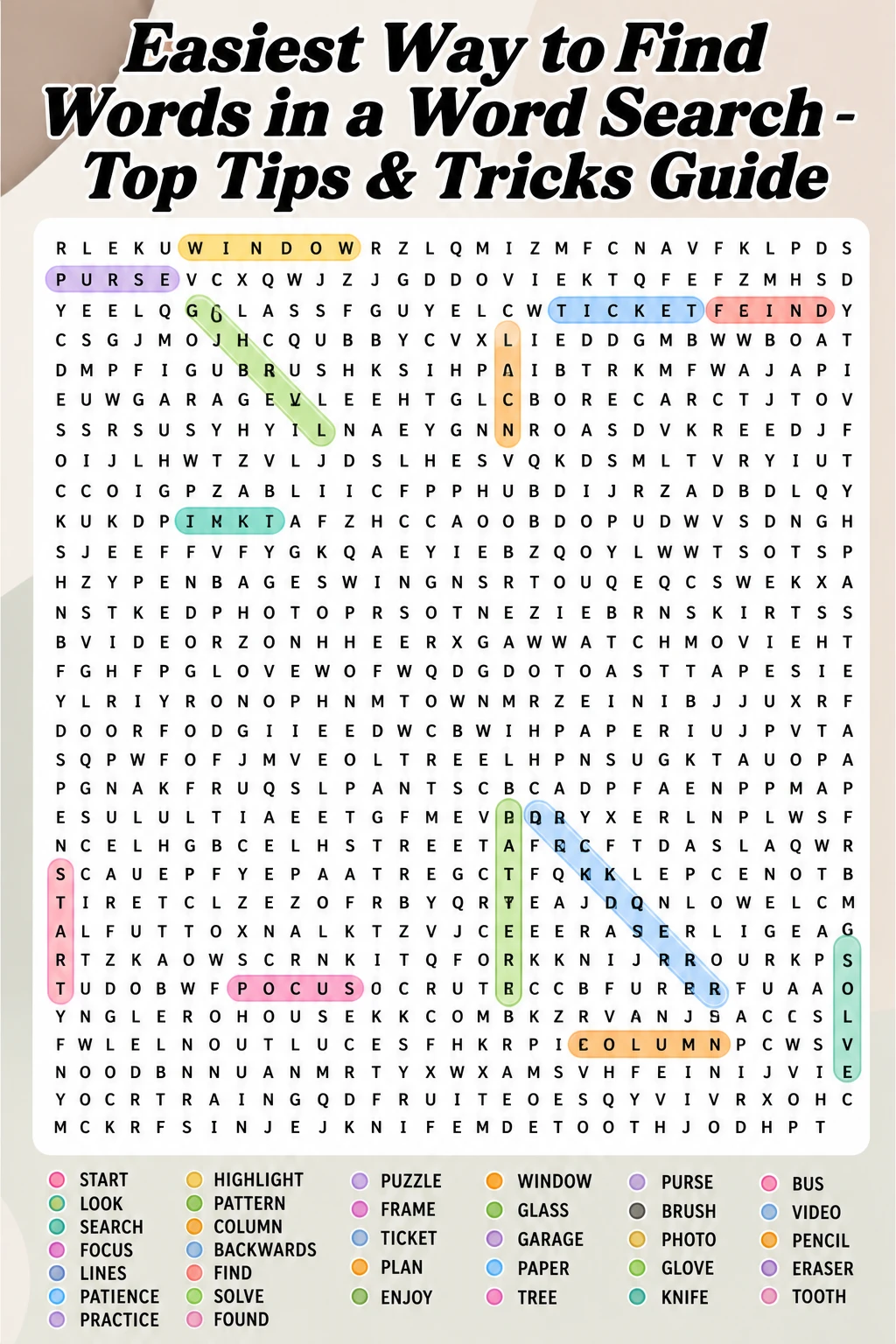
Easiest Way to Find Words in a Word Search - Top Tips & Tricks Guide
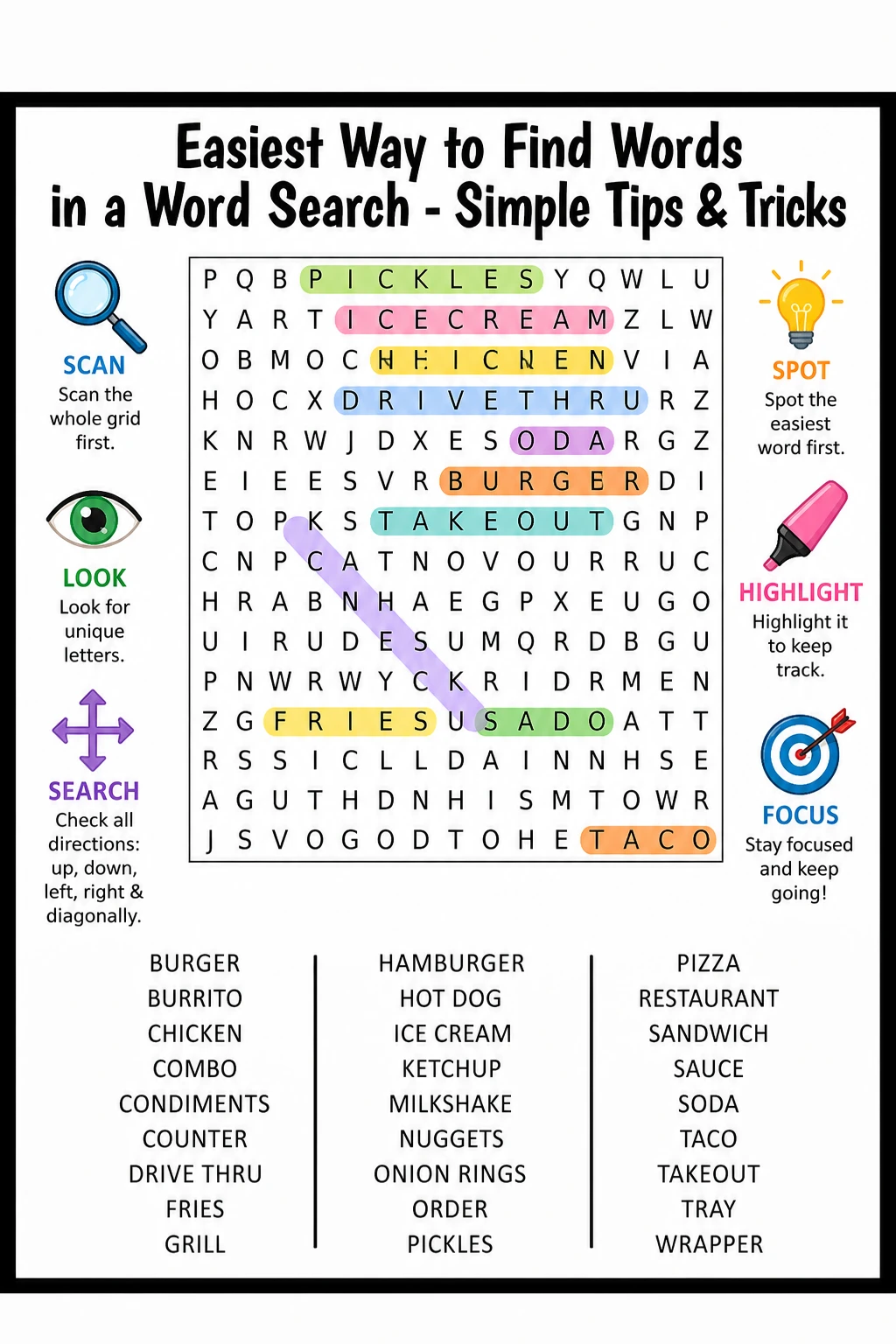
Easiest Way to Find Words in a Word Search - Simple Tips & Tricks

Create puzzle

Creating a custom word search puzzle starts with choosing a theme that interests your target audience, such as animals, holidays, or hobbies. Then, compile a word list that fits the theme and is appropriate in length for the solver's age. Next, decide on the grid size; smaller grids with fewer words work well for younger children, while larger grids with more words suit adults and experienced puzzlers.

When placing words, consider the directions allowed: horizontal and vertical placements are easier, while diagonal and backward words increase difficulty. Avoid using very long words or those with spaces and symbols, as they are harder to fit into the grid and can confuse solvers. Finally, fill in the remaining spaces with random letters to complete the puzzle. This process ensures your custom word search is both fun and challenging for everyone.
You Might Also Like

Build a puzzle in 3 steps, send the link to your family, or print, no watermark.

Leave a Reply

Your email address will not be published. Required fields are marked *

More Articles & Posts