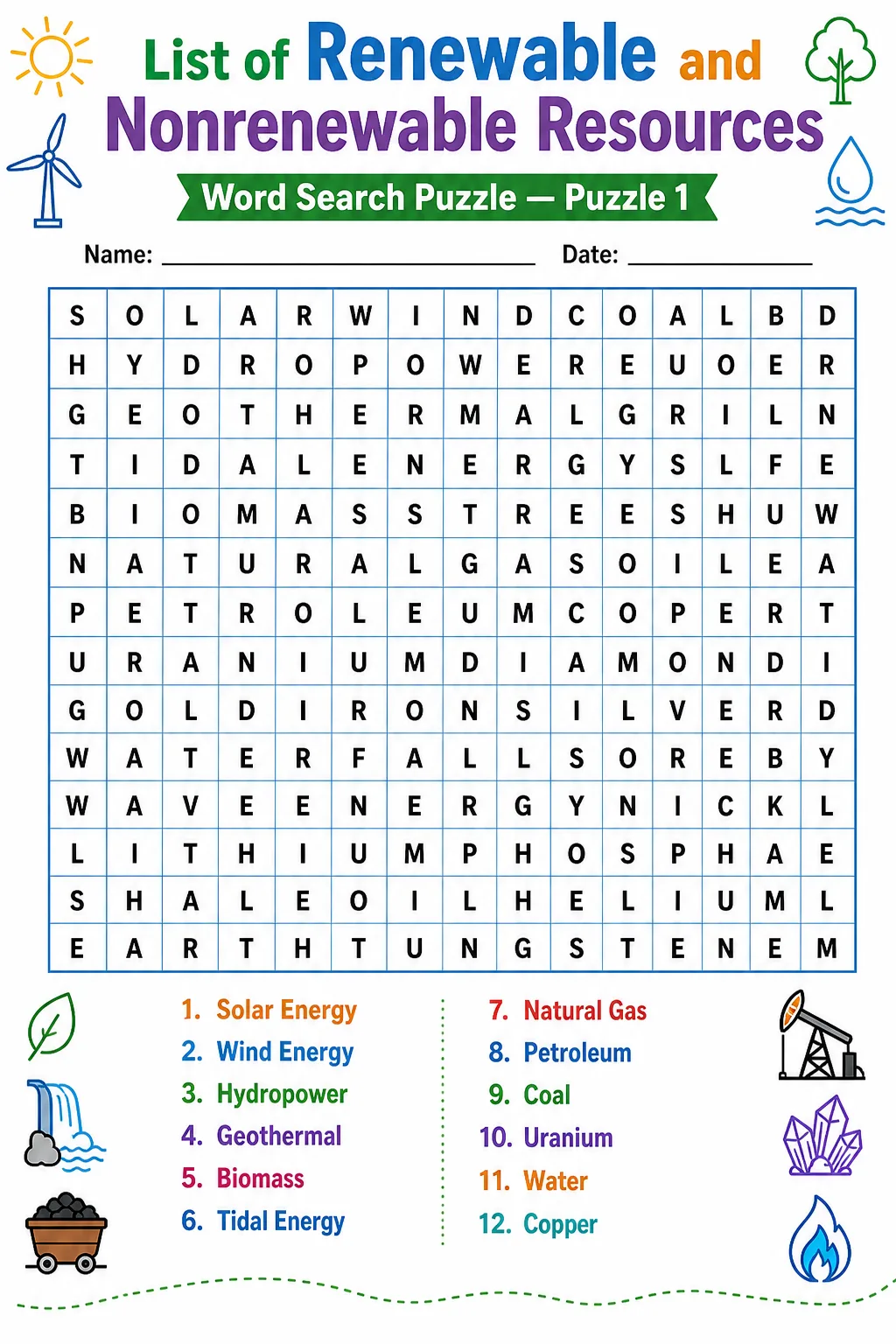
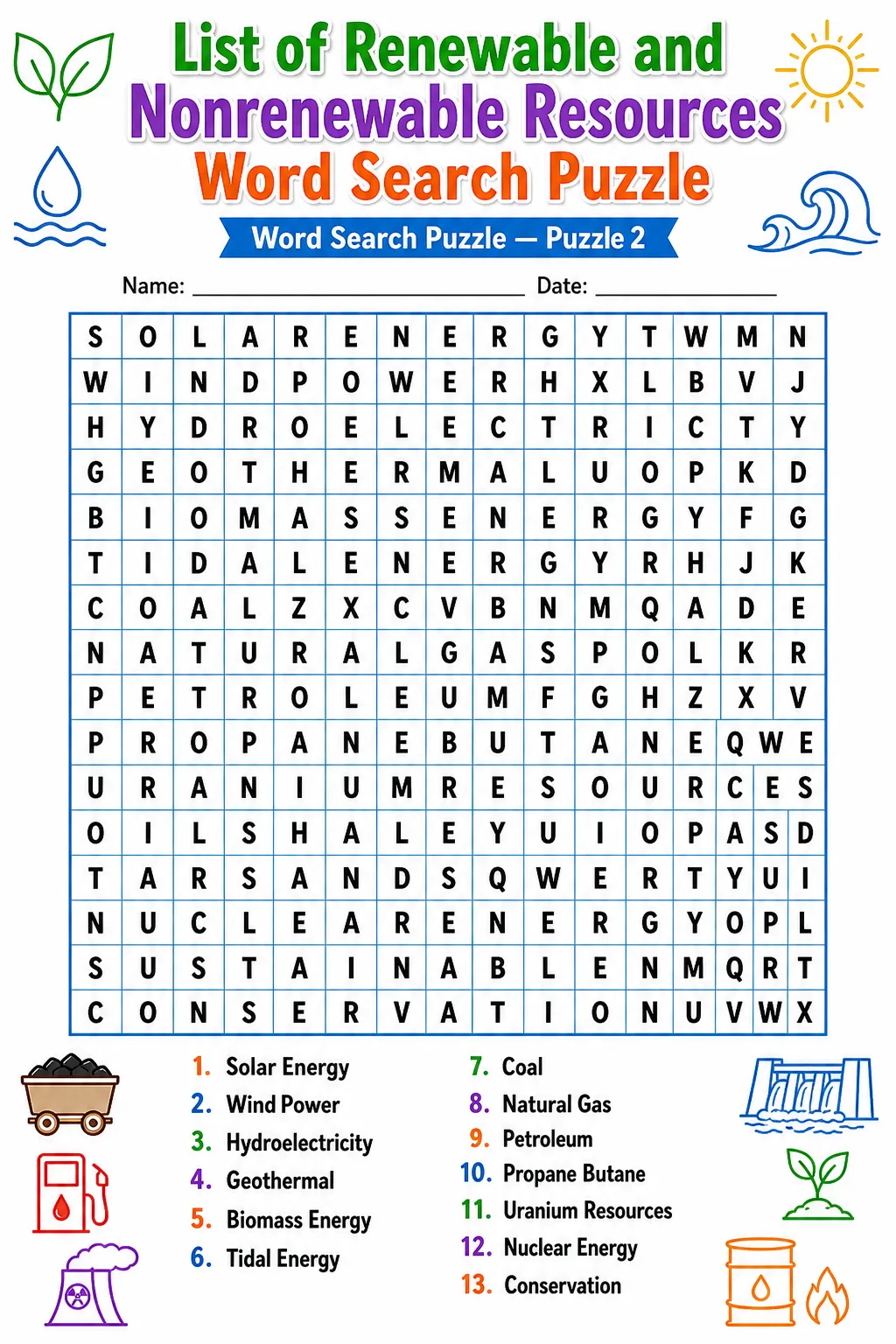
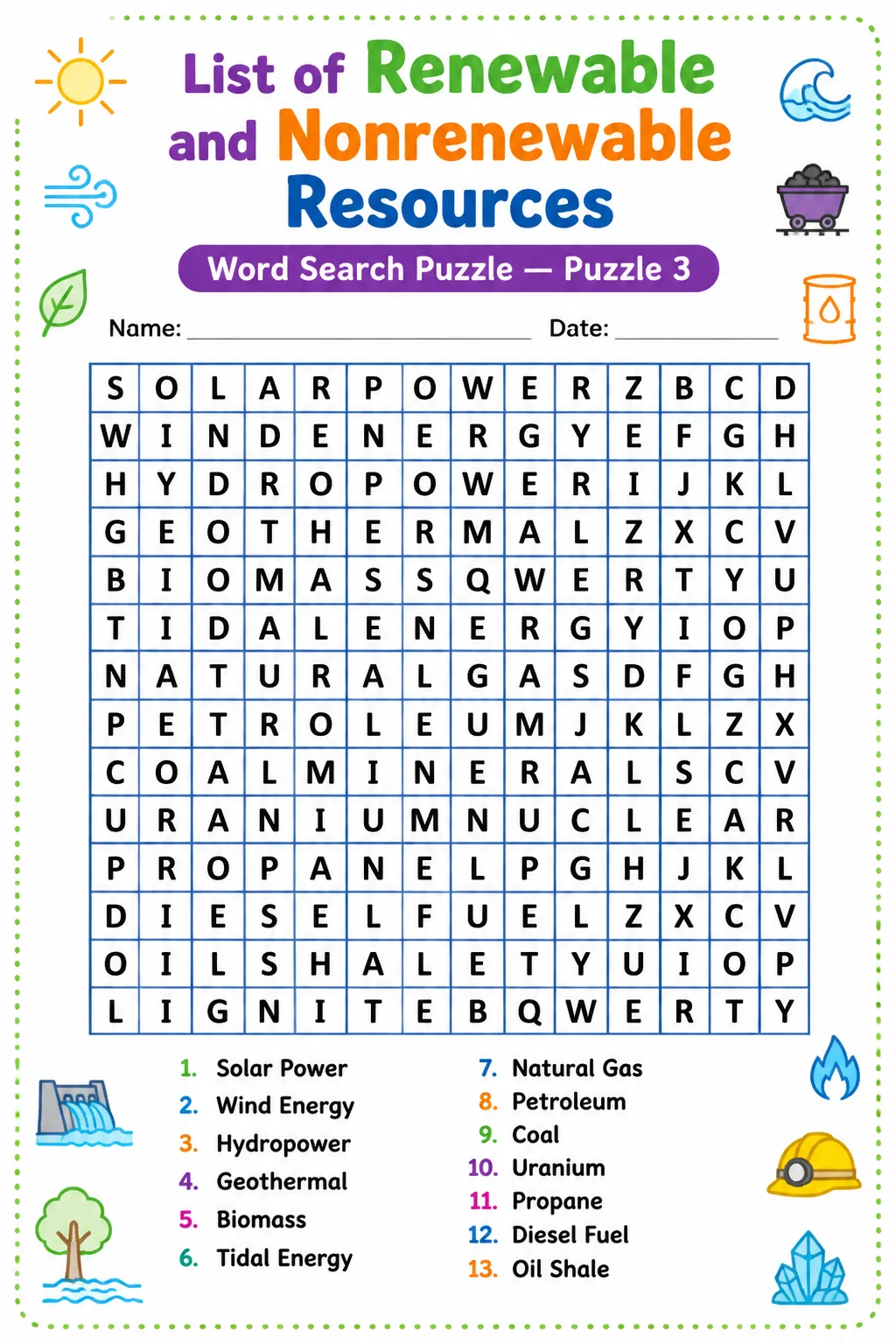
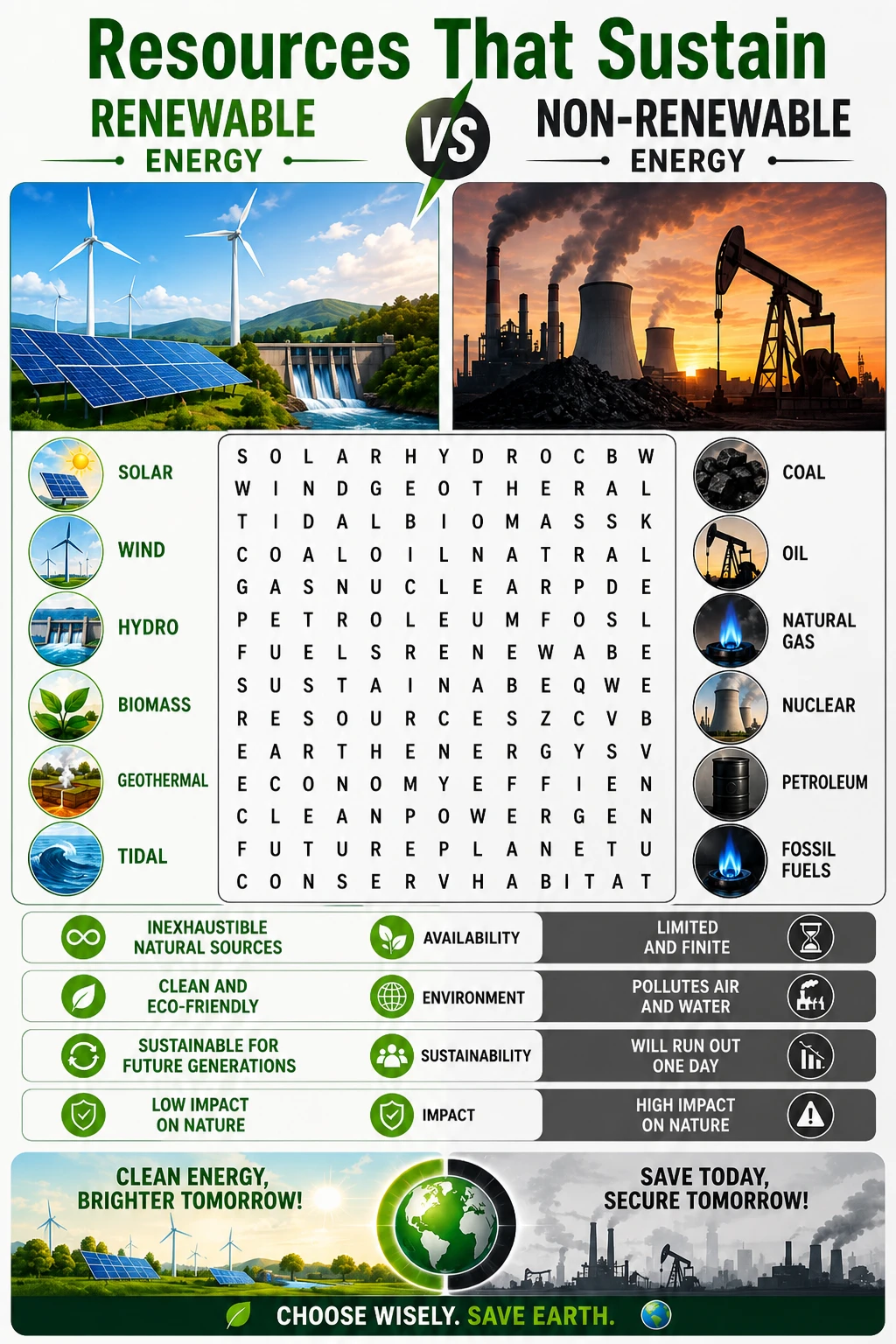
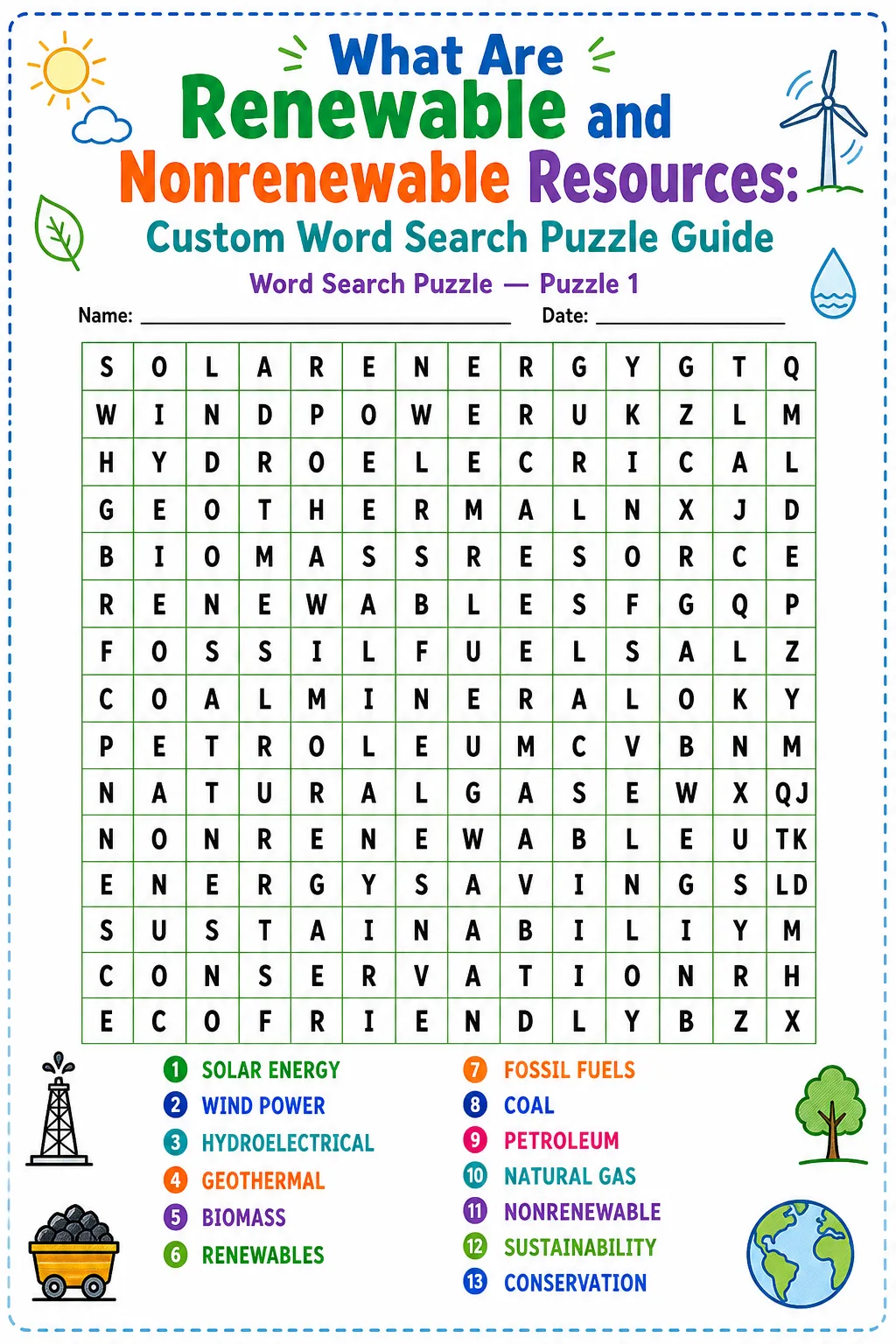
Discover the list of renewable and nonrenewable resources with this custom printable word search puzzle. This engaging activity helps learners understand key environmental concepts by finding terms related to energy sources and natural materials. Perfect for classrooms or home learning, it encourages vocabulary building and critical thinking while providing fun and educational entertainment. Download and print free to explore renewable and nonrenewable resources in an interactive way.
Introduction
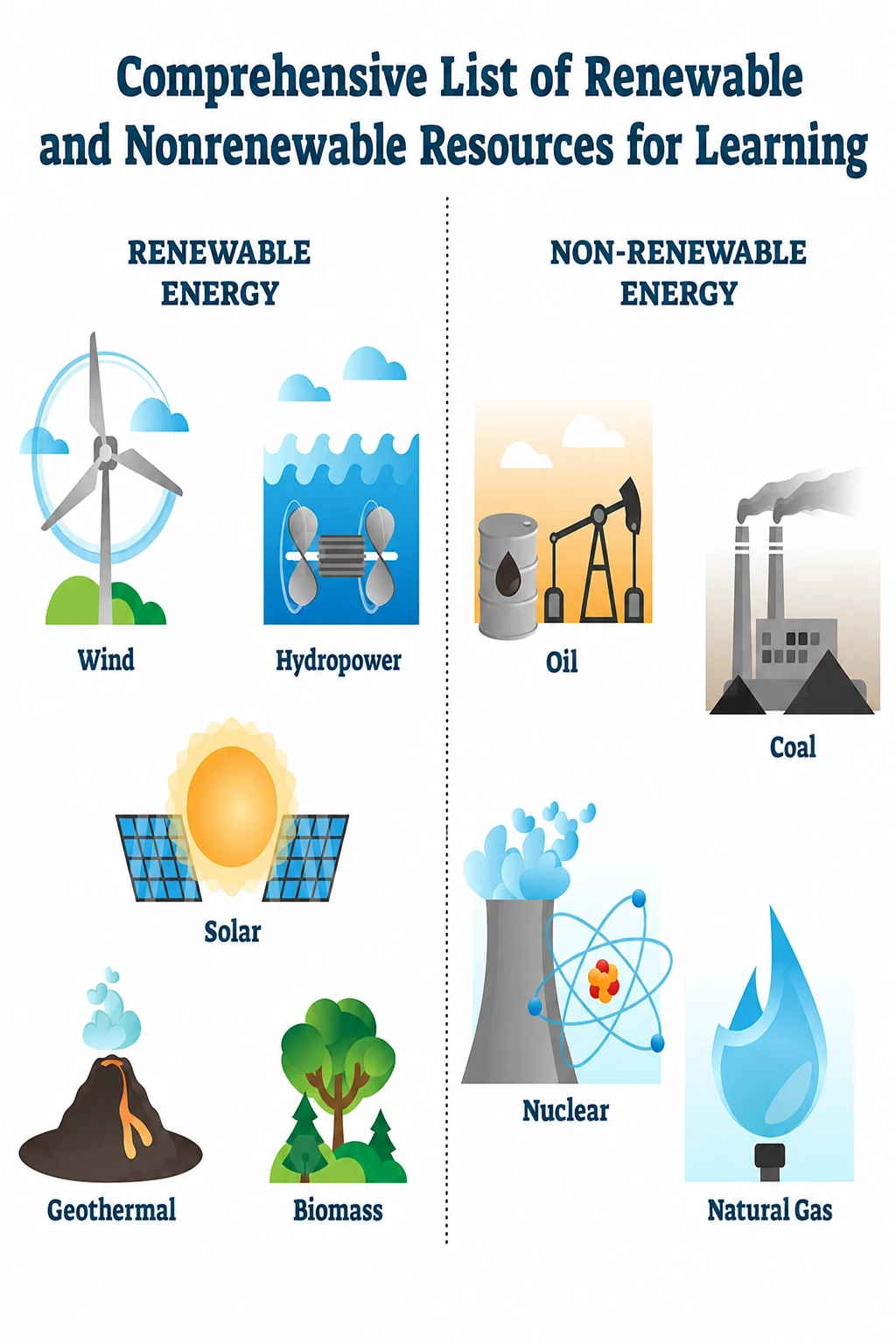
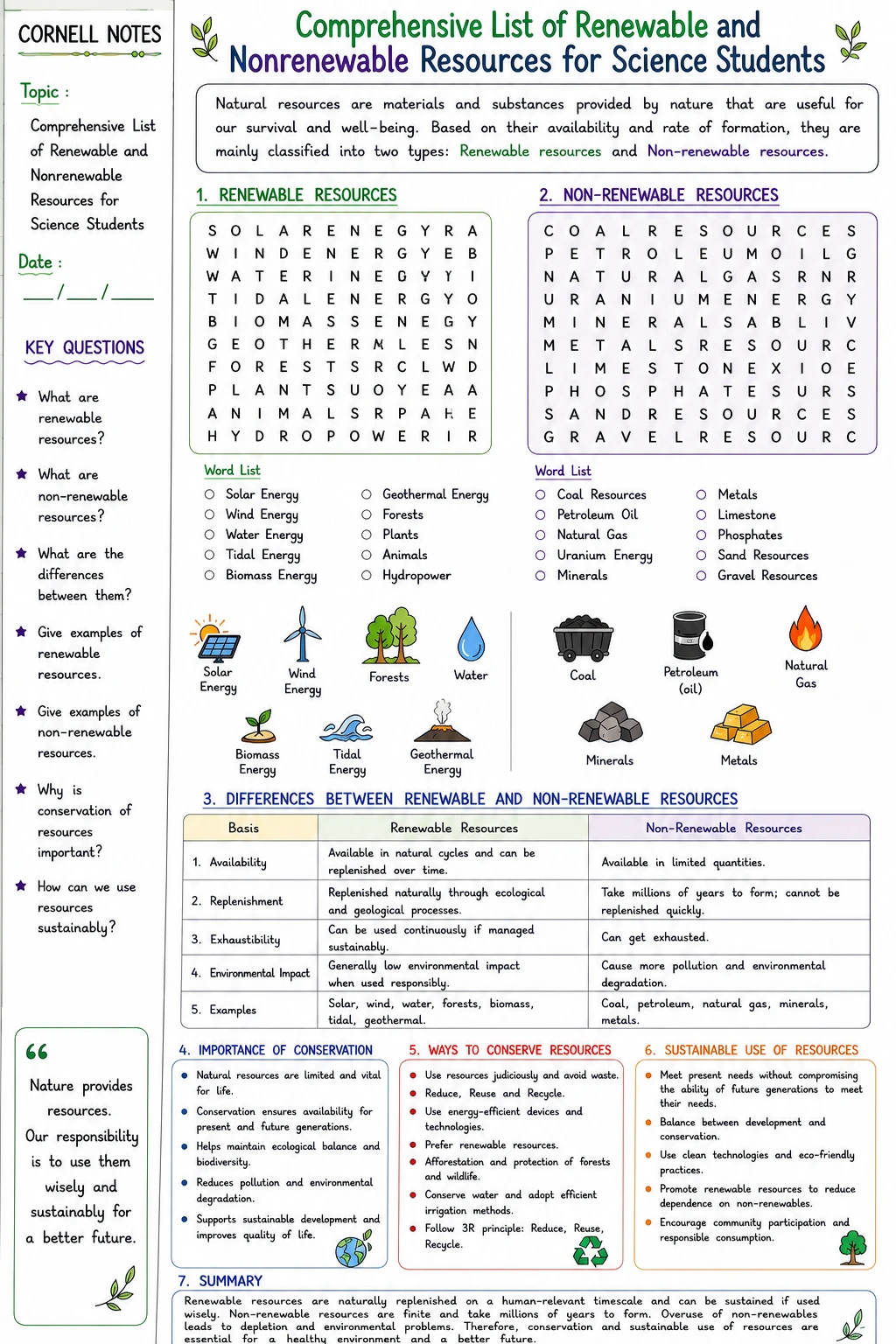
The list of renewable and nonrenewable resources is an important topic for anyone interested in environmental science and sustainable living. This word search puzzle is designed to help learners of all ages familiarize themselves with these crucial terms by engaging them in a fun and interactive way. By searching for words related to energy sources and materials that either replenish naturally or are finite, players can improve their vocabulary and deepen their understanding of how these resources impact our world.
Whether you are a teacher looking for a classroom activity or a parent wanting to support your child's learning at home, this printable word search offers a practical tool. It combines education with entertainment, making the study of renewable and nonrenewable resources accessible and enjoyable. In the following sections, you will find detailed instructions on creating and solving the puzzle, tips for making it more effective, and explanations of common pitfalls to avoid.
How To Do It
Step 1
Begin by selecting a list of renewable and nonrenewable resources you want to include in your word search puzzle. Make sure the words vary in length and complexity to provide a balanced challenge. Include common terms like 'solar,' 'coal,' 'wind,' and 'oil,' as well as less obvious ones such as 'biomass' or 'natural gas.' This variety will help players learn a broader range of vocabulary.
Step 2
Choose an appropriate grid size based on the age group and difficulty level you want. For younger players, a smaller grid with fewer words is best, while older students can handle larger grids with more terms. Place the words in the grid horizontally, vertically, and diagonally, both forwards and backwards, to increase the puzzle’s complexity and engagement.
Step 3
Fill the remaining empty spaces in the grid with random letters to complete the puzzle. Double-check that none of these filler letters accidentally form unintended words that could confuse players. Once the grid is complete, prepare a word list for players to find and provide clear instructions on how to circle or highlight the words when found.
Why This Works
Word search puzzles focused on the list of renewable and nonrenewable resources work effectively because they combine learning with active engagement. By searching for specific terms, players reinforce their memory of important vocabulary related to environmental science. This method encourages visual recognition and spelling skills while making the educational content more accessible and less intimidating.
In addition, this guide offers clear, step-by-step instructions that anyone can follow to create their own puzzles, making it a versatile resource for educators and parents alike. The inclusion of tips and common mistakes helps users avoid pitfalls that might reduce the puzzle’s educational value or enjoyment. Overall, this approach supports a deeper understanding of resource types and sustainability concepts, which are vital for fostering environmental awareness in learners.
Moreover, printable word search puzzles provide a screen-free activity that promotes focus and patience. They can be used in various settings, from classrooms to family game nights, making the learning process flexible and enjoyable. By using this guide, users gain practical knowledge on how to design puzzles that are both fun and informative, ensuring that the topic of renewable and nonrenewable resources is effectively communicated and retained.
FAQ
What are renewable and nonrenewable resources in a word search puzzle?
Renewable and nonrenewable resources in a word search puzzle refer to the specific terms related to natural materials and energy sources that either replenish over time or are finite. The puzzle includes words like 'solar,' 'wind,' 'coal,' and 'oil' for players to find, helping them learn about these important environmental concepts.
How can I create a printable word search for renewable and nonrenewable resources?
To create a printable word search, start by compiling a list of relevant words, then choose a grid size suitable for your audience. Place the words in the grid in various directions and fill empty spaces with random letters. Finally, print the puzzle along with the word list and instructions for players.
What grid size is best for kids learning about renewable and nonrenewable resources?
For younger children, a smaller grid such as 10×10 with around 8 to 10 words is ideal. This size keeps the puzzle manageable and enjoyable while reinforcing key vocabulary. Older students can handle larger grids with more words for a greater challenge.
Why include backward and diagonal words in a word search puzzle?
Including backward and diagonal words increases the puzzle’s difficulty and encourages more careful observation. This variety helps develop problem-solving skills and keeps the activity engaging, especially for older or more experienced players.
Can word search puzzles help with environmental education?
Yes, word search puzzles are an effective educational tool because they promote active learning. By searching for terms related to renewable and nonrenewable resources, players improve their vocabulary and gain a better understanding of sustainability topics in a fun and interactive way.
What should I do if some words don’t fit in the puzzle grid?
If certain words are too long or complex to fit, consider reducing the grid size or removing less essential terms. Alternatively, you can adjust the grid dimensions or simplify the word list to ensure all words fit comfortably without overcrowding.
Pro Tips
Include a mix of short and long words to keep the puzzle interesting and appropriately challenging for different age groups.
Use diagonal and backward word placements to increase difficulty without overwhelming beginners.
Double-check the word list for spelling accuracy before creating the puzzle grid to avoid confusion.
Keep the theme consistent by only including words directly related to renewable and nonrenewable resources.
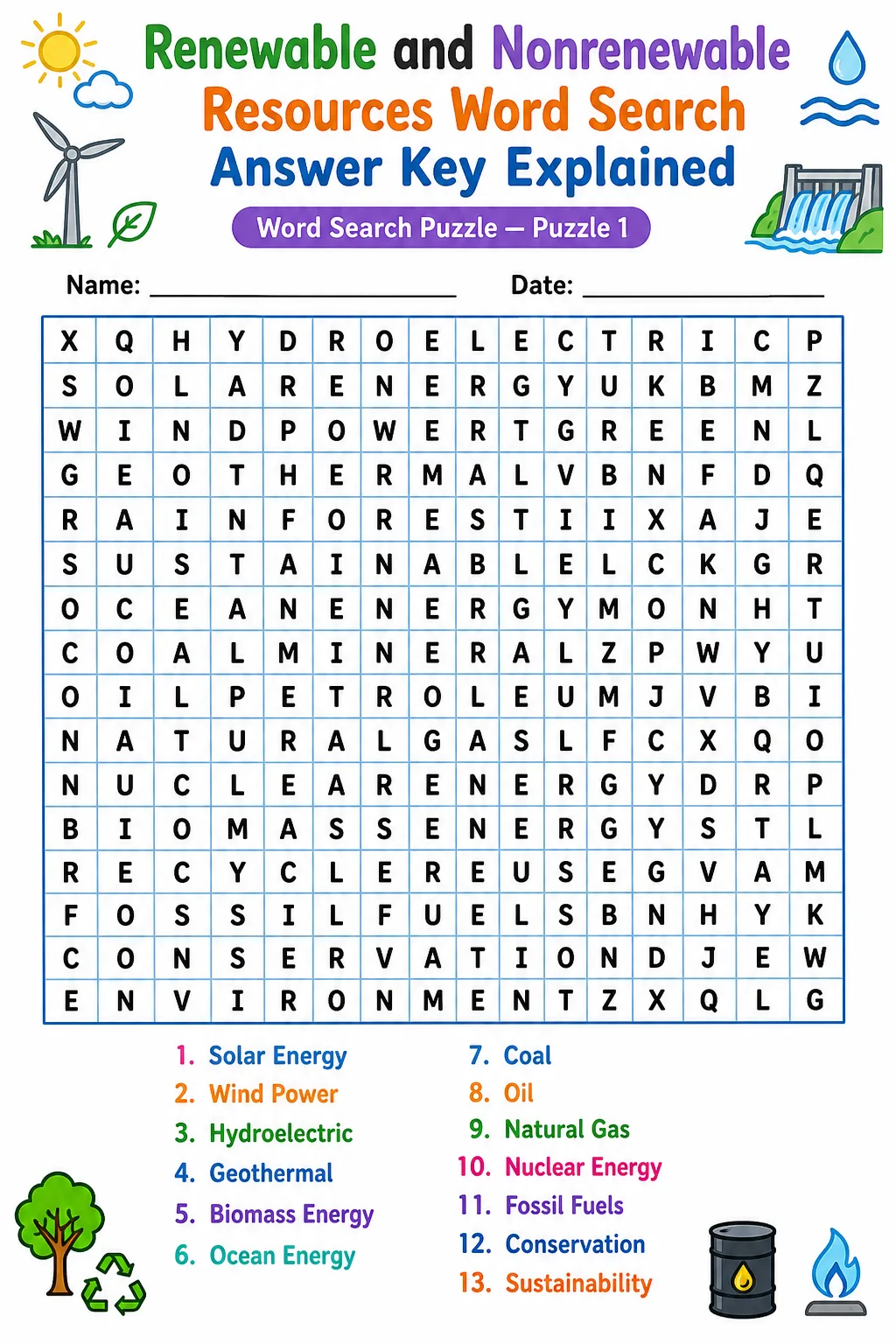
Provide a clear answer key to help learners check their work and reinforce correct spelling and recognition.
Common Mistakes to Avoid
Using words that are too obscure or technical, which can frustrate players and reduce engagement.
Creating a grid that is too large or too small for the target age group, making the puzzle either too easy or too difficult.
Placing words too close together without enough spacing, which can cause confusion when searching.
Failing to provide clear instructions or a word list, leaving players unsure of what to look for.
Final Thoughts
Creating and understanding a word search puzzle based on the list of renewable and nonrenewable resources is a rewarding way to learn about important environmental topics. This activity not only builds vocabulary and spelling skills but also deepens awareness of how different resources impact our planet. By following the instructions and tips provided, anyone can design an engaging and educational puzzle suitable for various age groups.
Whether used in classrooms or at home, these puzzles make learning interactive and enjoyable. They encourage critical thinking and help reinforce key concepts in a memorable way. We encourage you to download, print, and share this word search puzzle to support environmental education and inspire curiosity about the natural world.
Start with a clear and focused word list to maintain puzzle relevance.
Test the puzzle yourself to ensure all words are findable and the difficulty is appropriate.
Use consistent font and spacing when printing to enhance readability.
Encourage players to highlight or circle found words to track progress visually.





Leave a Reply