

Discover how to create and understand a God's promise to Abraham word search puzzle with this detailed guide. Learn step-by-step instructions, tips, and common pitfalls to make engaging and educational printable puzzles that highlight biblical themes effectively.
Introduction
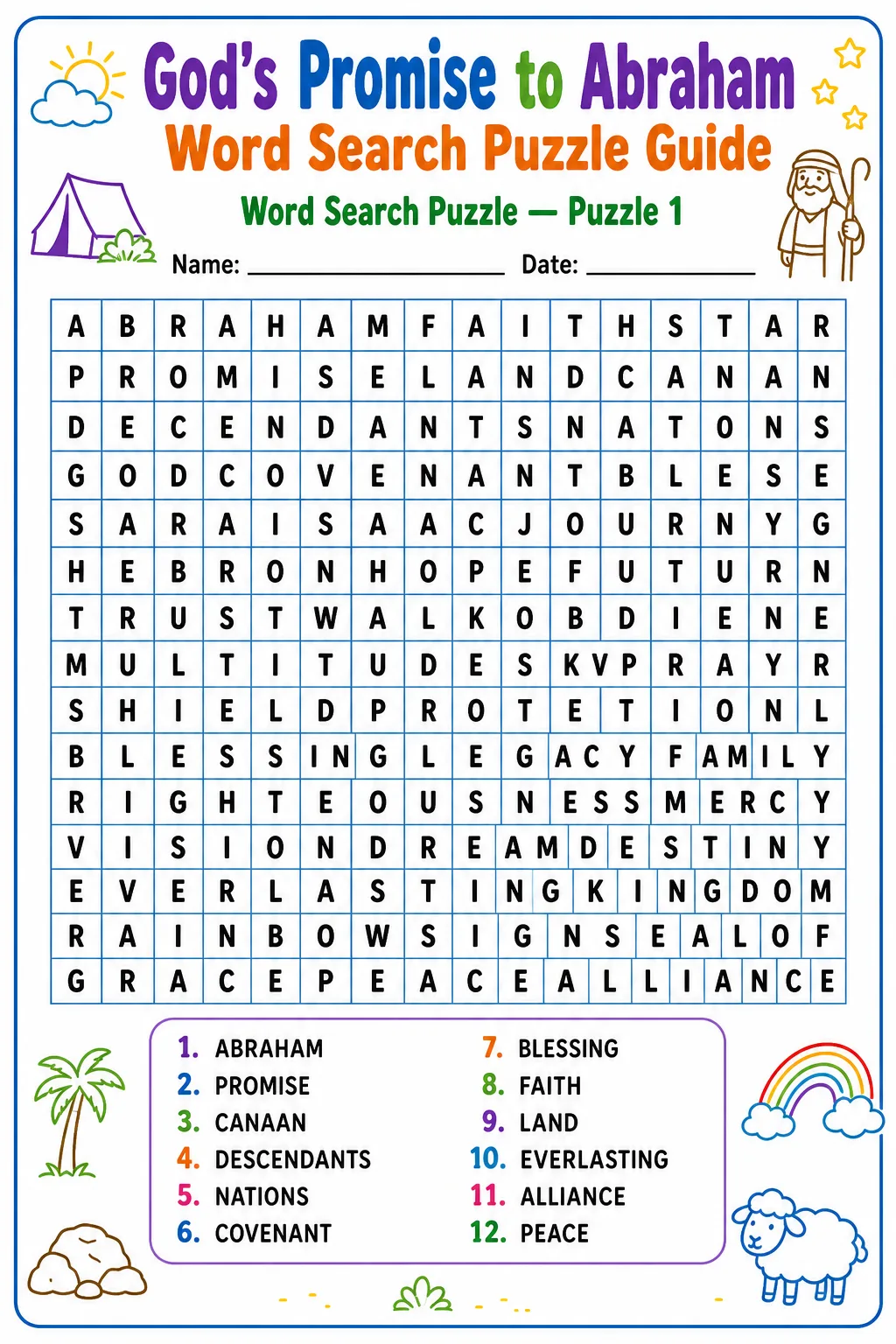
Creating a God's promise to Abraham word search puzzle is a wonderful way to engage learners with biblical stories while offering a fun and educational activity. This type of word search puzzle not only helps reinforce key vocabulary and concepts related to Abraham's covenant with God but also encourages focus and problem-solving skills. Whether you are a Sunday school teacher, a parent, or a puzzle enthusiast, understanding how to design and use these puzzles can enhance learning experiences. This guide will walk you through the essentials of making custom printable word searches centered on this important biblical promise, ensuring they are both meaningful and enjoyable.
How To Do It
Start by selecting the key words related to God's promise to Abraham. These should include names, places, and significant terms from the biblical narrative, such as 'Covenant,' 'Isaac,' 'Stars,' and 'Blessing.' Choose words that vary in length and complexity to create a balanced challenge. Aim for a list that fits your chosen grid size without overcrowding the puzzle, ensuring the words can be found horizontally, vertically, or diagonally.
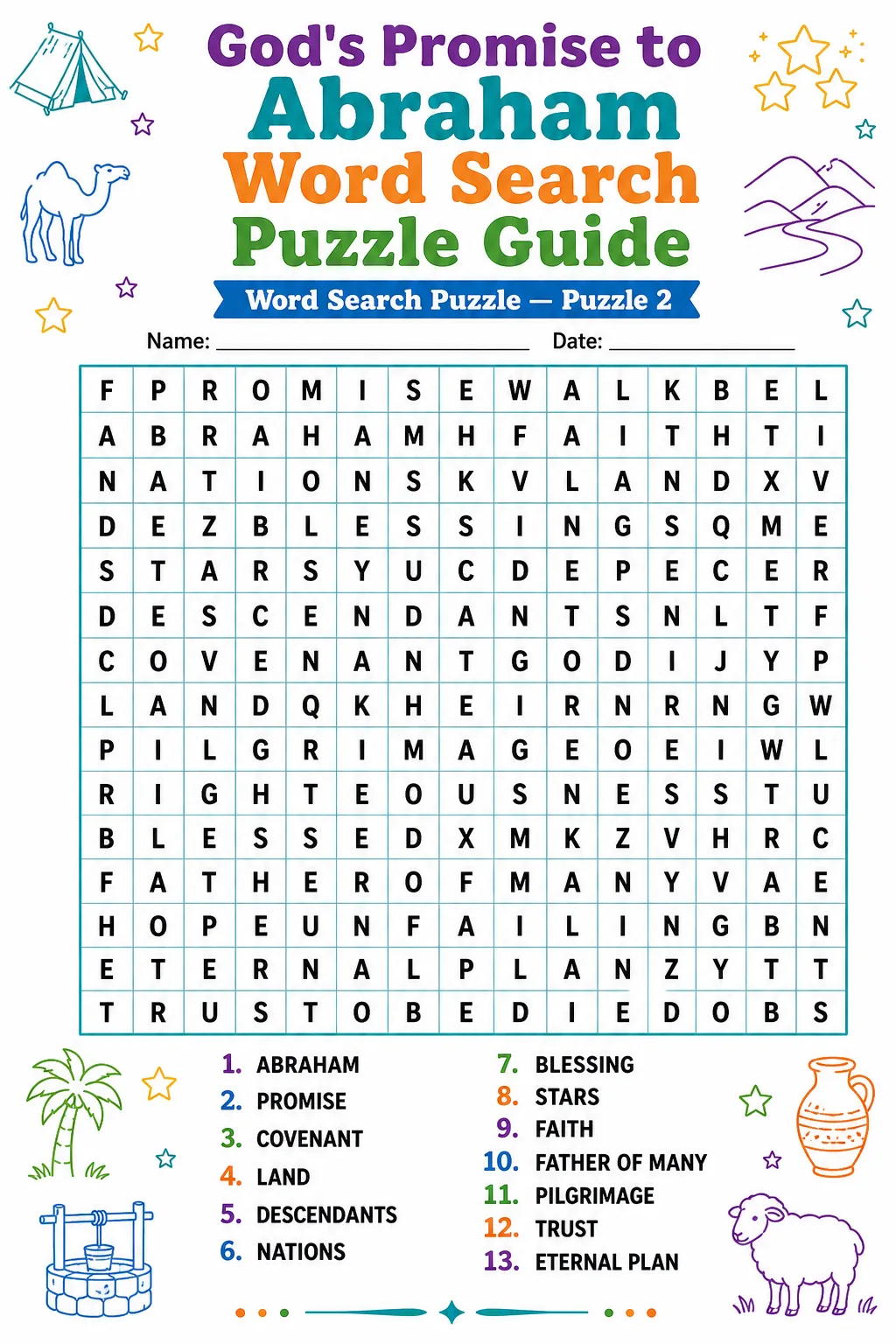
Next, decide on the grid size based on the target age group and difficulty level. For younger children, smaller grids with fewer words work best, while older participants can handle larger grids with more words. Place each word carefully in the grid, making sure they do not overlap incorrectly and that every letter is part of at least one word. Fill remaining empty spaces with random letters to complete the puzzle and make it visually appealing.
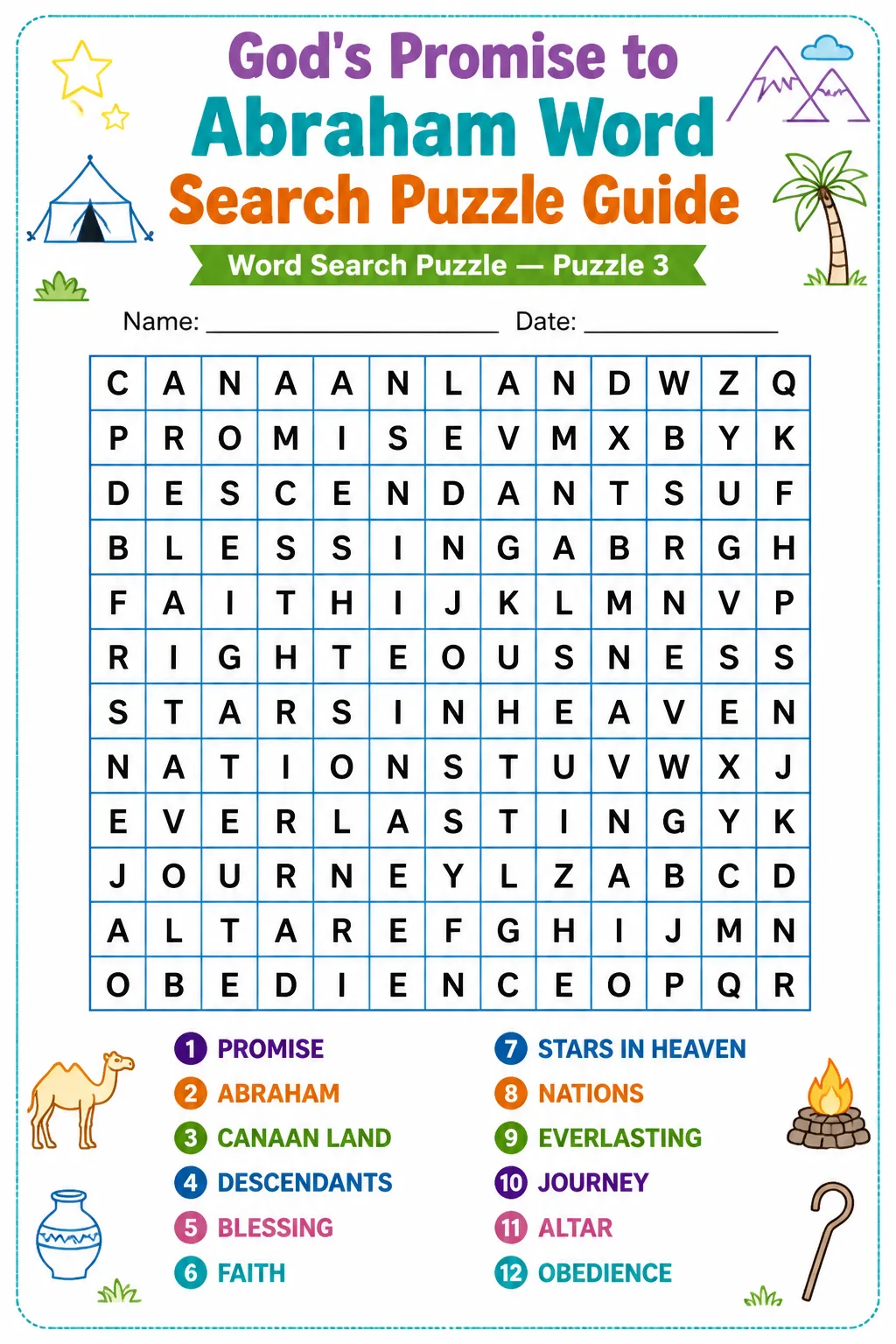
Finally, test the puzzle by solving it yourself or having someone else try it. Check that all words are correctly placed and can be found without ambiguity. Provide a word list alongside the puzzle and consider adding a brief explanation or biblical context for each term. This enhances the educational value and helps solvers connect with the story behind the words.
Grid Size and Grade Guidance
What Changes Difficulty?
Input Limits and Skipped Words
When creating a God's promise to Abraham word search puzzle, it's important to understand the input constraints to ensure the puzzle remains solvable and visually clear. Typically, the grid size limits the number of words that can be included; attempting to add too many words can overcrowd the puzzle, making it frustrating to solve. Words that are too long to fit in the chosen grid or that cannot be placed without overlapping incorrectly are usually skipped during the puzzle generation process. This helps maintain the puzzle’s integrity and readability.
Additionally, certain input words may be rejected if they contain invalid characters or spaces that disrupt the grid structure. It is best to use single, continuous words or hyphenated terms if necessary. The puzzle creator should prioritize key thematic words and remove or replace less essential ones to fit within these constraints. Understanding these limits and how skipped words are handled ensures the final printable word search is balanced, engaging, and educational.
FAQ
For children, a grid size between 10×10 and 12×12 is ideal. This size allows enough space to include key words related to God's promise to Abraham without overwhelming young solvers. It balances challenge and accessibility, helping kids build vocabulary and concentration skills effectively.
Select words that are directly connected to the biblical story or theme you want to highlight. For the God's promise to Abraham puzzle, focus on names, places, and important terms like 'Covenant,' 'Promise,' and 'Isaac.' Ensure the words vary in length and complexity to create a balanced and engaging puzzle.
Yes, increasing the grid size, adding more words, and including words placed diagonally or backwards can raise the difficulty. Using longer or less common words related to the theme also enhances the challenge, making the puzzle more stimulating for adult solvers.
Testing ensures all words are correctly placed and solvable, preventing frustration for users. It helps identify any errors such as missing words, incorrect spellings, or ambiguous letter placements, ensuring a smooth and enjoyable solving experience.
Use the puzzle as a fun activity to reinforce the story of Abraham’s covenant with God. It can serve as a warm-up, review, or homework assignment that encourages students to recall key terms and concepts, enhancing their biblical literacy in an interactive way.
If certain words are too long or numerous to fit, consider reducing the word list or increasing the grid size. Alternatively, prioritize the most important words related to the theme to maintain clarity and solvability without overcrowding the puzzle.
Final Thoughts
Creating a God's promise to Abraham word search puzzle is a rewarding way to combine biblical education with engaging activities. By following the detailed instructions and tips provided, you can design puzzles that are both fun and meaningful, tailored to various age groups and skill levels. Avoiding common mistakes and understanding difficulty factors will help you produce high-quality printable puzzles that reinforce scripture knowledge effectively. Whether for classroom use, family devotion, or personal enrichment, these word searches offer a creative method to explore and remember the promises God made to Abraham.
Gallery
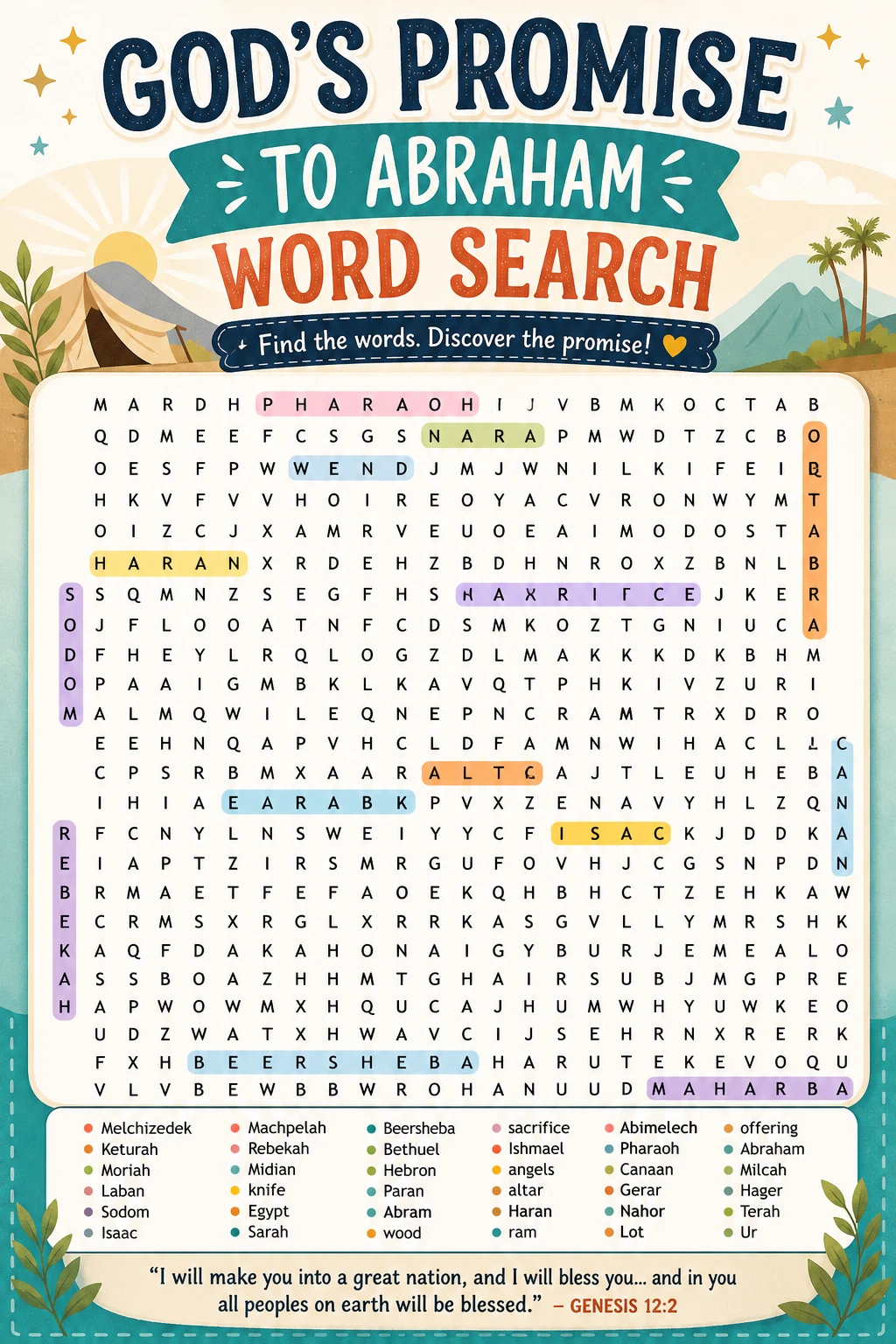
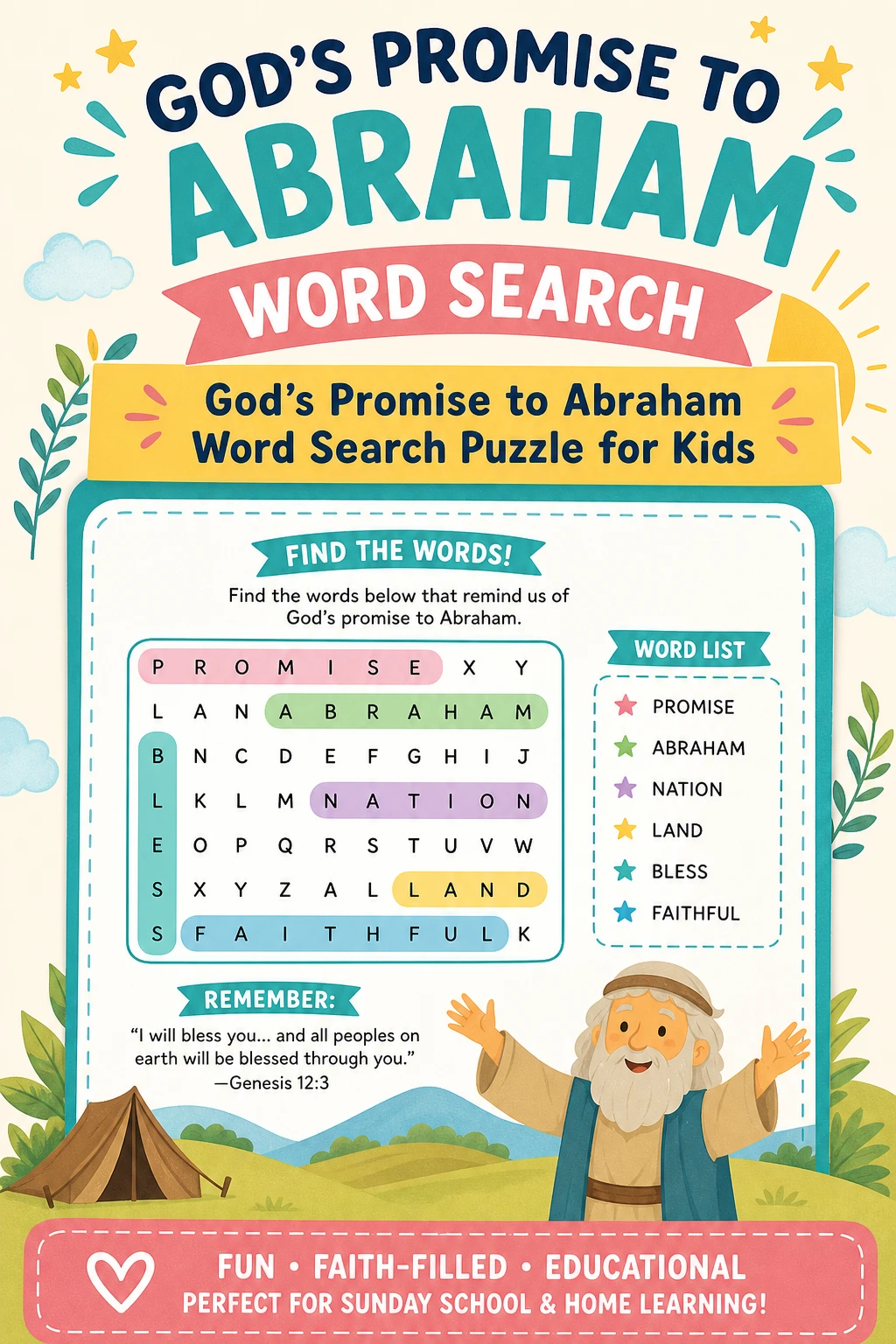
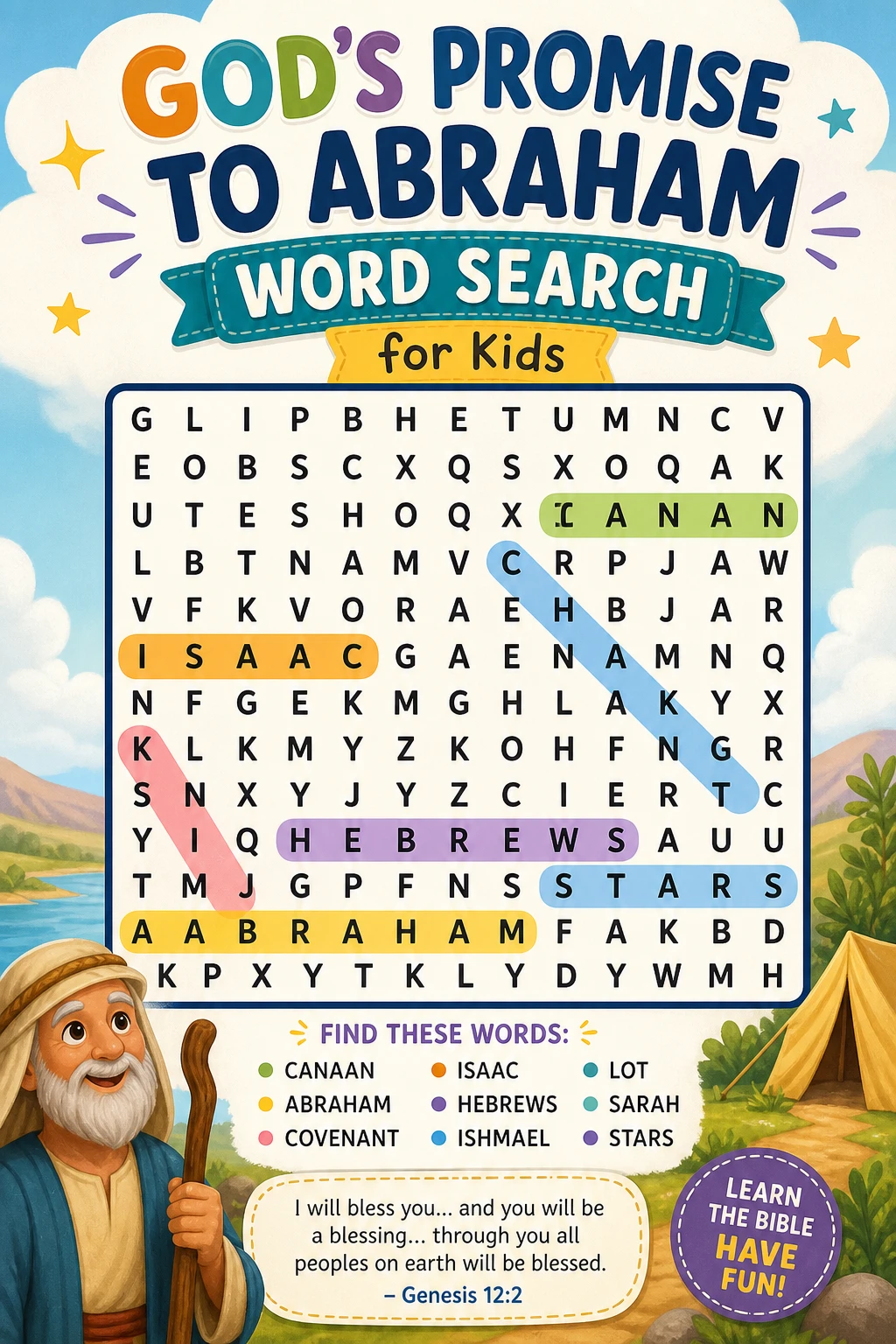
Start with a clear theme and select relevant words to maintain focus and educational value.
Adjust the puzzle grid size to suit the intended audience’s age and abilities for optimal engagement.
Incorporate a variety of word directions to keep the puzzle interesting and challenging.
Provide a word list and brief explanations to enhance learning and context for solvers.
You Might Also Like



Leave a Reply