

Discover how to create and understand custom printable Thanksgiving word search puzzles with this comprehensive guide. Perfect for educators, parents, and puzzle enthusiasts, this article explores the benefits of word searches, step-by-step instructions for crafting your own, and practical tips to enhance puzzle quality. Learn about grid sizes, difficulty factors, and common pitfalls to avoid, ensuring your Thanksgiving-themed word search is both fun and educational for all ages.
Introduction
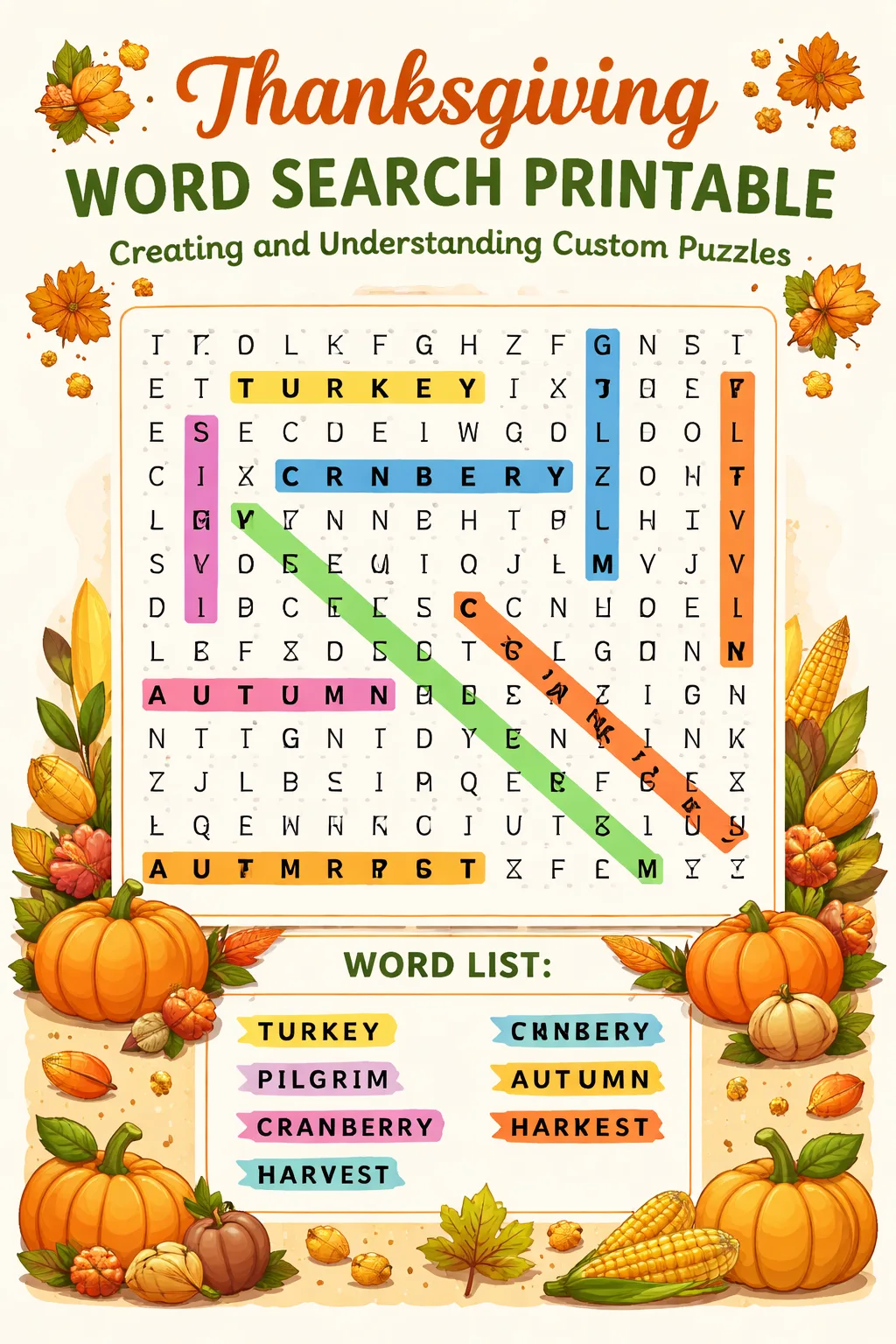
Word search puzzles have long been a beloved activity for children and adults alike, offering a fun and engaging way to improve vocabulary, concentration, and pattern recognition. When themed around Thanksgiving, these puzzles become even more special, connecting players to the holiday's spirit through words related to traditions, foods, and celebrations. Creating a custom printable Thanksgiving word search allows you to tailor the difficulty and content to your audience, whether it’s for a classroom, family gathering, or solo enjoyment. This article will guide you through the process of designing your own puzzle, understanding the elements that influence its challenge, and maximizing its educational value. By the end, you’ll be equipped to produce a festive, high-quality word search that brings joy and learning together.
How To Do It
Begin by selecting a list of Thanksgiving-related words that suit the age and skill level of your target audience. Include a variety of word lengths and complexity, such as 'turkey,' 'harvest,' 'gratitude,' and 'pilgrim.' Aim for a balanced list that is neither too short nor overwhelmingly long, typically between 10 to 20 words depending on the grid size. This foundational step ensures the puzzle is thematically relevant and engaging.
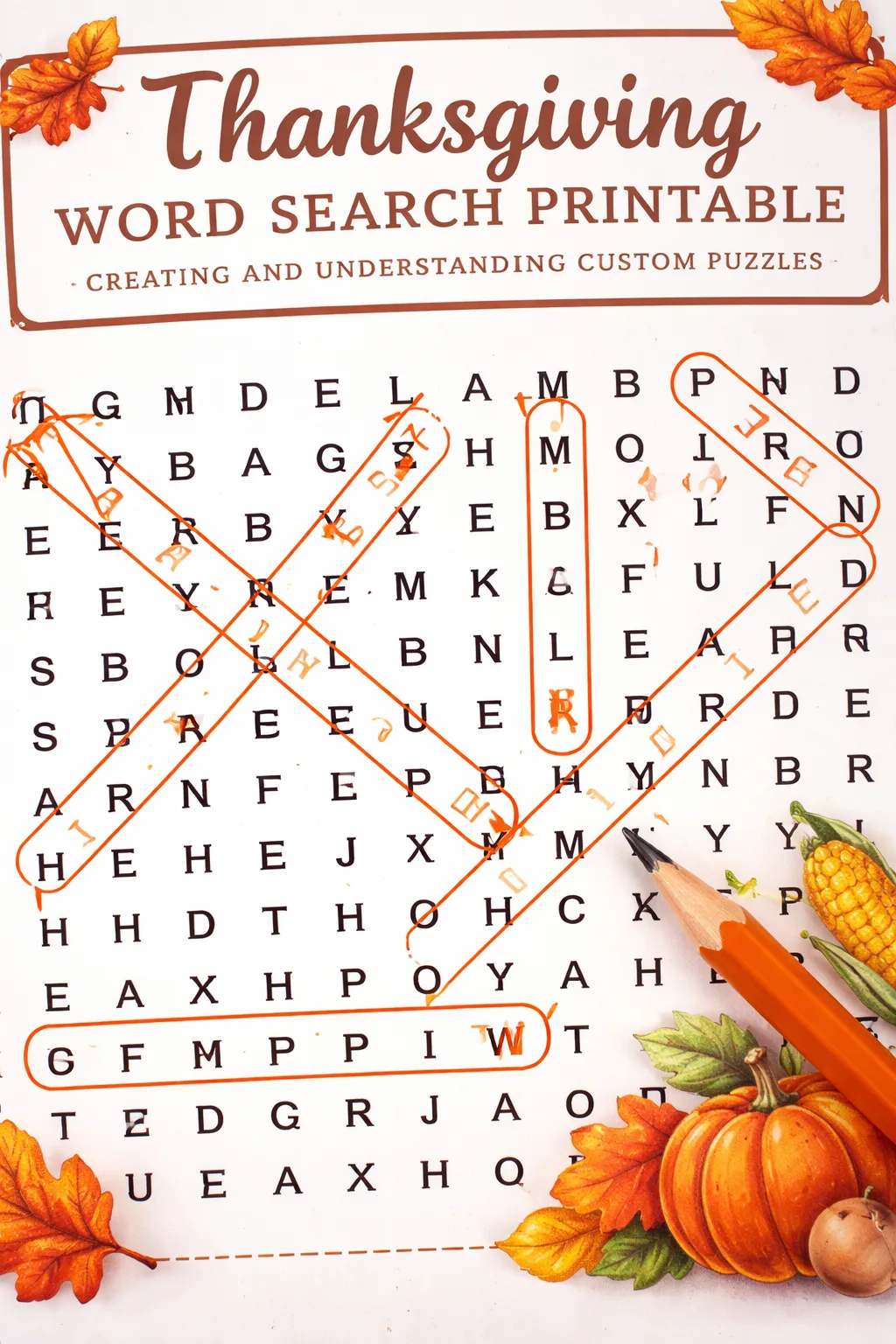
Choose an appropriate grid size based on the difficulty and the number of words you want to include. For younger children, smaller grids with fewer words are ideal, while older players can handle larger grids with more complex word placements. Arrange the words horizontally, vertically, diagonally, and even backwards to increase challenge. Fill the remaining empty spaces with random letters to complete the grid, ensuring the puzzle looks balanced and visually appealing.
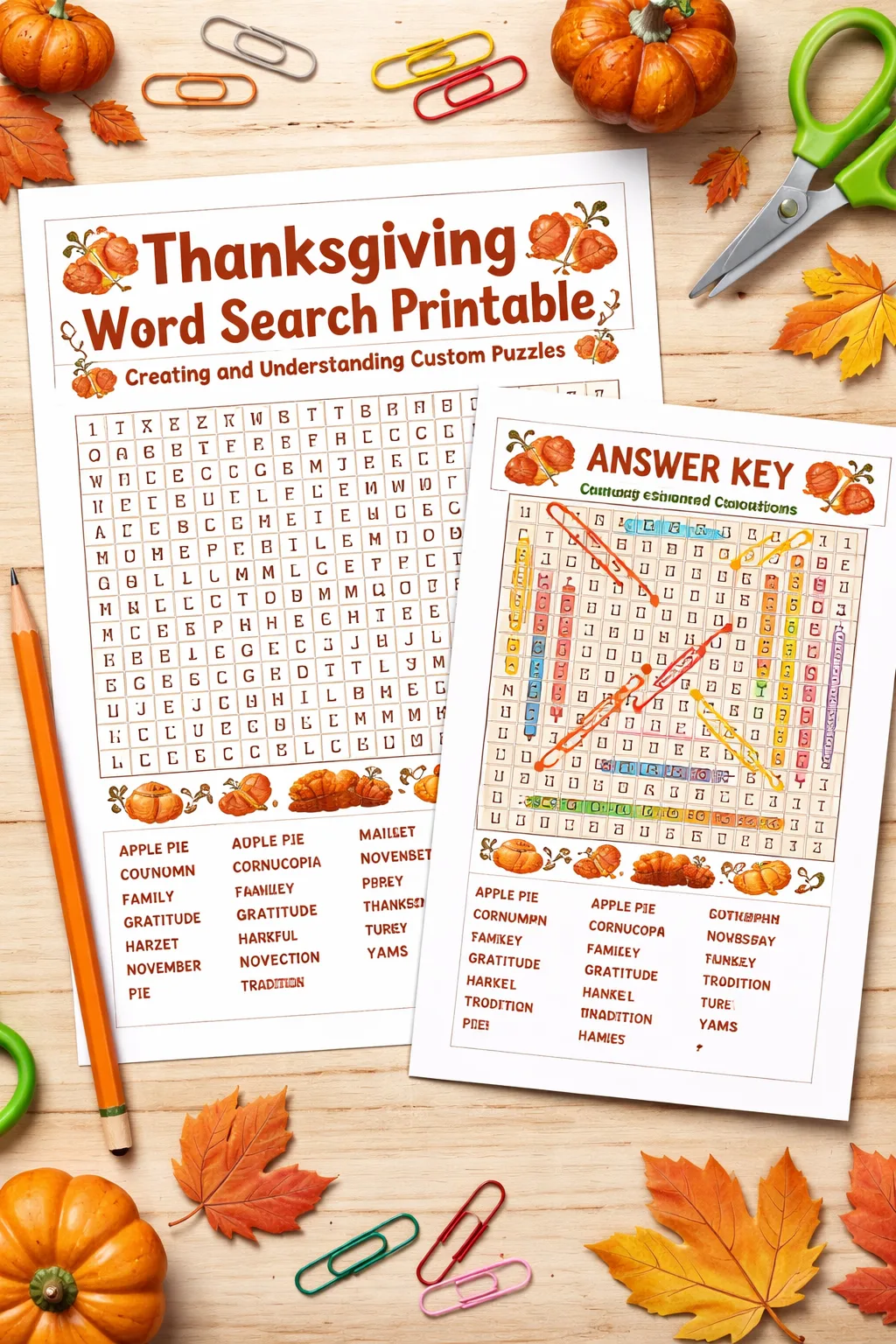
Once the grid is complete, create an answer key by highlighting or listing the locations of each word within the puzzle. This helps players verify their solutions and provides a reference for educators or parents. Finally, format the puzzle and answer key into a printable layout, making sure the font is clear and the design is festive yet uncluttered. This step ensures your Thanksgiving word search is ready for distribution and use.
Grid Size and Grade Guidance
What Changes Difficulty?
Input Limits and Skipped Words
When creating a Thanksgiving word search printable, it is important to consider input limits related to grid size and word count. Most printable puzzles function best when the number of words is balanced with the grid dimensions; too many words can overcrowd the puzzle, making it difficult to solve, while too few can result in a sparse and less engaging experience. Additionally, words that are excessively long or contain special characters may not fit well within the grid constraints. In such cases, these words are typically skipped or replaced to maintain puzzle integrity.
Another consideration is the handling of duplicate or very similar words. To avoid confusion and redundancy, these are often omitted during the input process. Puzzle creators should review their word lists carefully to ensure each entry contributes uniquely to the theme and challenge. By respecting these input limits and managing skipped words thoughtfully, you can produce a well-structured, enjoyable Thanksgiving word search that is both printable and playable across various age groups and skill levels.
FAQ
The ideal number of words depends on the grid size and the target age group. For younger children, 10 to 12 words in a 10×10 grid work well, while older children and adults can handle 15 to 20 words in grids sized 15×15 or larger. Balancing word count with grid size ensures the puzzle is neither too easy nor too overwhelming.
To increase difficulty, use larger grids and include words placed diagonally and backwards. Adding longer or less common words related to Thanksgiving traditions also raises the challenge. Avoid providing word lists for advanced players to encourage discovery and improve problem-solving skills.
Absolutely. Adjust the grid size, word list complexity, and word orientations to match the cognitive abilities of your audience. Younger children benefit from smaller grids and simpler words, while older players enjoy bigger puzzles with diverse word placements and more complex vocabulary.
An answer key allows players to check their solutions, ensuring they have found all the words correctly. It also helps educators and parents provide guidance and support. Without an answer key, users may become frustrated or unsure if they completed the puzzle accurately.
Effective themes include Thanksgiving foods (like turkey, cranberry), historical terms (pilgrim, harvest), emotions (gratitude, family), and holiday activities (parade, feast). These themes enrich the puzzle’s educational and cultural relevance, making it more engaging and meaningful.
If a selected word cannot be placed due to grid constraints, consider resizing the grid or substituting the word with a shorter or more fitting alternative. Prioritizing word fit ensures the puzzle remains balanced and solvable without overcrowding.
Final Thoughts
Creating a custom printable Thanksgiving word search puzzle is a rewarding way to celebrate the holiday while promoting learning and fun. By carefully selecting words, choosing the right grid size, and considering difficulty factors, you can design puzzles that delight players of all ages. This guide has equipped you with the knowledge and practical tips needed to craft engaging and educational word searches. Whether for classroom use, family gatherings, or personal enjoyment, your Thanksgiving word search will be a festive activity that brings joy and a sense of accomplishment. Embrace the creative process and watch as your puzzle becomes a cherished part of holiday traditions.
Start with a clear theme to keep your word list focused and relevant.
Use software or puzzle generators as a starting point, then customize manually for a personal touch.
Print test copies to check readability and difficulty before final distribution.
Include a mix of easy and challenging words to maintain interest throughout the puzzle.
You Might Also Like



Leave a Reply