

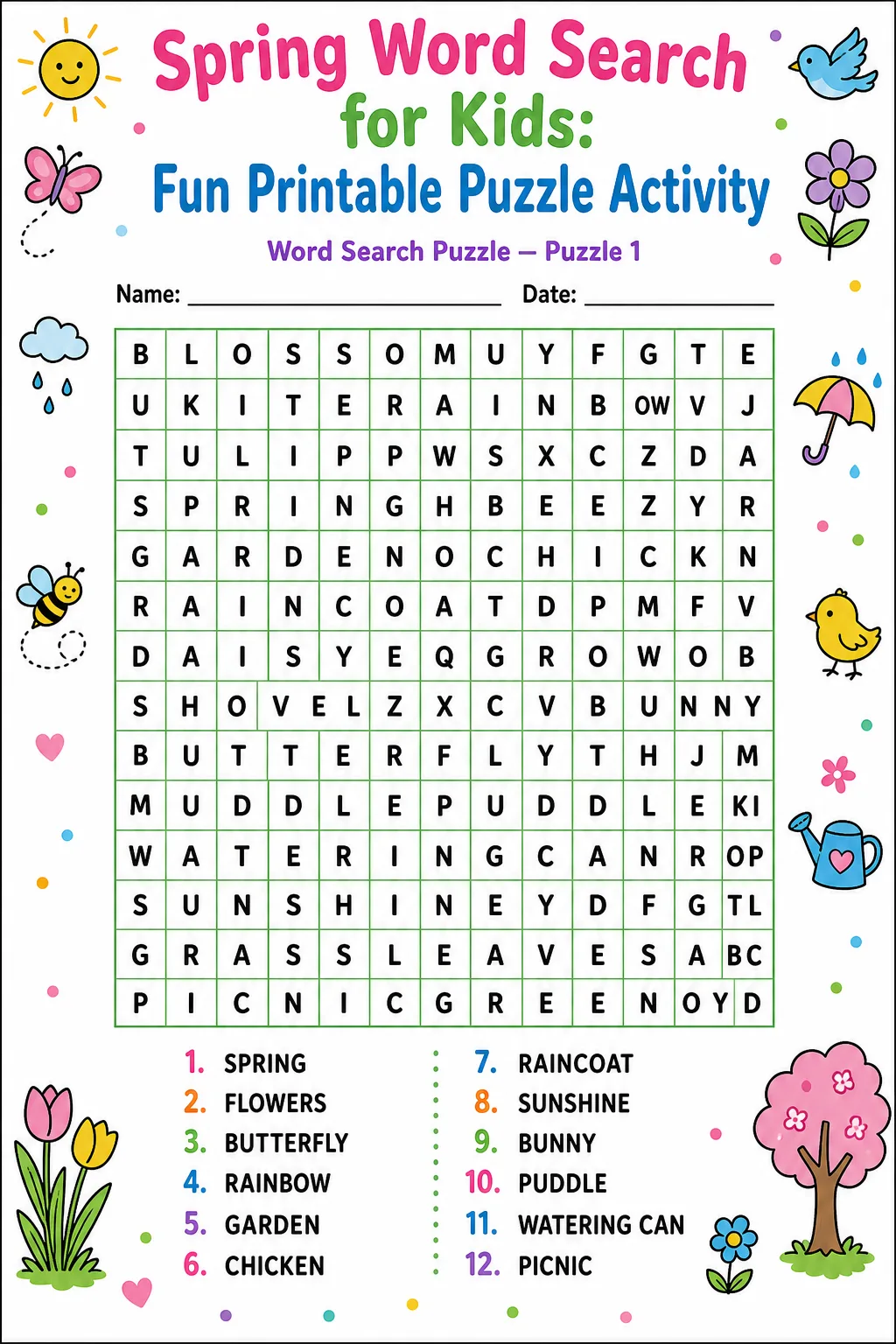
The spring word search for kids is a delightful printable puzzle designed to engage children with seasonal vocabulary. This activity helps improve spelling, word recognition, and concentration while celebrating the joys of spring. Perfect for classrooms or home use, it combines learning with fun in a fresh, seasonal theme.
Introduction
Welcome to Spring Word Search for Kids
Spring word search for kids is a wonderful way to introduce children to the season's vocabulary while sharpening their reading and cognitive skills. This printable puzzle features words related to springtime, such as flowers, animals, and weather, making it both educational and entertaining. Children can enjoy searching for these words hidden in a grid, which helps build their attention to detail and spelling abilities.
Whether used in a classroom setting or as a fun home activity, this spring-themed word search encourages kids to engage with language through play. It also provides a quiet, screen-free pastime that supports learning in a relaxed environment. By exploring this puzzle, children not only learn new words but also develop patience and problem-solving skills.
Story
How the Spring Word Search for Kids Came to Be
One rainy spring afternoon, I was looking for a fun way to keep my children entertained while also encouraging their learning. I wanted an activity that combined the excitement of the season with a challenge that would help their reading skills. That’s when the idea of a spring word search for kids came to life. I gathered words about flowers, rain, and animals that come alive during spring, then created a puzzle that was both fun and educational.
My kids loved searching for the words, and it sparked conversations about the changing season around us. This simple activity turned a gloomy day into a joyful learning experience. Since then, I’ve shared this spring word search with other parents and teachers who wanted a creative way to engage children in vocabulary practice tied to the season’s themes.
How To Do It
Why This Works
Benefits of Spring Word Search for Kids
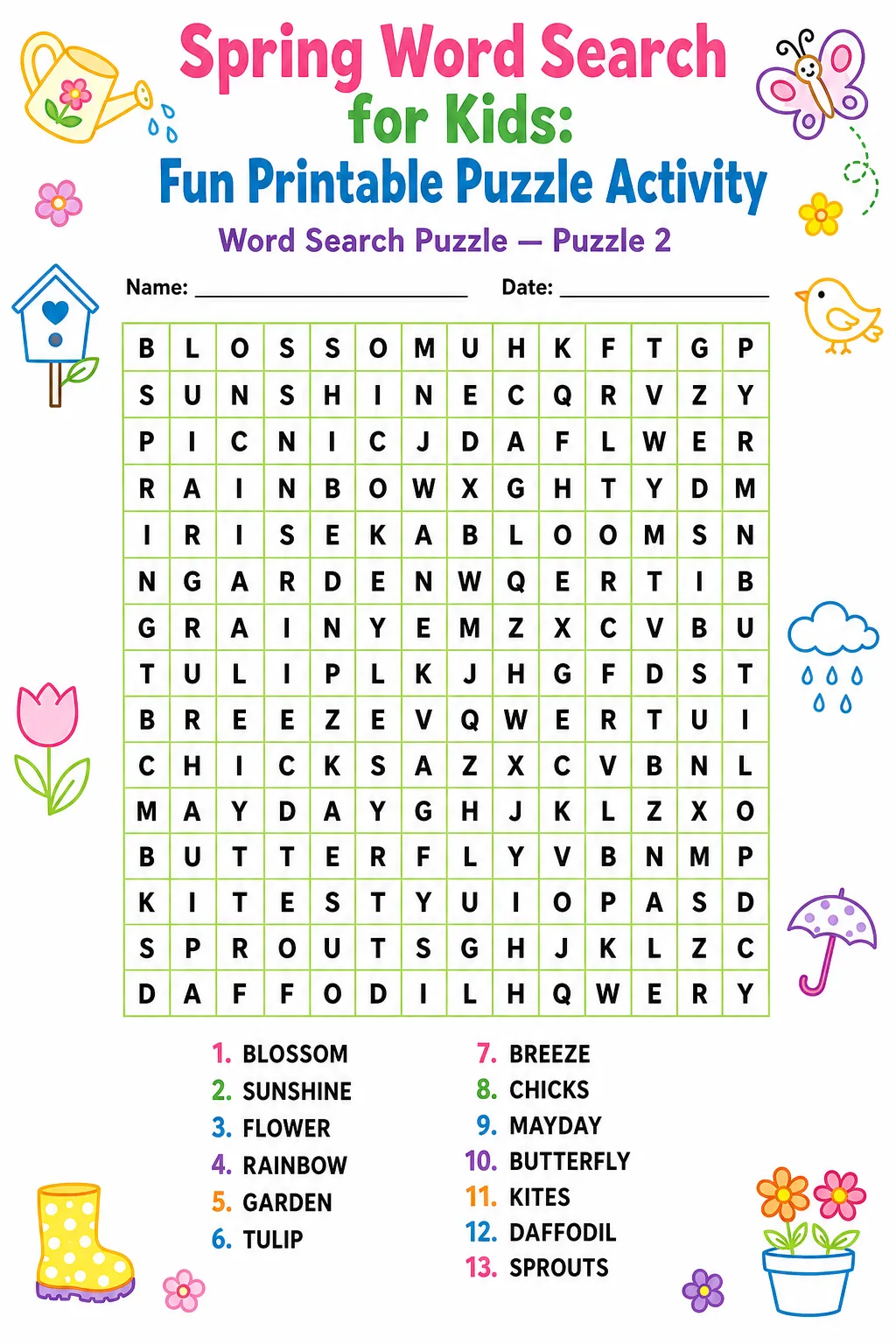
This post works because it combines the educational benefits of word search puzzles with the engaging theme of spring, which naturally interests children. Word searches help improve vocabulary, spelling, and pattern recognition, all essential skills for early literacy development. Additionally, they encourage focus and patience, which are valuable for academic success.
By offering a printable spring word search, this guide provides a ready-to-use resource that teachers and parents can easily implement. The detailed instructions and tips help users create customized puzzles, enhancing the learning experience. Moreover, the seasonal theme connects children to nature and the changing environment, making learning more relevant and enjoyable.
Overall, this post supports both fun and education, making it a practical tool for fostering language skills while celebrating the freshness of spring.
FAQ
Pro Tips
Common Mistakes to Avoid
Final Thoughts
Creating and using a spring word search for kids is a simple yet effective way to combine fun with learning. This puzzle helps children develop important language skills while connecting them to the season’s themes. Whether at home or in the classroom, it offers an engaging activity that supports vocabulary growth and concentration.
By following the steps and tips provided, anyone can craft a custom word search that fits their needs and challenges children appropriately. Embrace the joy of spring and learning by incorporating these puzzles into your educational toolkit today.
Keep the word list clear and easy to read to help children find words efficiently.
Use seasonal themes like spring to make puzzles more engaging and relatable.
Test the puzzle yourself to ensure all words fit well and the difficulty is appropriate.
Encourage kids to say the words aloud as they find them to reinforce spelling and pronunciation.
Gallery
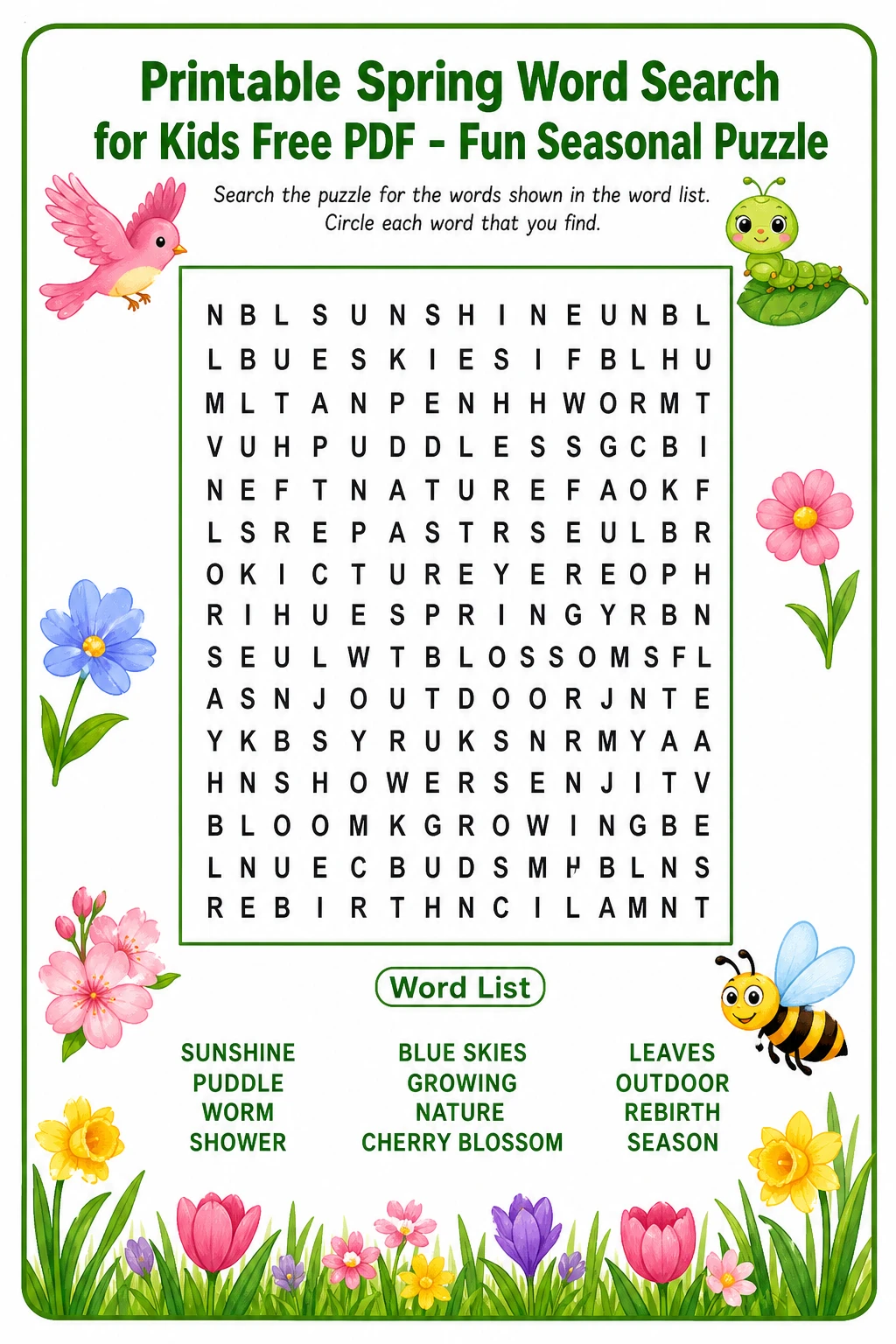
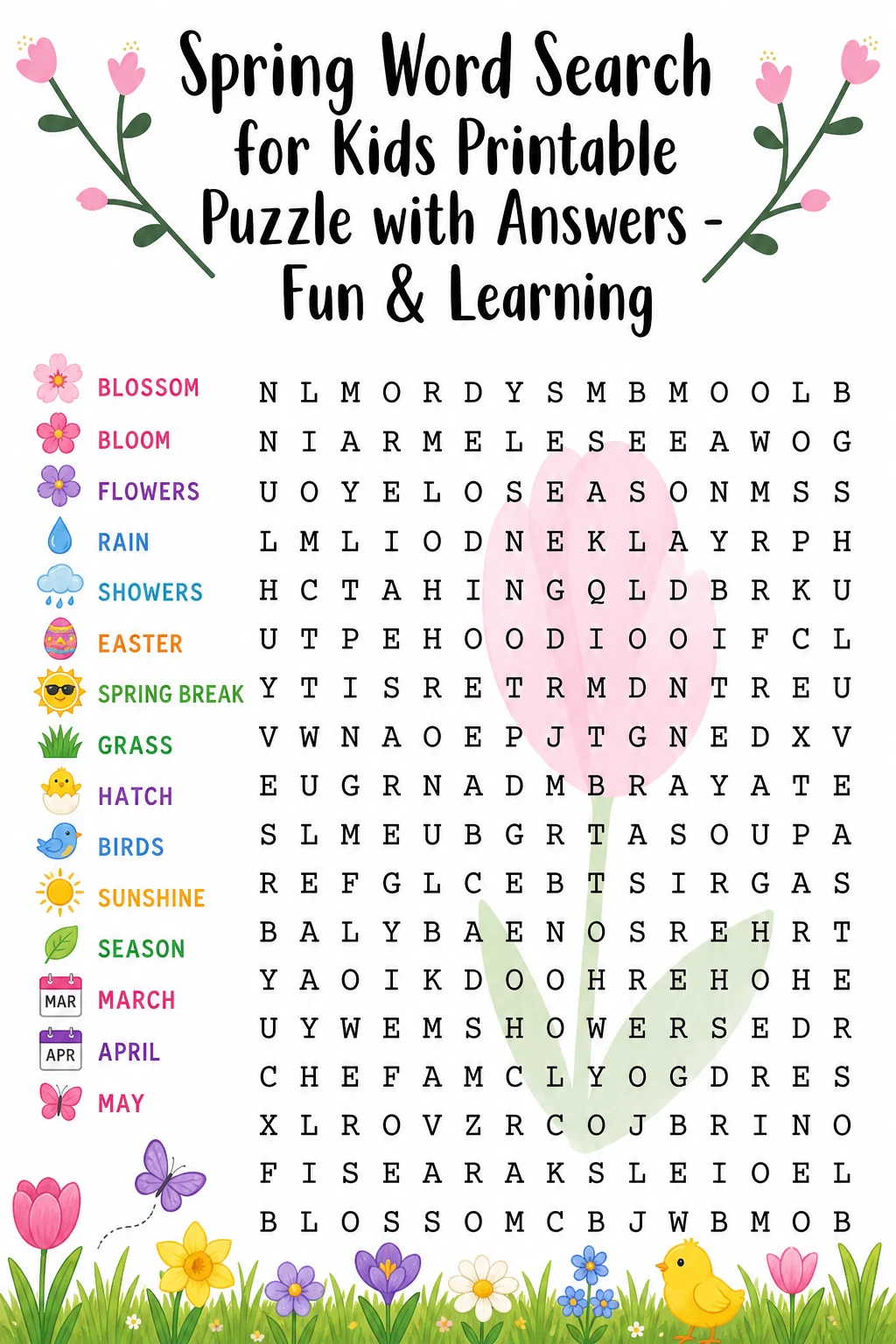
Create puzzle
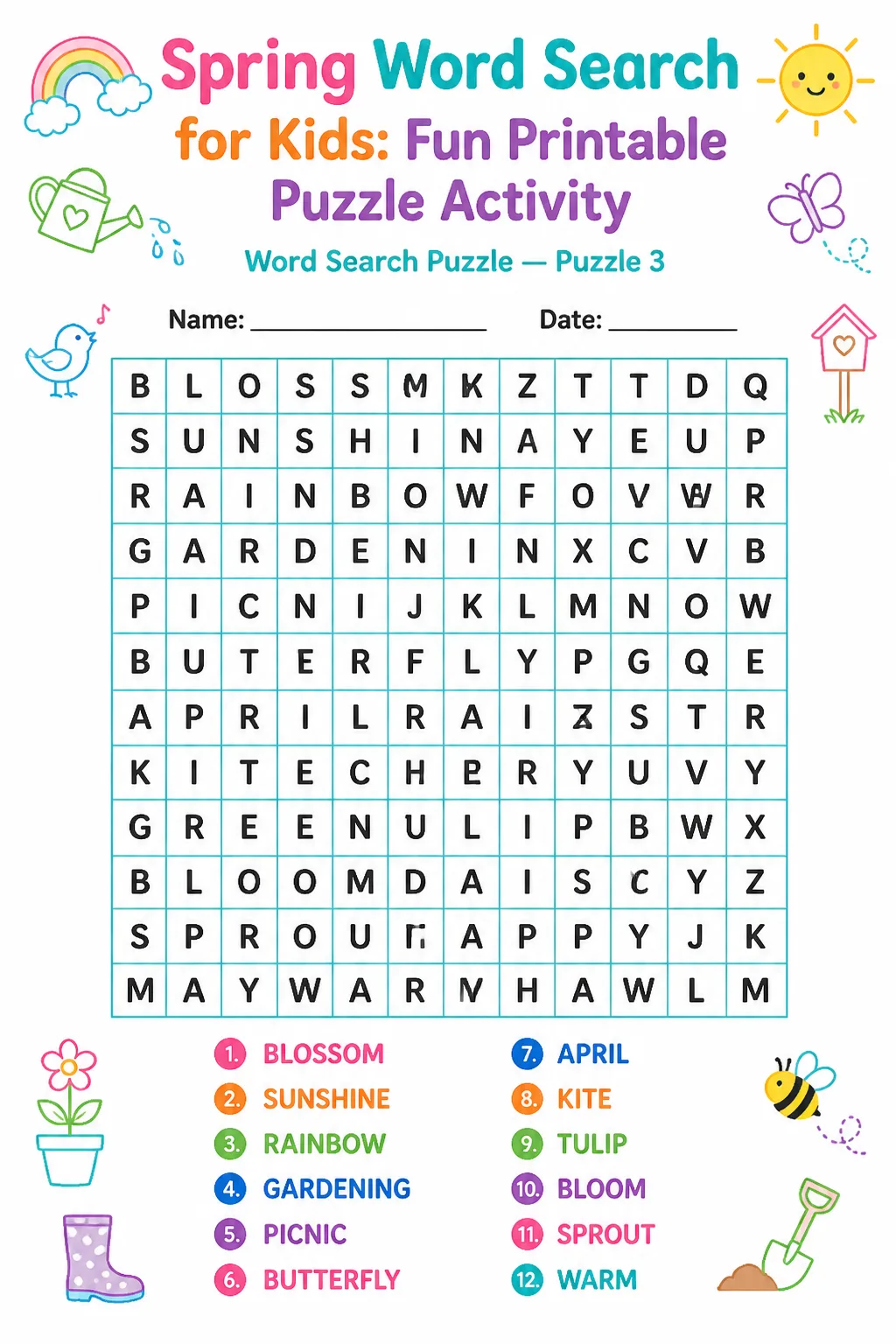
Creating a custom spring word search puzzle starts with choosing a theme and a list of words related to spring, such as flowers, weather, and animals. Consider the age group of the children to decide on the length and complexity of the words. For younger kids, select shorter, simpler words, while older children can handle longer or more challenging vocabulary.
Next, pick a grid size that matches the difficulty level. Smaller grids with fewer words are best for younger children, while larger grids with more words and directions like diagonal or backward placements increase the challenge for older kids. Keep in mind that very long words or those with spaces and special characters might be difficult to fit and could be skipped.
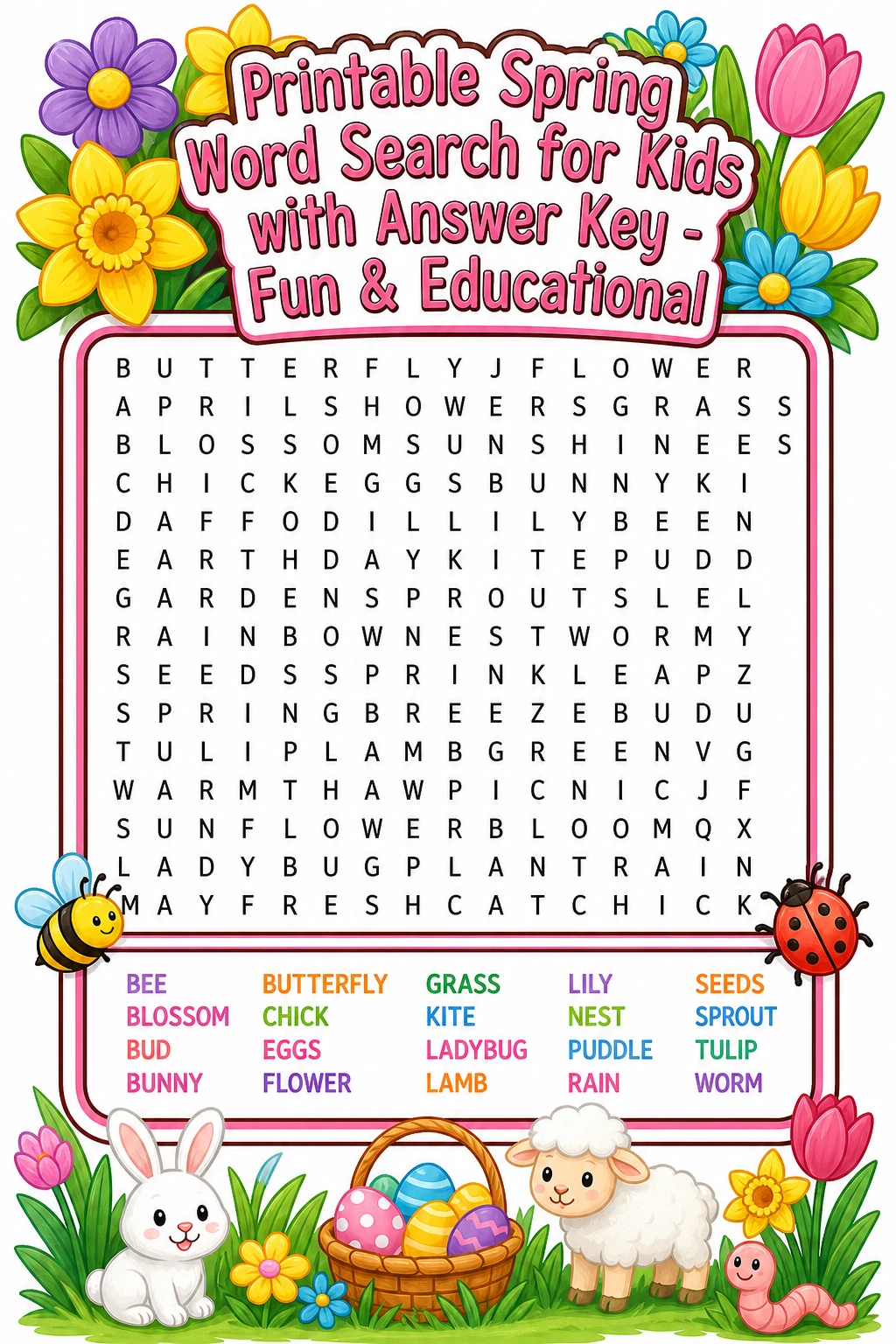
Once the word list and grid size are set, place the words into the grid carefully, making sure they fit without overlapping incorrectly. Fill the remaining spaces with random letters to complete the puzzle. Finally, provide a clear word list so children know what to look for. This approach allows you to tailor the puzzle to your audience, making learning both fun and effective.



Leave a Reply