

Creating custom printable word search puzzles tailored specifically for 10-year-old kids offers an engaging way to boost vocabulary, improve pattern recognition, and provide screen-free entertainment. This article explores how to design effective word searches that balance challenge and fun, ensuring children remain motivated while learning. With detailed instructions, tips, and guidance on grid sizes and difficulty, parents and educators can craft puzzles that perfectly suit this age group’s abilities and interests.
Introduction
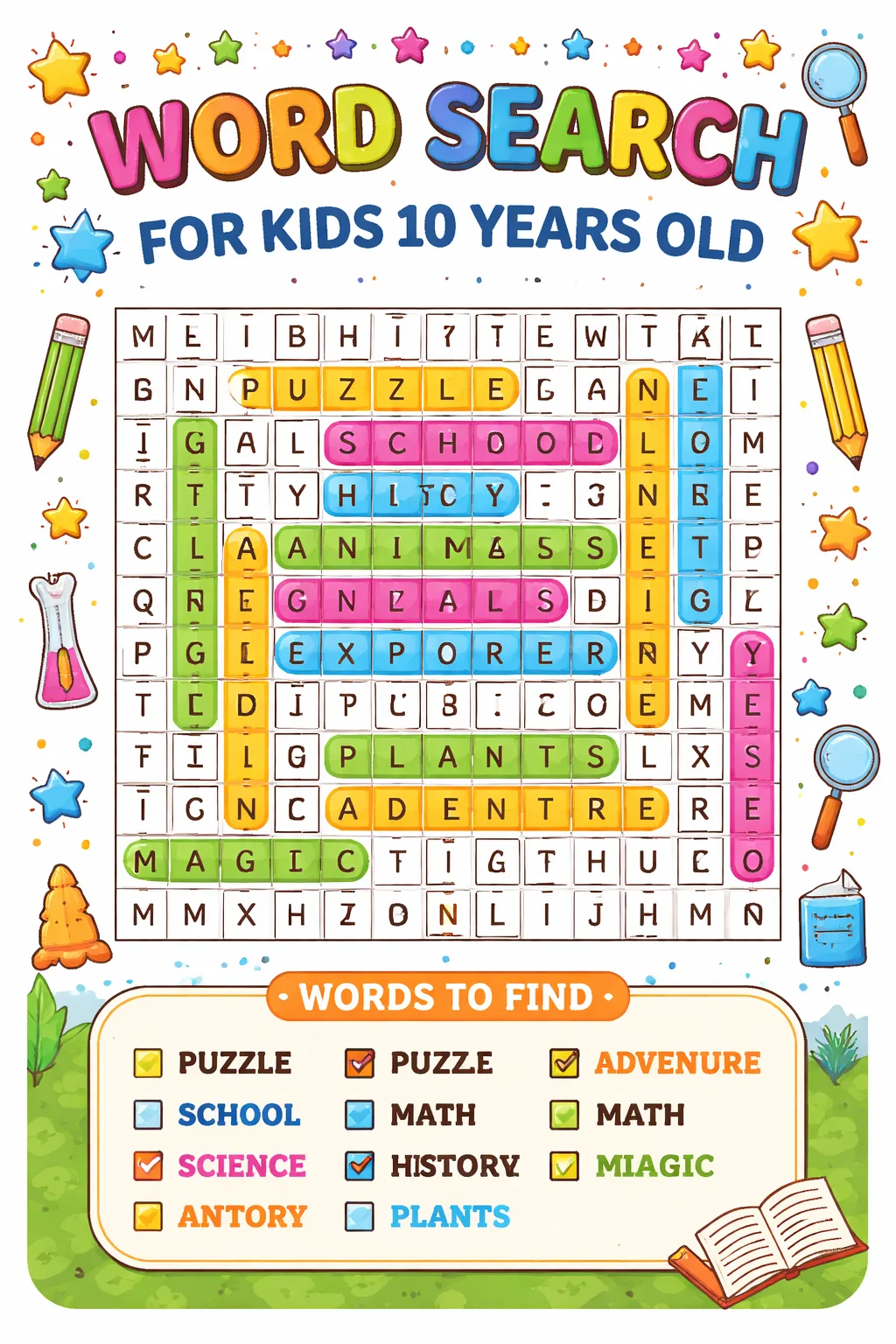
Word search puzzles have long been a favorite pastime for children, combining fun with educational benefits. For kids around 10 years old, these puzzles can be particularly effective in enhancing spelling skills, expanding vocabulary, and developing concentration. Designing custom printable word searches allows you to tailor the difficulty and themes to match the child’s interests and learning level. This article will guide you through the process of creating word search puzzles specifically suited for 10-year-olds, highlighting important considerations such as grid size, word selection, and difficulty factors. Whether you’re a parent, teacher, or caregiver, this comprehensive guide will empower you to create engaging and educational puzzles that children will enjoy solving time and again.
How To Do It
Begin by selecting a theme or topic that interests the child, such as popular games, animals, or school subjects. Choose a list of words related to this theme, aiming for around 15 to 20 words to keep the puzzle engaging but not overwhelming. Ensure the words are age-appropriate in length and complexity, helping to reinforce vocabulary without causing frustration.
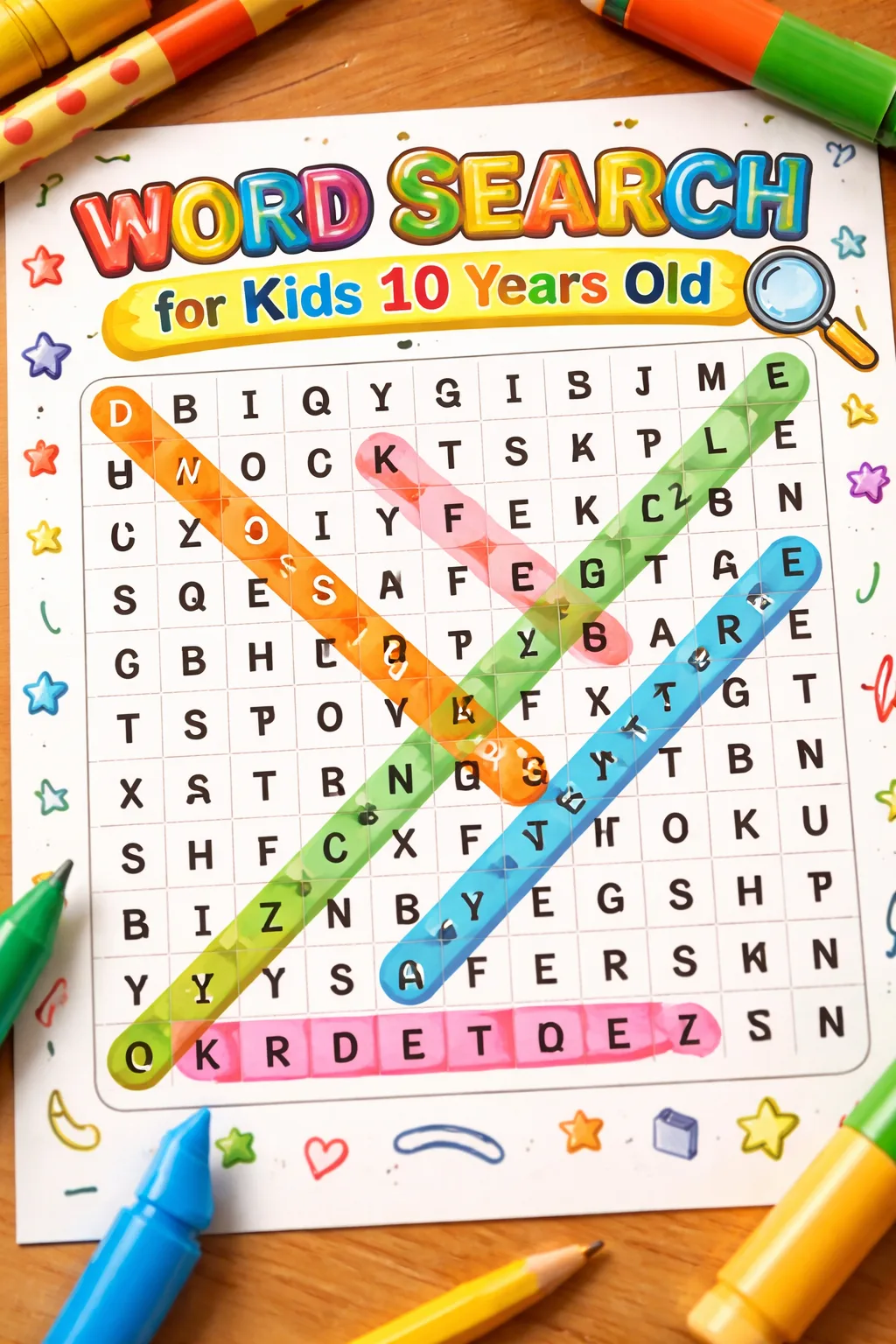
Decide on the grid size based on the number of words and the child’s skill level. For 10-year-olds, grids typically range from 12×12 to 15×15 squares. Larger grids allow for longer words and more complexity, while smaller grids keep the puzzle simpler. Use a mix of horizontal, vertical, and diagonal placements to increase challenge, but avoid overly complex arrangements that may discourage young solvers.
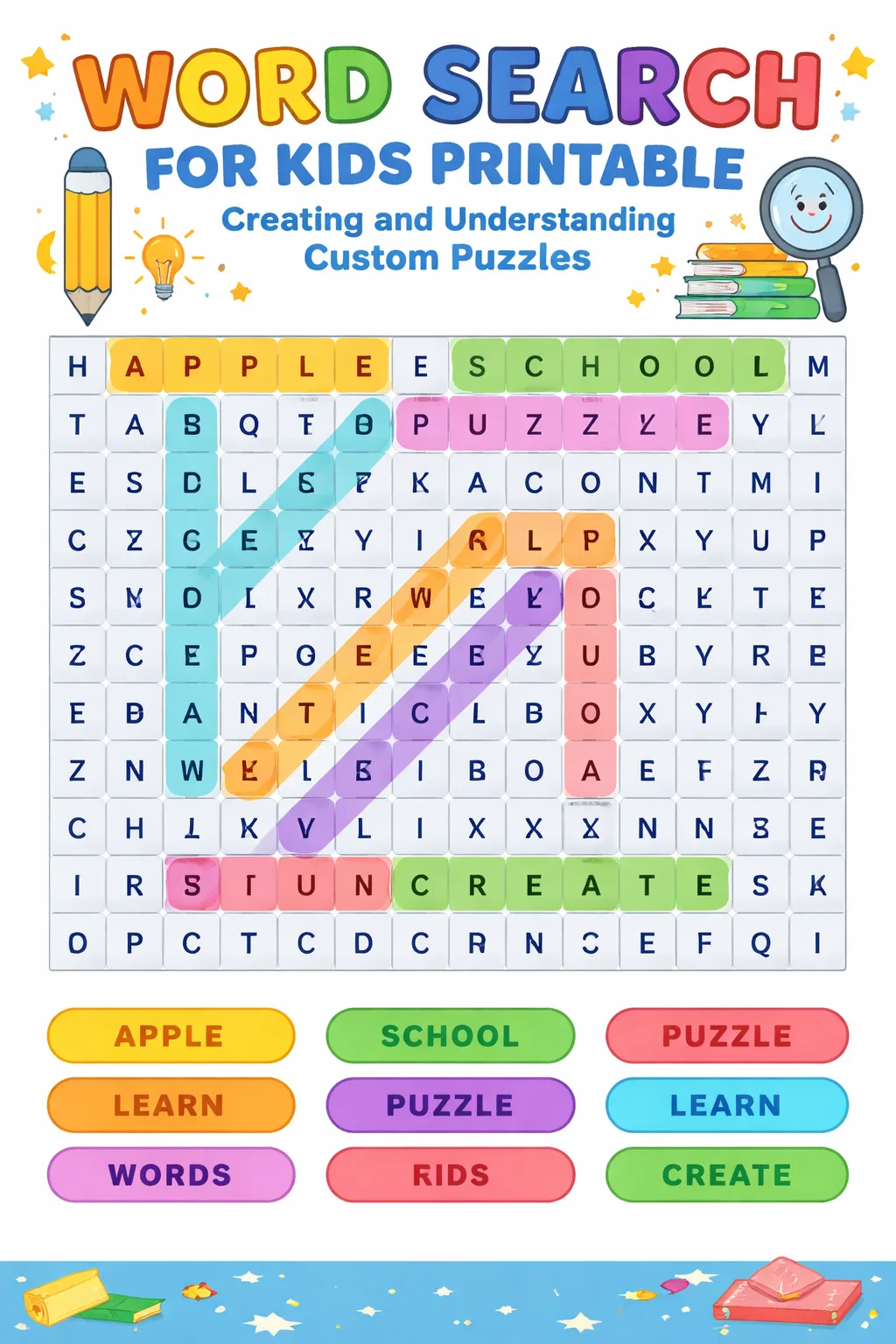
After placing the words in the grid, fill the remaining empty spaces with random letters to complete the puzzle. Double-check that all words are correctly spelled and fully visible. Finally, provide a word list alongside the puzzle for reference. Print the puzzle on a clean, easy-to-read layout, and consider including instructions or hints to guide the child through solving the word search effectively.
Grid Size and Grade Guidance
What Changes Difficulty?
Input Limits and Skipped Words
When creating a word search puzzle for 10-year-olds, it is important to consider input limits to maintain a balanced and solvable puzzle. Typically, the maximum number of words that can fit comfortably depends on the grid size. For example, a 12×12 grid can usually accommodate around 15 to 18 words without overcrowding. Attempting to include too many words can lead to a cluttered puzzle that is frustrating and difficult to solve.
Additionally, words that are excessively long or contain unusual letter combinations may not fit into the grid properly, especially if the puzzle design restricts word placement to certain orientations. In such cases, these words may be skipped or replaced to preserve the puzzle’s integrity. It is advisable to review the word list carefully before finalizing the puzzle to ensure all included words fit well within the grid and contribute to an enjoyable solving experience.
Handling skipped words thoughtfully is crucial. Instead of forcing all words into the puzzle, prioritize those that best fit the theme and the solver’s skill level. Skipped words can be saved for future puzzles or used in different formats. This approach ensures that each word search remains clear, engaging, and educational, avoiding unnecessary complexity that could discourage young solvers.
Overall, respecting input limits and managing skipped words effectively helps maintain a high-quality word search puzzle that is both fun and appropriately challenging for 10-year-old children.
FAQ
The ideal grid size for kids aged 10 typically ranges between 12×12 and 15×15 squares. This size accommodates a moderate number of words—usually between 15 and 20—allowing for a balanced challenge that is neither too easy nor too difficult. Larger grids can be used for more advanced solvers or longer words, but it’s important to keep the puzzle manageable to maintain engagement.
Including around 15 to 20 words is optimal for 10-year-olds. This quantity provides enough variety to keep the puzzle interesting without overwhelming the child. The words should be carefully selected to match the child’s vocabulary level and the puzzle’s theme, ensuring a rewarding and educational experience.
Yes, incorporating diagonal and backward words adds an appropriate level of challenge for 10-year-olds, who are developing stronger pattern recognition skills. However, it’s important to balance these orientations with more straightforward placements to avoid making the puzzle too difficult or discouraging for younger solvers.
To ensure the puzzle is educational, select words that reinforce vocabulary related to the child’s current learning topics or interests. Providing definitions or hints alongside the word list can deepen understanding. Additionally, designing puzzles that promote concentration and problem-solving skills contributes to cognitive development while keeping the activity enjoyable.
If certain words don’t fit, consider adjusting the grid size or replacing longer words with shorter alternatives. It’s better to maintain a clean, solvable puzzle than to force words in awkwardly. Alternatively, you can omit some words and save them for a future puzzle, ensuring each puzzle remains balanced and engaging.
Printable word searches offer tangible benefits such as reduced screen time and the ability to work on puzzles anywhere without electronic devices. Many children find physical puzzles more satisfying to solve, and printing allows for easy customization. However, digital versions can offer interactive features. The choice depends on personal preference and learning goals.
Final Thoughts
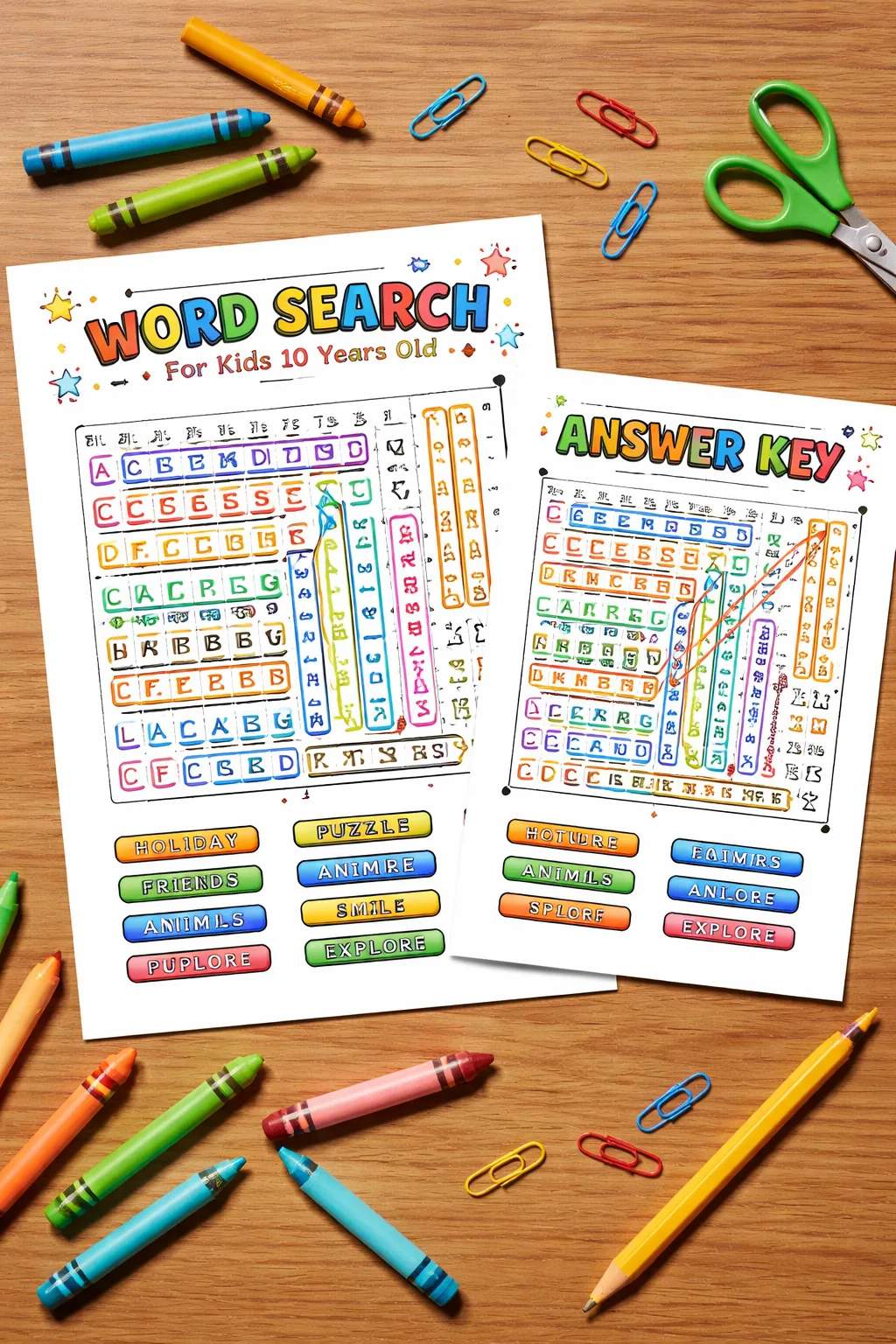
Creating custom printable word search puzzles for 10-year-old kids is a rewarding way to combine education and entertainment. By carefully selecting words, choosing appropriate grid sizes, and balancing difficulty, you can craft puzzles that stimulate learning and keep children engaged. This guide has provided comprehensive instructions, tips, and insights to help you design effective word searches tailored to this age group’s abilities and interests. Whether for home use, classroom activities, or birthday parties, these puzzles offer a fun, screen-free way to enhance vocabulary and concentration. Start creating your own word searches today and watch as children enjoy the challenge while developing valuable skills.
Use age-appropriate vocabulary to maintain interest and learning relevance.
Incorporate themes that reflect the child’s hobbies or school subjects for added engagement.
Test the puzzle yourself or with another adult to ensure clarity and solvability before printing.
Provide a clean, readable layout with clear fonts to make the puzzle accessible and enjoyable.
You Might Also Like



Leave a Reply