

Word Search Puzzle Guide : What Are God’s Promises to Abraham
Discover how to create and understand a custom printable word search puzzle centered on the theme “What Are God’s Promises to Abraham.” This article explores the significance of word searches in reinforcing biblical knowledge, provides step-by-step instructions for crafting your own puzzle, and offers expert tips to enhance puzzle quality. Whether for Sunday school, personal study, or group activities, this guide ensures an engaging and educational experience focused on Abraham’s faith and God’s covenant with him.
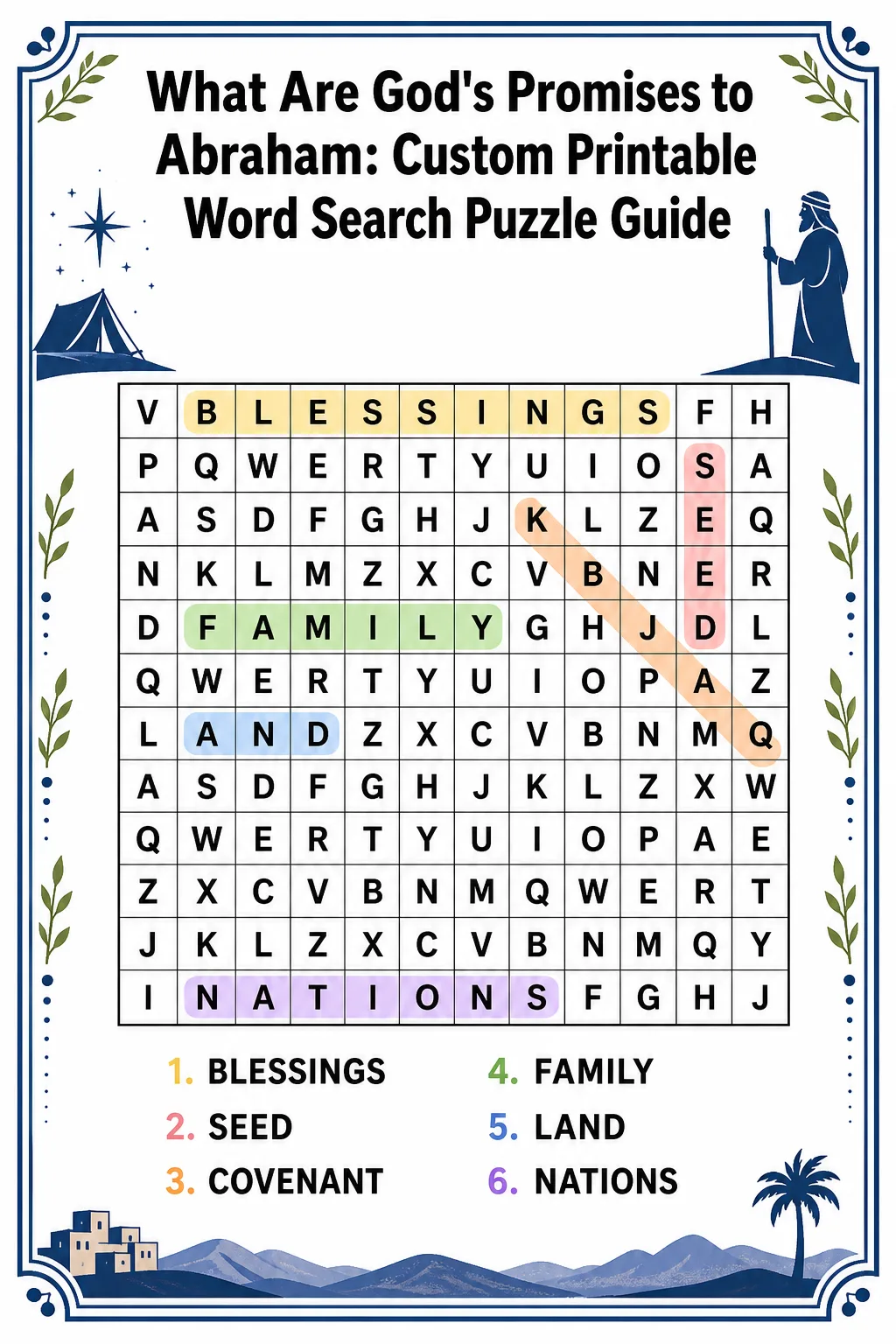
Introduction
Word search puzzles are a timeless educational tool that combines fun with learning. When themed around significant biblical topics such as “What Are God’s Promises to Abraham,” they offer an interactive way to deepen understanding of scripture. Abraham’s story is foundational in many faith traditions, highlighting trust, promise, and divine covenant. Creating a custom printable word search puzzle on this subject not only reinforces these themes but also encourages engagement through active participation. This article will guide you through the process of designing your own puzzle, explain why these puzzles are effective for learning, and provide practical advice for making your word search both challenging and accessible. Whether you are a teacher, parent, or enthusiast, this comprehensive guide will help you bring Abraham’s promises to life in a captivating format.
How To Do It
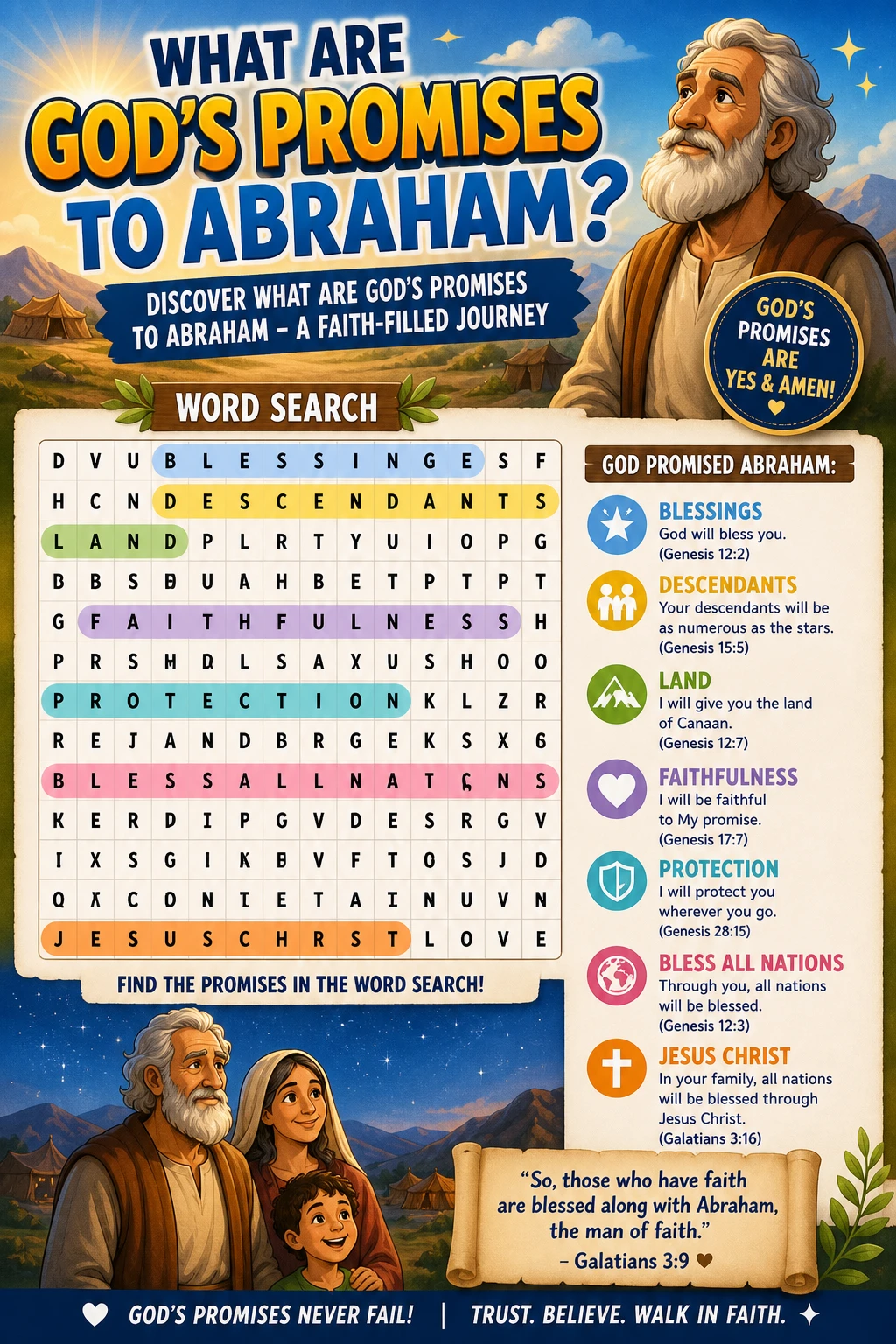
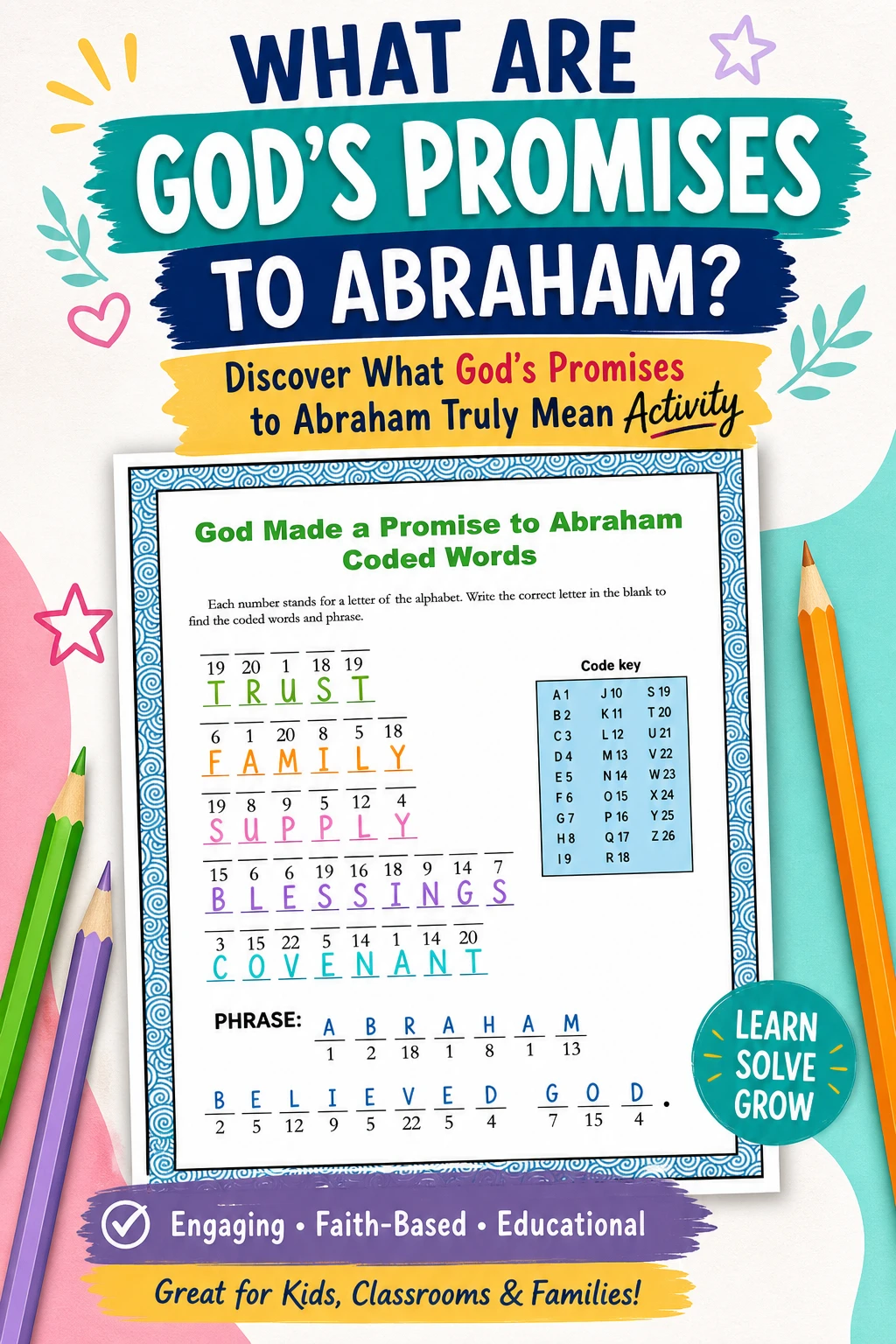
Begin by selecting key words and phrases that represent God’s promises to Abraham. These might include terms like “covenant,” “descendants,” “land,” “blessing,” and “faith.” Aim for a balanced list of words that reflect the core biblical themes and are suitable for your target audience’s age and reading level. This foundational step ensures the puzzle remains focused and meaningful.
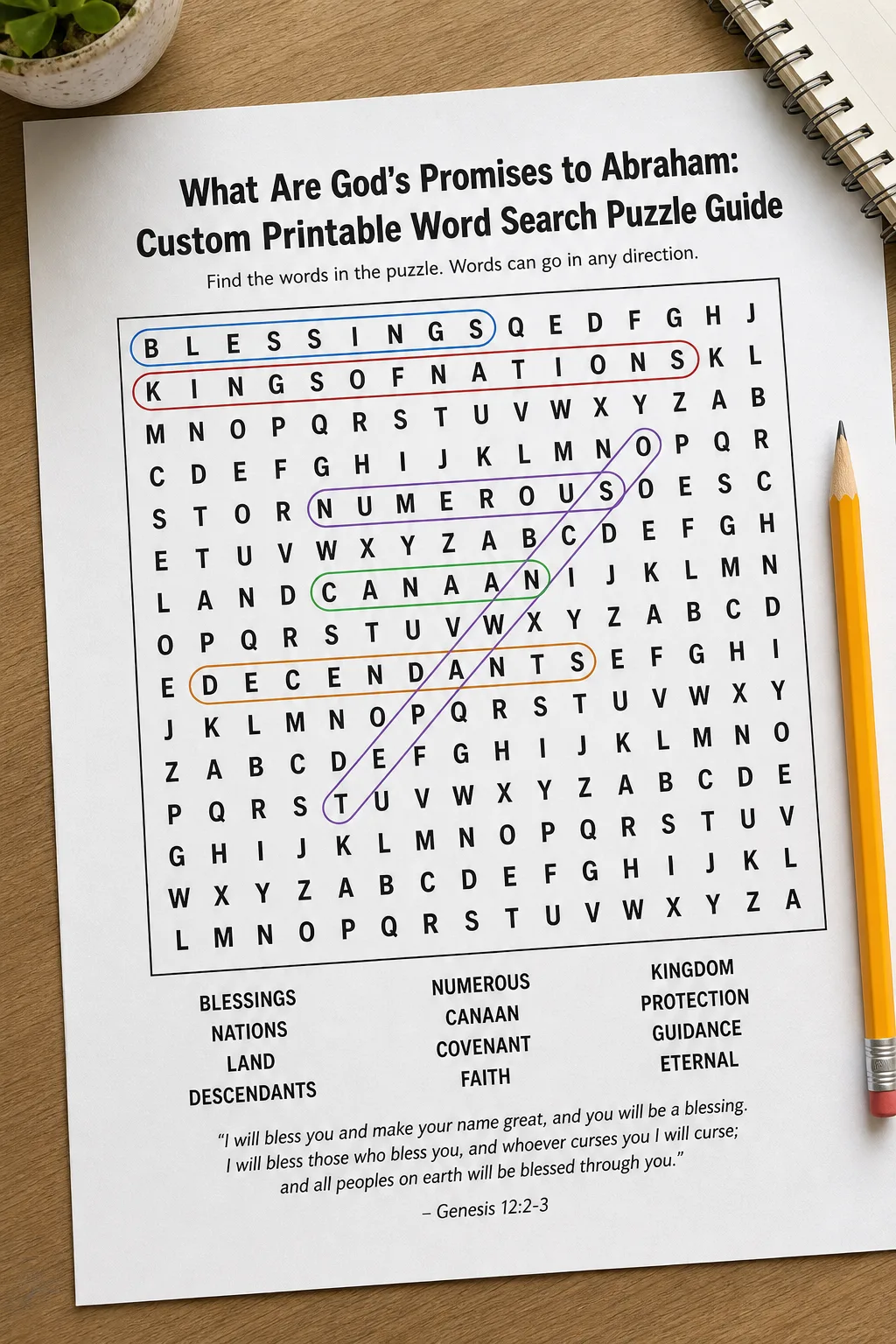
Choose an appropriate grid size for your word search puzzle. The grid should be large enough to accommodate all your selected words without overcrowding but not so large that it becomes intimidating. For younger solvers, smaller grids with fewer words work best, while older participants can handle more complex puzzles. Arrange the words in various directions—horizontal, vertical, diagonal, forwards, and backwards—to increase engagement and challenge.
Fill the remaining empty spaces in the grid with random letters, ensuring they do not accidentally form unintended words. After completing the grid, test the puzzle yourself or with others to confirm all words are findable and the difficulty level is appropriate. Finally, provide a word list and clear instructions for solvers, and prepare the puzzle for printing or digital distribution.
Grid Size and Grade Guidance
What Changes Difficulty?
Input Limits and Skipped Words
When creating a custom word search puzzle, it is important to consider input limits such as the maximum number of words and the grid size. Typically, grids have a finite number of cells, so attempting to include too many or overly long words may result in some words being skipped or omitted. The puzzle generator or manual layout process must prioritize fitting words logically without overlap conflicts. Words that cannot be placed due to space constraints or conflicts with other words are usually skipped to maintain puzzle integrity and solvability. It is advisable to review the final word list after layout to ensure all intended words are included. If some words are skipped, consider reducing the list or increasing the grid size. Additionally, avoid words with special characters or punctuation, as these can complicate placement and recognition. By understanding these input limits and planning accordingly, you can create a clean, functional word search puzzle that effectively conveys the theme “What Are God’s Promises to Abraham” without frustration or confusion for solvers.
Moreover, when filling the grid, random letters should not accidentally form unintended words, which can detract from the puzzle’s focus. Careful attention during the letter-filling stage helps maintain clarity. If a word is skipped, it’s useful to inform solvers or provide an alternative word list to keep the educational goals intact. This transparency enhances user experience and trust in the puzzle’s quality.
FAQ
For a balanced and engaging puzzle, aim for 10 to 15 words. This range allows for enough variety to cover key promises like “covenant,” “descendants,” and “blessing,” while keeping the puzzle manageable for most age groups. Adjust the number based on the solver’s age and experience.
Use a smaller grid size, simpler and shorter words, and limit word directions to horizontal and vertical only. Providing a word list with images or definitions can also help younger children connect with the theme and enjoy the puzzle more fully.
Absolutely. Adjust grid size, word length, and placement directions to increase or decrease difficulty. For harder puzzles, include diagonal and backward words, longer words, and larger grids. For easier puzzles, keep words straightforward and directions limited.
Unintended words can distract or confuse solvers, detracting from the educational focus. Ensuring random letters do not form other meaningful words maintains clarity and helps solvers concentrate on the intended biblical terms related to Abraham’s promises.
If a word is too long or the grid too small, consider increasing the grid size or replacing the word with a synonym or related term. Alternatively, adjust the puzzle layout to allow more flexible word placement directions.
They promote active engagement with scripture, enhance vocabulary and spelling, improve concentration and pattern recognition, and provide a fun, interactive way to reinforce key biblical themes such as faith and promises, making learning memorable and enjoyable.
Final Thoughts
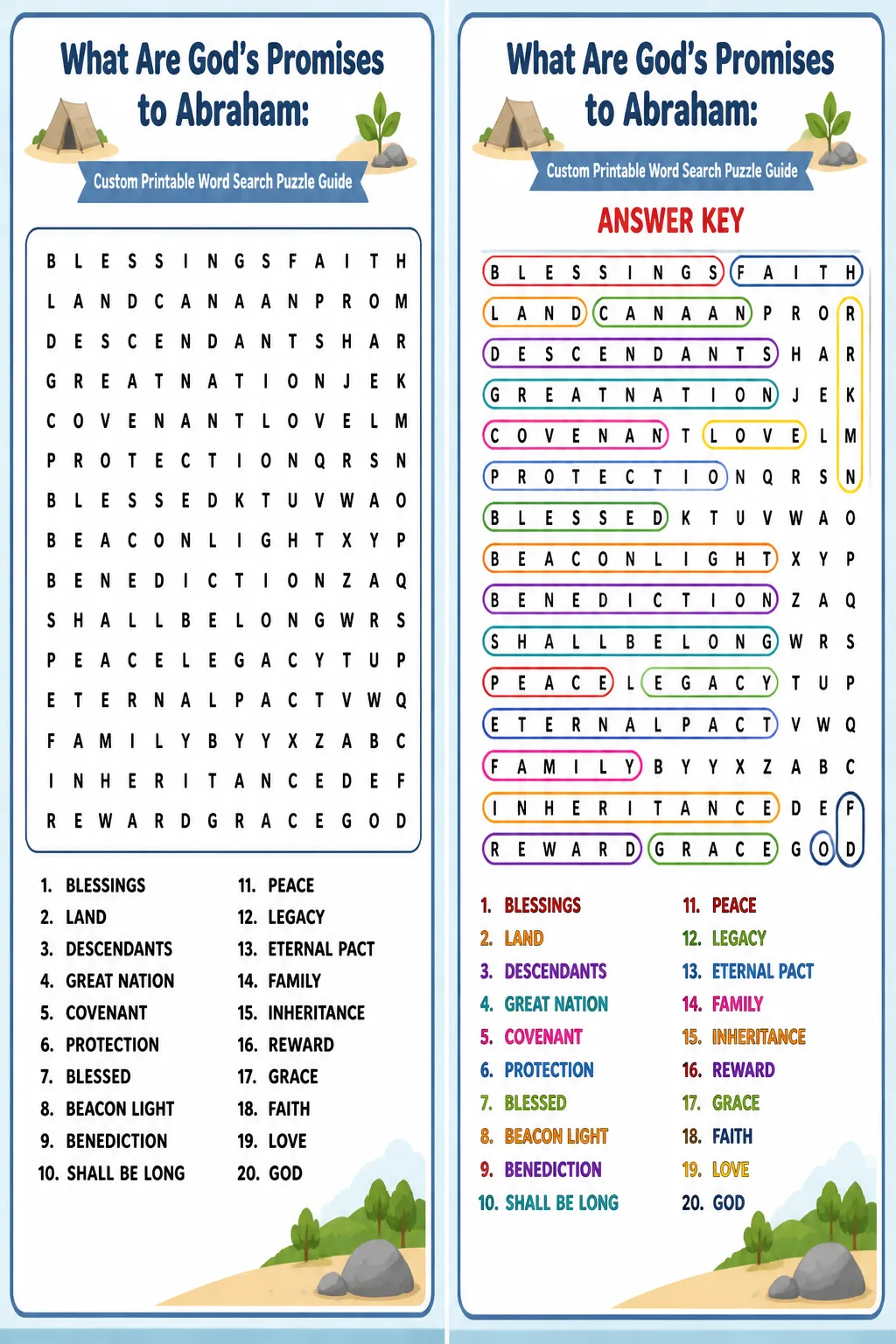
Creating a custom printable word search puzzle on “What Are God’s Promises to Abraham” is a rewarding way to blend education and faith. By carefully selecting words, designing an appropriate grid, and following best practices, you can produce a puzzle that is both challenging and meaningful. This interactive approach encourages deeper reflection on Abraham’s story and God’s covenant, making scripture accessible and engaging for learners of all ages. Use the tips and instructions provided here to craft your own puzzles, share them with your community, and inspire a love for biblical study through the joy of word searches.
Gallery
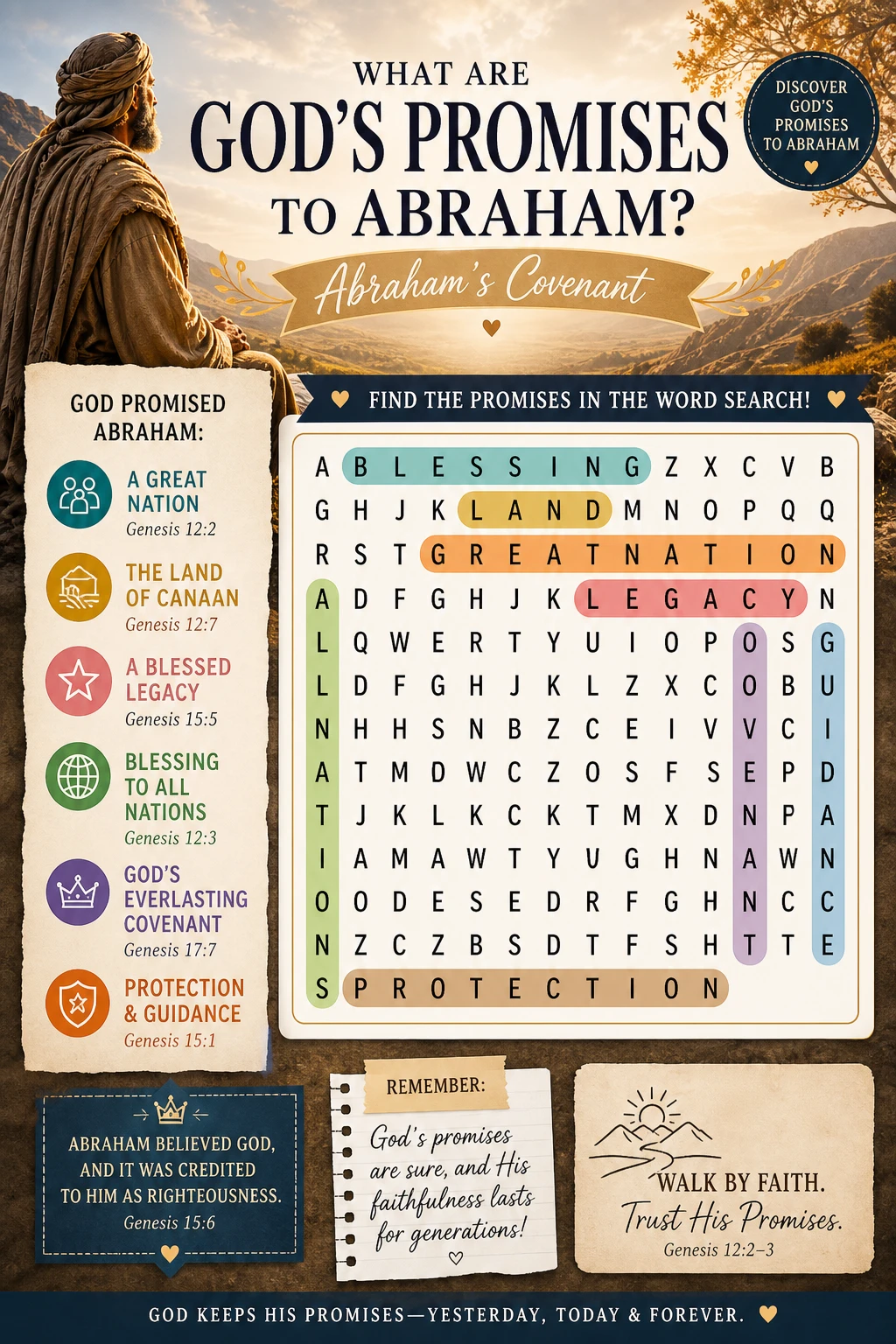
Consider the age and skill level of your audience when choosing grid size and word complexity.
Use consistent formatting for the word list to enhance readability.
Incorporate related biblical references or verses alongside the puzzle for added context.
You Might Also Like



Leave a Reply