

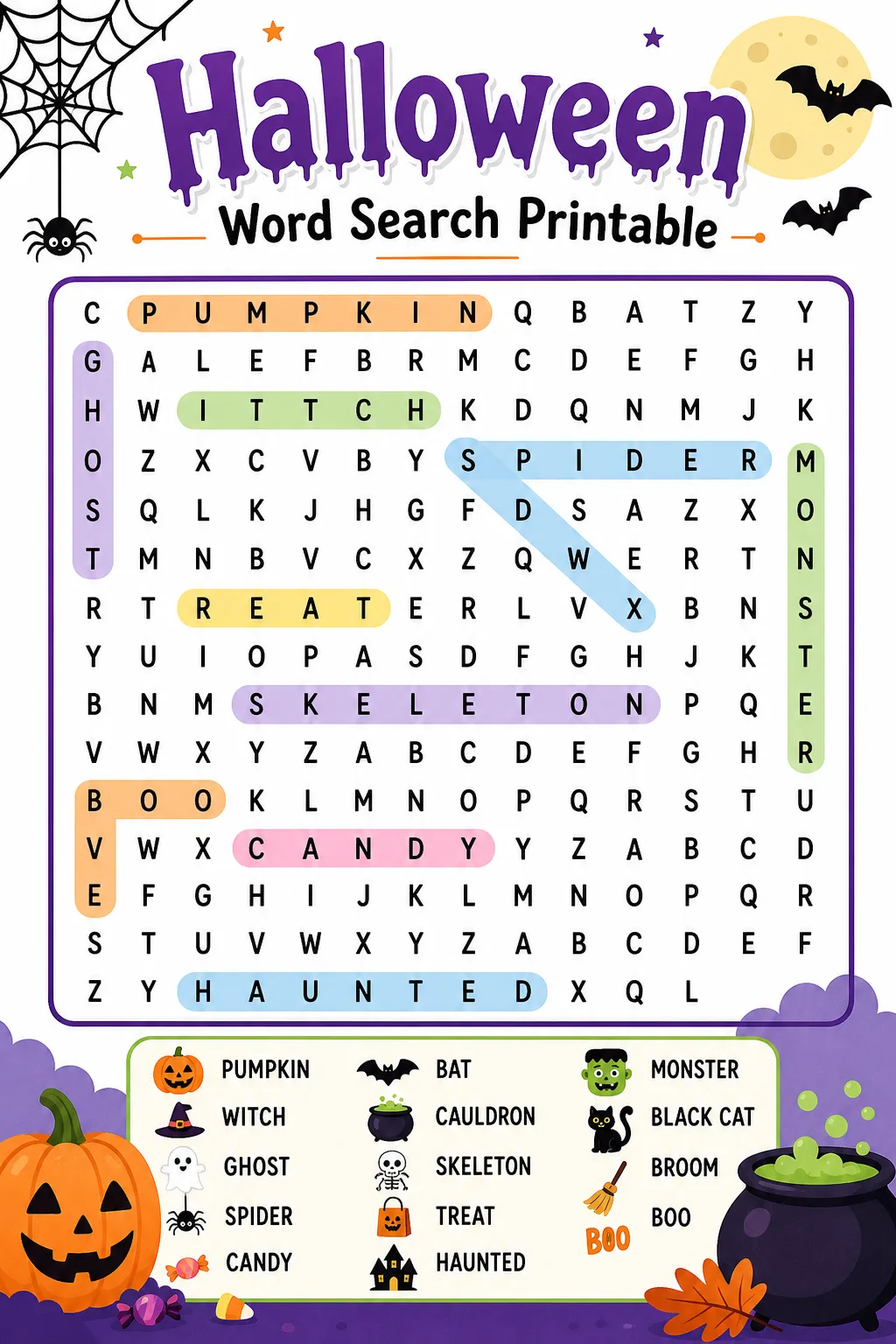
Discover how to create and understand a custom printable word search puzzle themed around the Halloween trick or treat bowl. This comprehensive guide covers everything from selecting the right grid size and word count for various age groups to understanding factors that affect puzzle difficulty. Whether you want to entertain kids or challenge adults, learn practical tips and avoid common mistakes to craft an engaging and educational Halloween word search experience.
Introduction
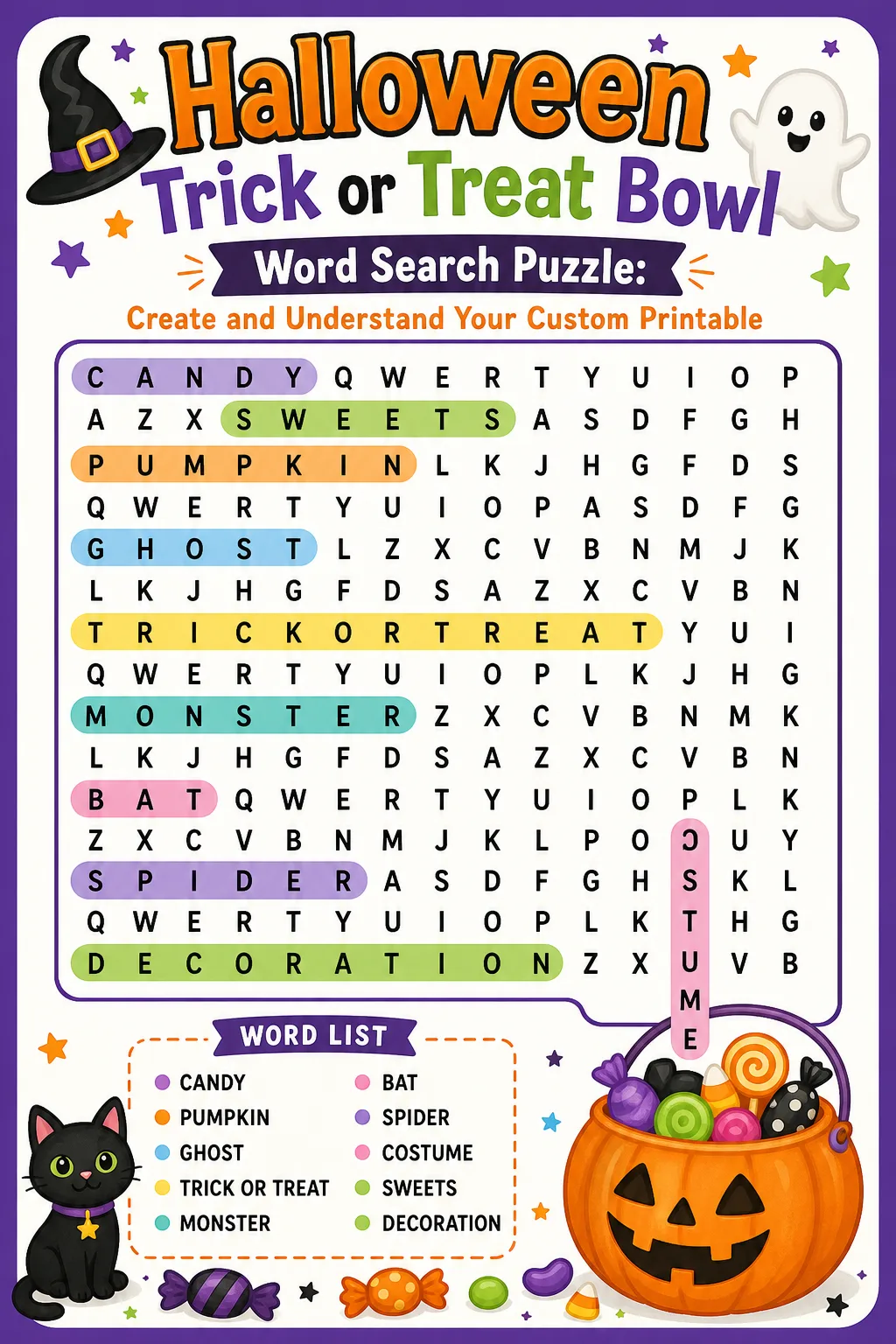
Halloween is a festive time filled with spooky decorations, costumes, and of course, trick or treat bowls brimming with candy. One fun and educational activity to complement this tradition is a Halloween-themed word search puzzle. Creating a custom printable word search centered on the "halloween trick or treat bowl" theme offers a creative way to engage children and adults alike, sharpening vocabulary, pattern recognition, and problem-solving skills. This article will guide you through the process of designing your own word search puzzle, explaining key considerations such as grid size, word selection, and difficulty adjustments. By the end, you will be equipped to produce a captivating puzzle that fits your audience perfectly, whether for classroom activities, party favors, or seasonal entertainment.
How To Do It
Begin by compiling a list of relevant words related to the Halloween trick or treat bowl theme. Include words like "ghost," "candy," "pumpkin," "costume," and "bowl." Aim for a balanced word count that fits your target grid size and audience age. This foundational step ensures your puzzle is thematic and engaging.
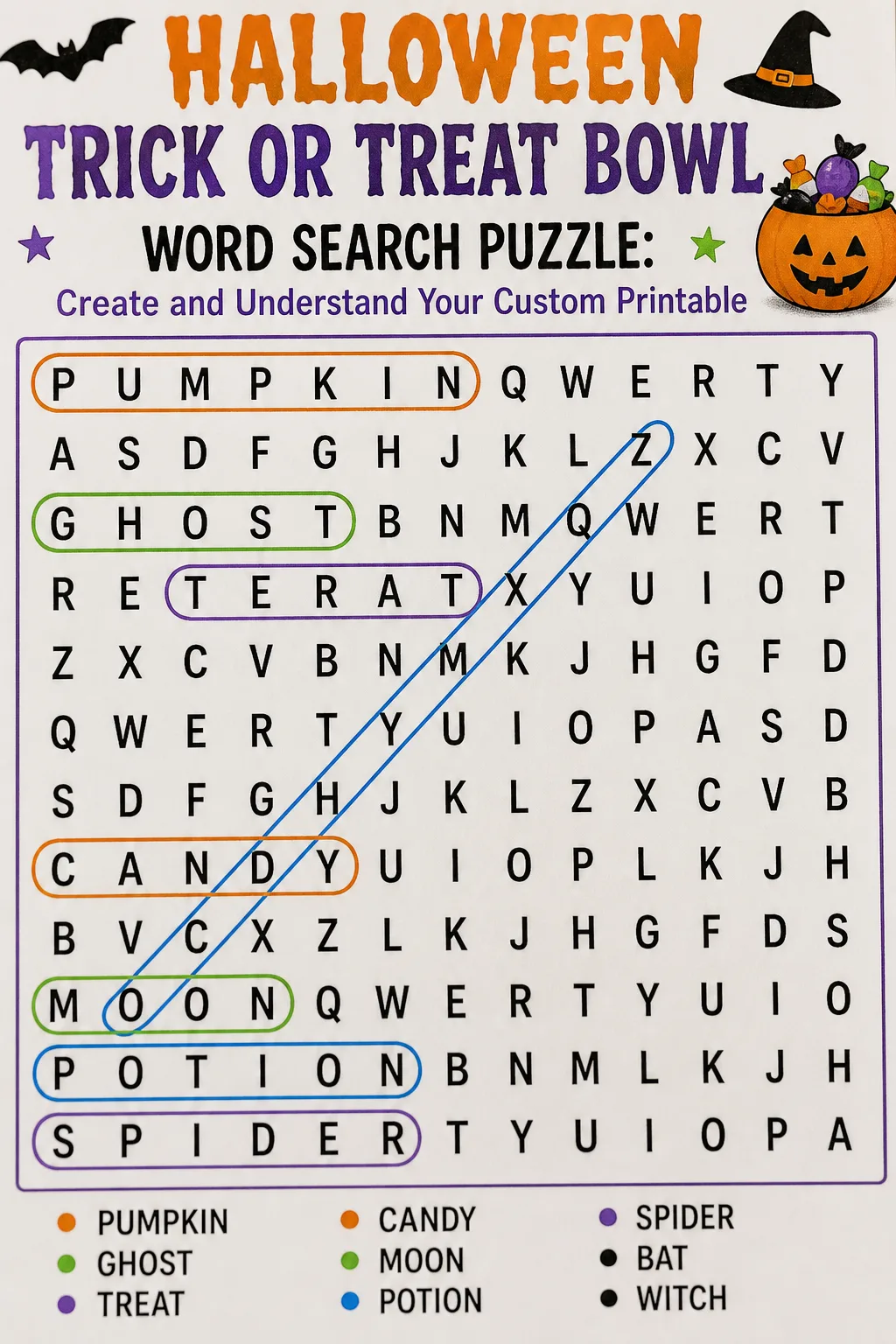
Choose an appropriate grid size based on the age group and word count. For younger children, smaller grids with fewer words are ideal, while older participants can handle larger grids with more complex word placements. Arrange the words in various directions—horizontal, vertical, diagonal—to increase challenge and interest.
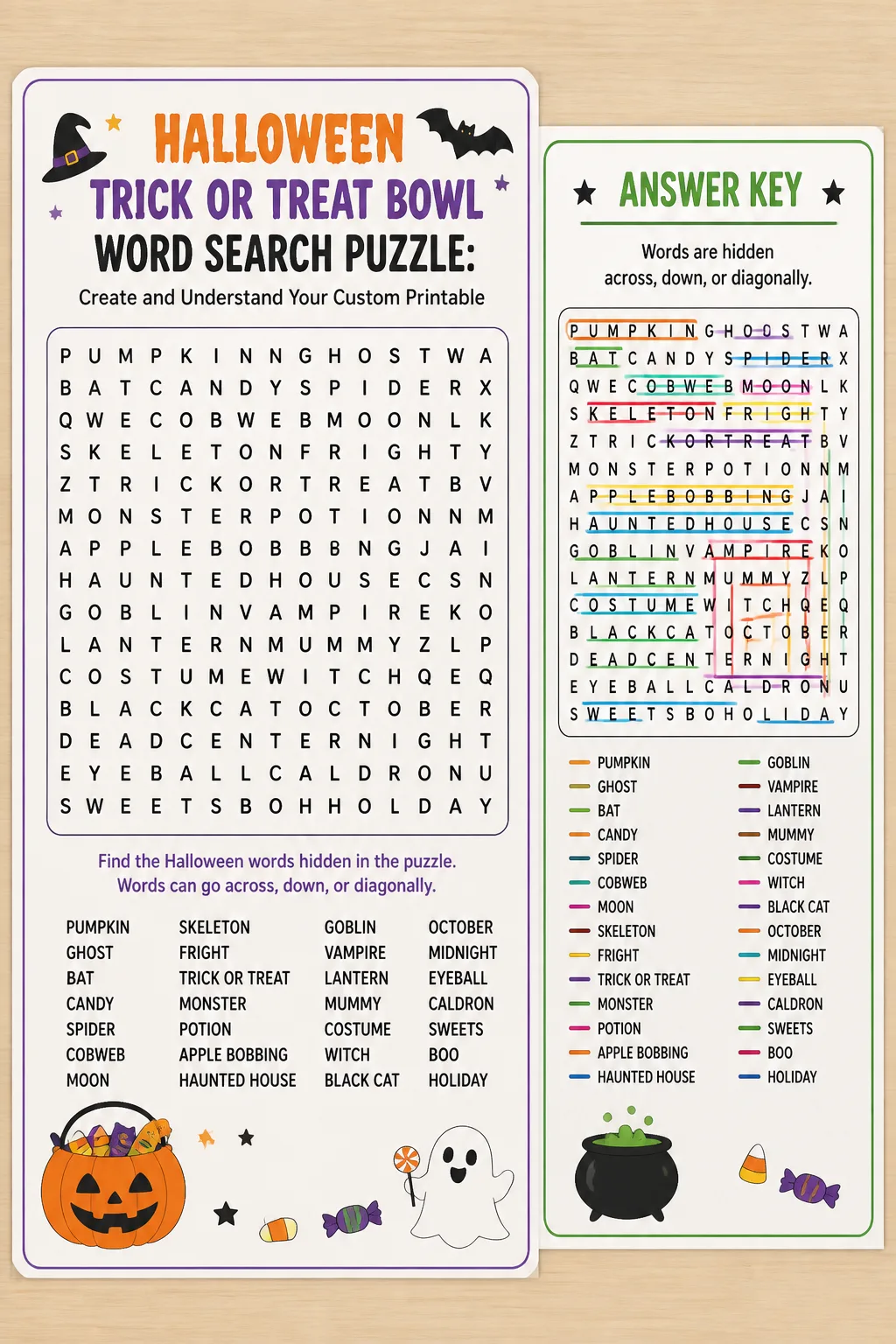
After placing all words, fill the remaining empty spaces with random letters to complete the grid. Review the puzzle to ensure all words are correctly included and easily findable without unintentional overlaps or confusing letter arrangements. Finally, provide a word list alongside the grid for solvers to reference.
Grid Size and Grade Guidance
What Changes Difficulty?
Input Limits and Skipped Words
When creating a custom word search puzzle, input limitations often apply to ensure the puzzle remains solvable and visually clear. Typically, there is a maximum number of words you can include based on the chosen grid size; exceeding this limit can cause overcrowding and reduce puzzle quality. Words that are too long to fit within the grid dimensions or that cannot be placed without overlapping existing words inappropriately may be automatically skipped or require substitution. It is important to review any skipped words and consider replacing them with shorter or more fitting alternatives. Additionally, avoiding overly obscure or unrelated words helps maintain solver engagement and puzzle coherence. By understanding these constraints, you can better plan your word list and grid layout, resulting in a well-balanced and enjoyable word search puzzle.
Furthermore, some puzzle creation tools may restrict certain special characters or spaces in input words, so it is advisable to use simple, single-word entries without punctuation. This ensures smooth processing and accurate placement within the grid. Always double-check your final puzzle for any missing words or errors before printing or sharing to guarantee a quality experience for solvers.
FAQ
The ideal grid size depends on the age and skill level of your target audience. For young children, grids around 8×8 with 8-10 words work well. Older children and adults can handle larger grids such as 12×12 or 15×15 with 15-20 words. Adjusting grid size helps balance challenge and accessibility.
Start by brainstorming words directly related to the theme—in this case, Halloween and trick or treat bowls. Include nouns like "candy," "ghost," and "pumpkin," as well as verbs and adjectives if appropriate. Ensure the words vary in length and complexity to create an engaging puzzle.
Yes, reusing common Halloween words is acceptable and often expected, as it reinforces familiar vocabulary. However, adding unique or less common words related specifically to the trick or treat bowl theme can make your puzzle stand out and be more interesting.
Words can be placed horizontally, vertically, and diagonally, both forwards and backwards. Varying directions increases difficulty and visual interest. For younger solvers, limiting directions to horizontal and vertical is advisable to reduce complexity.
If a word is too long or cannot be placed without overlap, consider reducing the grid size or substituting the word with a shorter synonym. Alternatively, increase grid dimensions to accommodate all words comfortably without compromising readability.
Filling empty spaces with random letters conceals the hidden words and adds challenge to the puzzle. It prevents solvers from easily spotting words by isolating letters and encourages careful scanning of the entire grid.
Final Thoughts
Creating a custom printable word search puzzle themed around the Halloween trick or treat bowl is a rewarding activity that combines creativity with educational value. By carefully selecting words, choosing the right grid size, and applying thoughtful design principles, you can craft puzzles that delight and challenge solvers of all ages. This guide has provided you with the knowledge and tools to avoid common pitfalls and enhance your puzzle’s appeal. Embrace the spirit of Halloween by adding a personalized word search to your seasonal activities, and watch as participants enjoy hours of fun and learning.
Gallery
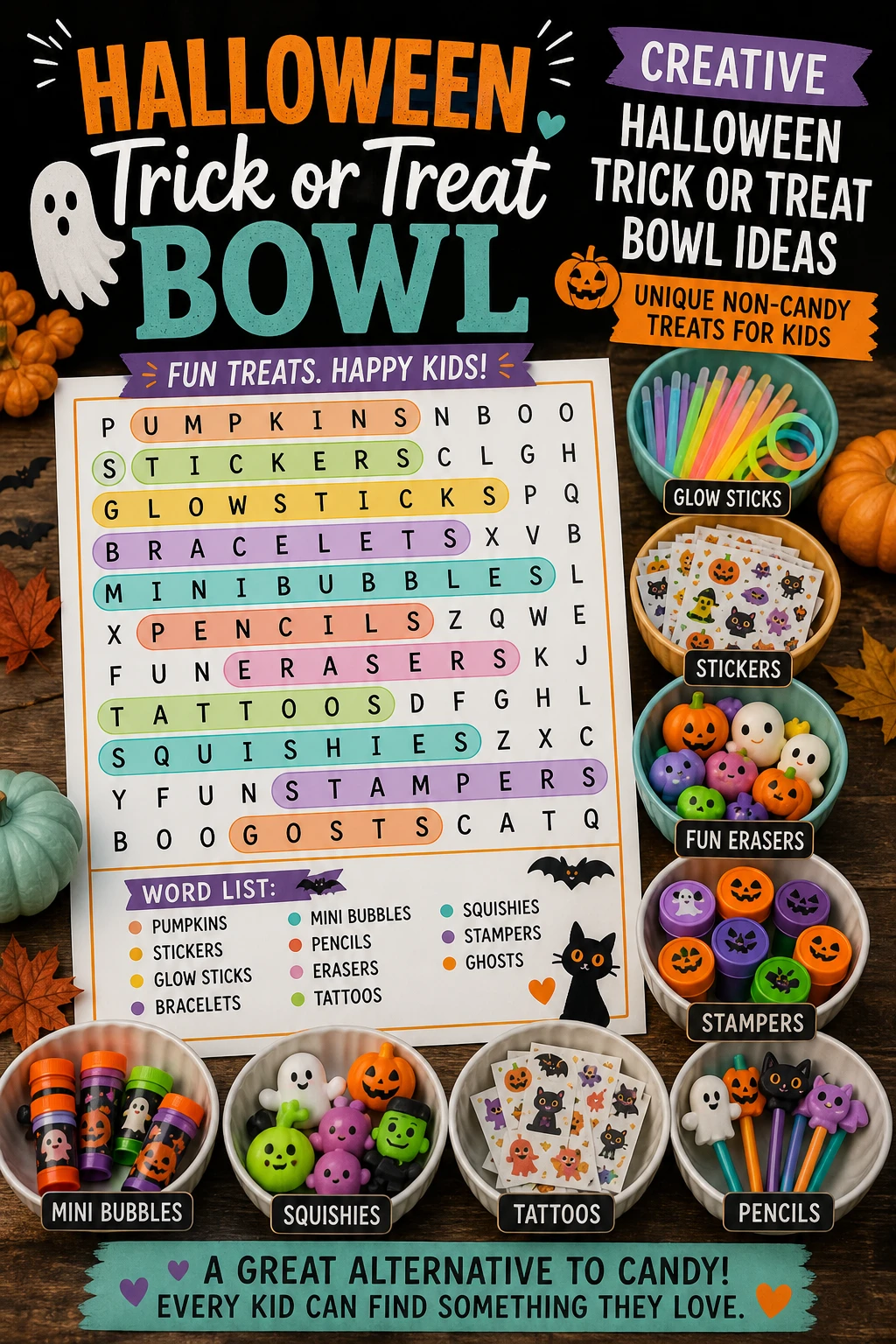
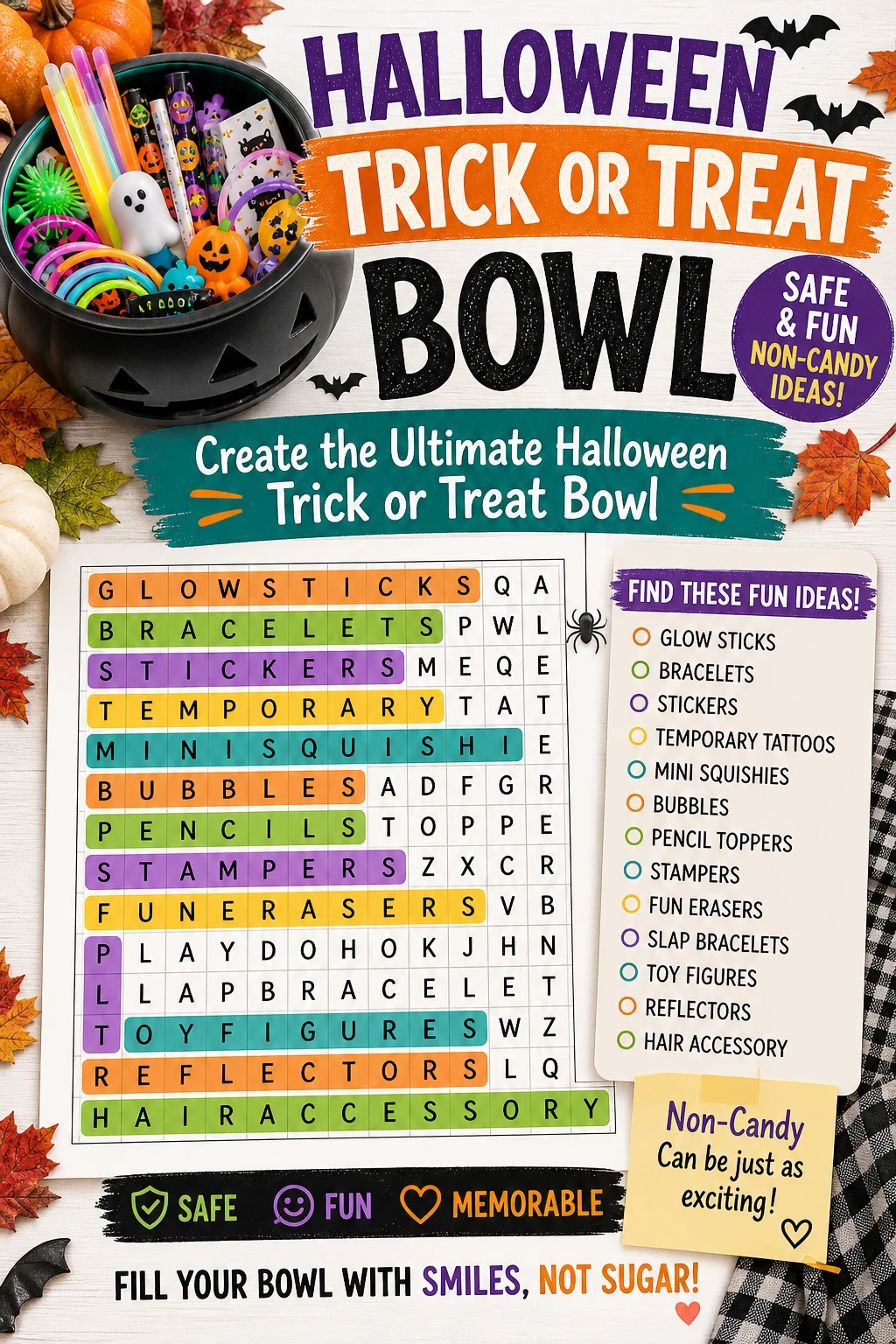
Plan your word list before designing the grid to ensure thematic consistency.
Use software or graph paper to sketch your puzzle layout for better visualization.
Consider your audience’s skill level when deciding on word complexity and grid size.
Proofread your final puzzle carefully to avoid spelling errors and missing words.
You Might Also Like



Leave a Reply