

Discover how to create and understand custom printable word search puzzles focused on the Anglo Saxon period. This detailed guide explores the historical context and vocabulary of the Anglo Saxon era, providing a rich educational experience. Learn step-by-step instructions, tips, common pitfalls, and the rationale behind using word searches as effective learning tools. Whether for students, teachers, or enthusiasts, this article offers valuable insights into crafting engaging puzzles that enhance knowledge retention.
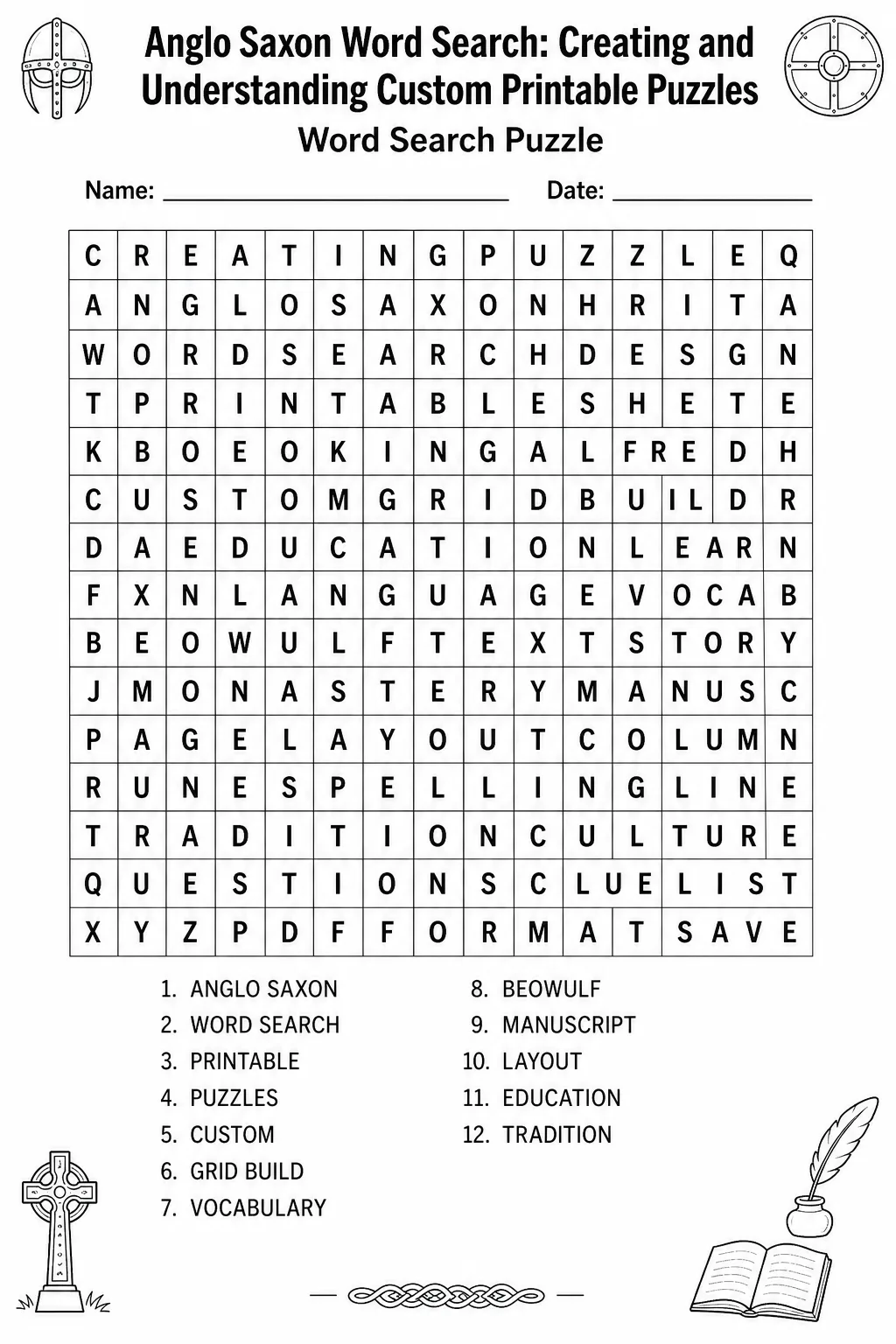
Introduction
The Anglo Saxon period, spanning from 449 to 1066, is a fascinating chapter in English history and literature. Exploring this era through a word search puzzle offers a unique and interactive way to familiarize oneself with its key terms, figures, and cultural elements. Custom printable word searches are versatile educational tools that can be tailored to specific topics like the Anglo Saxon period, making learning both enjoyable and effective. This article delves into how to create such puzzles, what makes them valuable, and how to optimize their design for various age groups and learning objectives. By engaging with the vocabulary and concepts of the Anglo Saxon era through a word search, learners can reinforce their understanding in a fun and memorable manner.
How To Do It
Begin by selecting a comprehensive list of Anglo Saxon-related words that cover important historical, literary, and cultural terms. Aim for a balanced mix of common and challenging words such as 'Beowulf,' 'monastery,' 'thane,' and 'wyrd.' This curated list will form the basis of your puzzle and ensure it is both educational and relevant to the Anglo Saxon period.
Choose an appropriate grid size based on the number of words and the target age group. Larger grids accommodate more words and increase difficulty, while smaller grids are suitable for younger learners or beginners. Place the words strategically in the grid, allowing them to appear horizontally, vertically, diagonally, and even backwards to add variety and challenge.
Fill the remaining empty spaces in the grid with random letters to complete the puzzle. Ensure that these filler letters do not accidentally form unintended words related to the Anglo Saxon theme to avoid confusion. Finally, provide a clear word list alongside the puzzle and include instructions on how to locate the words, enhancing the user’s experience and learning outcomes.
Grid Size and Grade Guidance
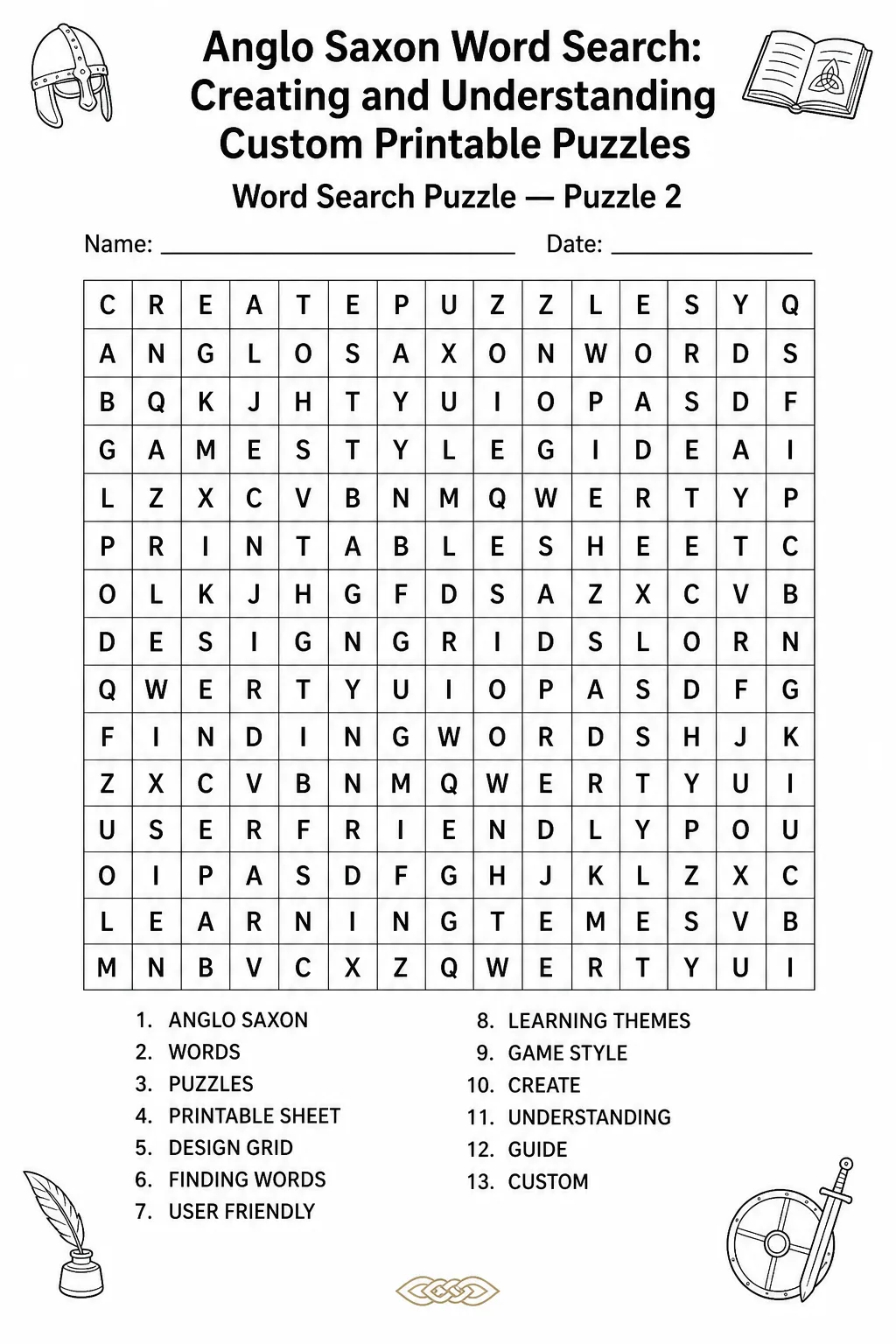
What Changes Difficulty?
Input Limits and Skipped Words
When creating an Anglo Saxon word search puzzle, it is important to consider input constraints such as the maximum number of words and grid size. Most printable puzzles function best with a limited word count to maintain clarity and solvability. Typically, including between 10 to 25 words is ideal depending on the grid size and target audience. Words that are too long or contain special characters may be skipped or truncated to fit the grid properly. Additionally, input words should be carefully reviewed to avoid duplicates or irrelevant terms that could detract from the puzzle’s educational value. If a word cannot be placed due to space or orientation limitations, it should be omitted or replaced with a more suitable alternative. This ensures the final puzzle remains balanced, engaging, and free from errors that could confuse solvers. Attention to these input limits and handling skipped words thoughtfully contributes to creating high-quality Anglo Saxon word search puzzles that are both fun and informative.
FAQ
The ideal grid size depends on the age group and number of words included. For younger learners, a 10×10 grid with 10-12 words is manageable, while older students can handle grids up to 15×15 or larger with 20 or more words. Adjusting grid size ensures the puzzle is challenging yet solvable.
Select words that are historically and culturally significant to the Anglo Saxon period, such as names, places, literary terms, and societal roles. Including a variety of word lengths and difficulty levels helps maintain engagement and educational value.
Yes, including words in backwards and diagonal orientations increases the puzzle’s difficulty and keeps it interesting. However, balance is key to avoid making the puzzle too complex for the intended audience.
Filler letters should be random and not form unintended words related to the theme to prevent confusion. They serve to obscure the word placements and add challenge without distracting the solver.
Word searches promote active engagement with vocabulary, enhancing memory retention and recall. They provide a fun, low-pressure way to familiarize learners with key terms and concepts, supporting deeper understanding of historical topics like the Anglo Saxon period.
Printable word searches can be adapted for all ages by adjusting grid size, word difficulty, and puzzle complexity. This flexibility makes them excellent educational tools for children, teens, and adults alike.
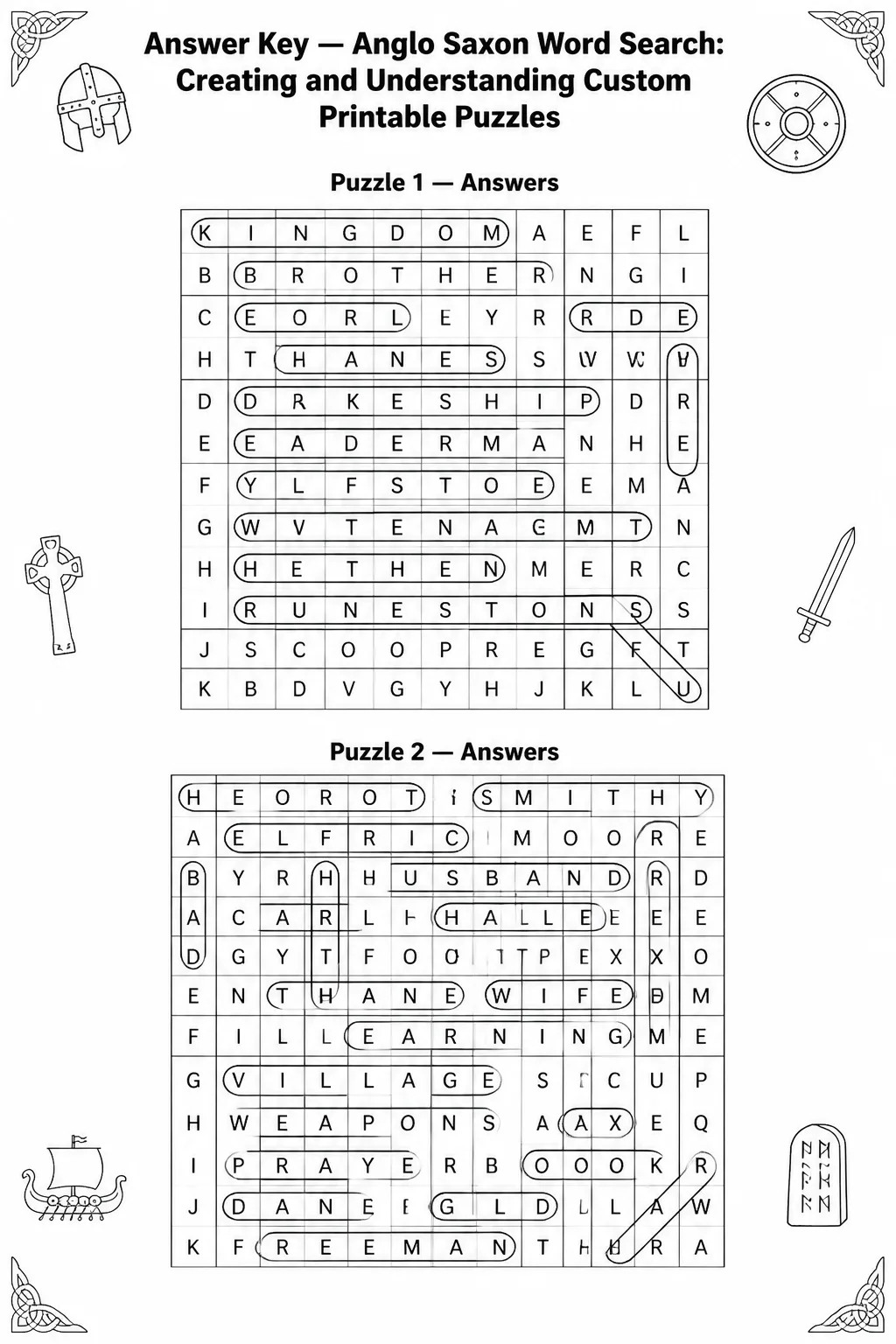
Final Thoughts
Creating a custom printable Anglo Saxon word search puzzle is an engaging way to deepen understanding of this pivotal historical period. By carefully selecting relevant vocabulary and designing an appropriately challenging grid, educators and learners can enjoy a productive and enjoyable study experience. This guide has provided detailed instructions, tips, and insights to help you craft puzzles that are both educational and fun. Whether for classroom use, exam revision, or personal enrichment, word search puzzles offer a creative approach to mastering Anglo Saxon history and literature. Embrace this interactive method and watch your knowledge grow as you explore the fascinating world of the Anglo Saxons.
Gallery
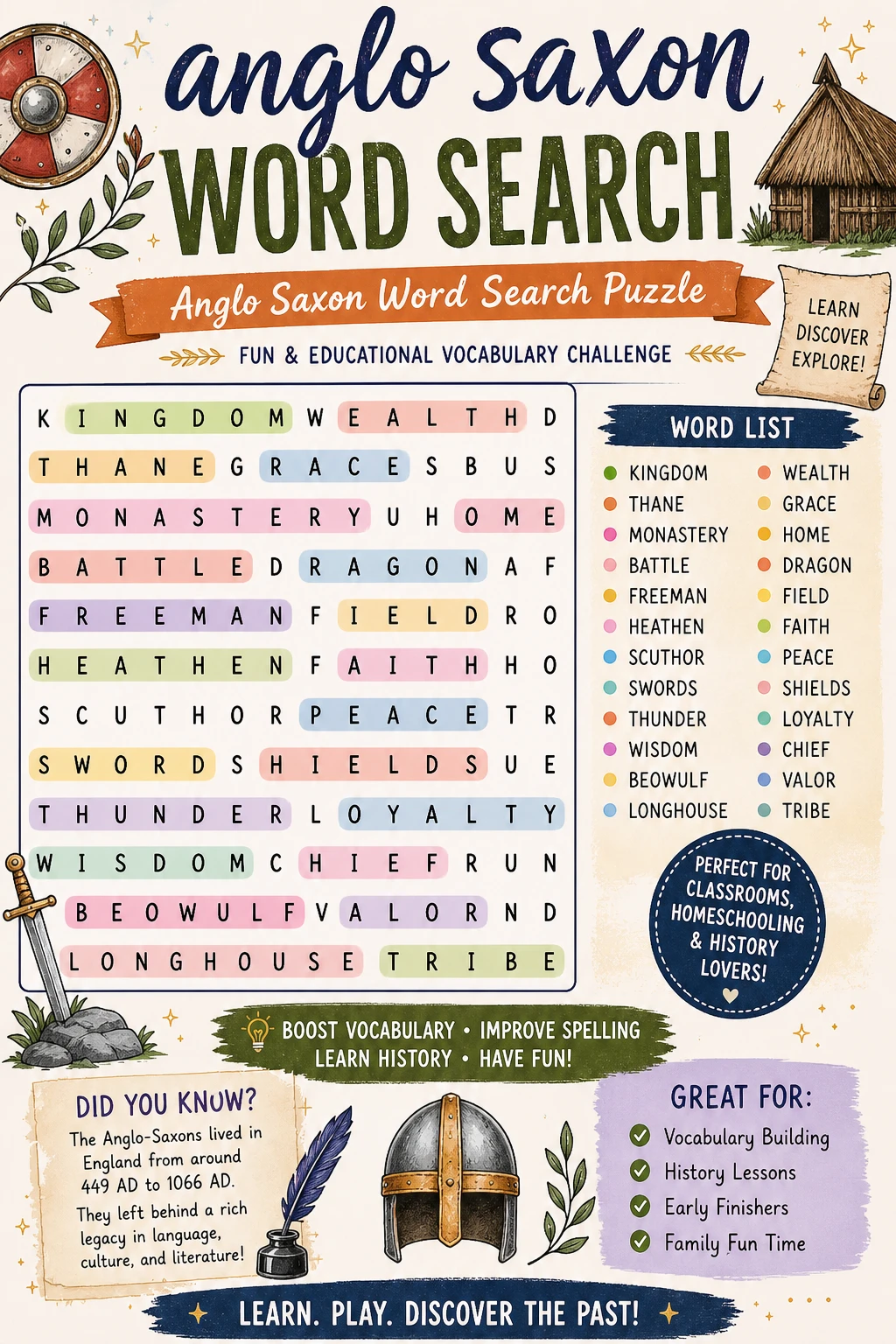
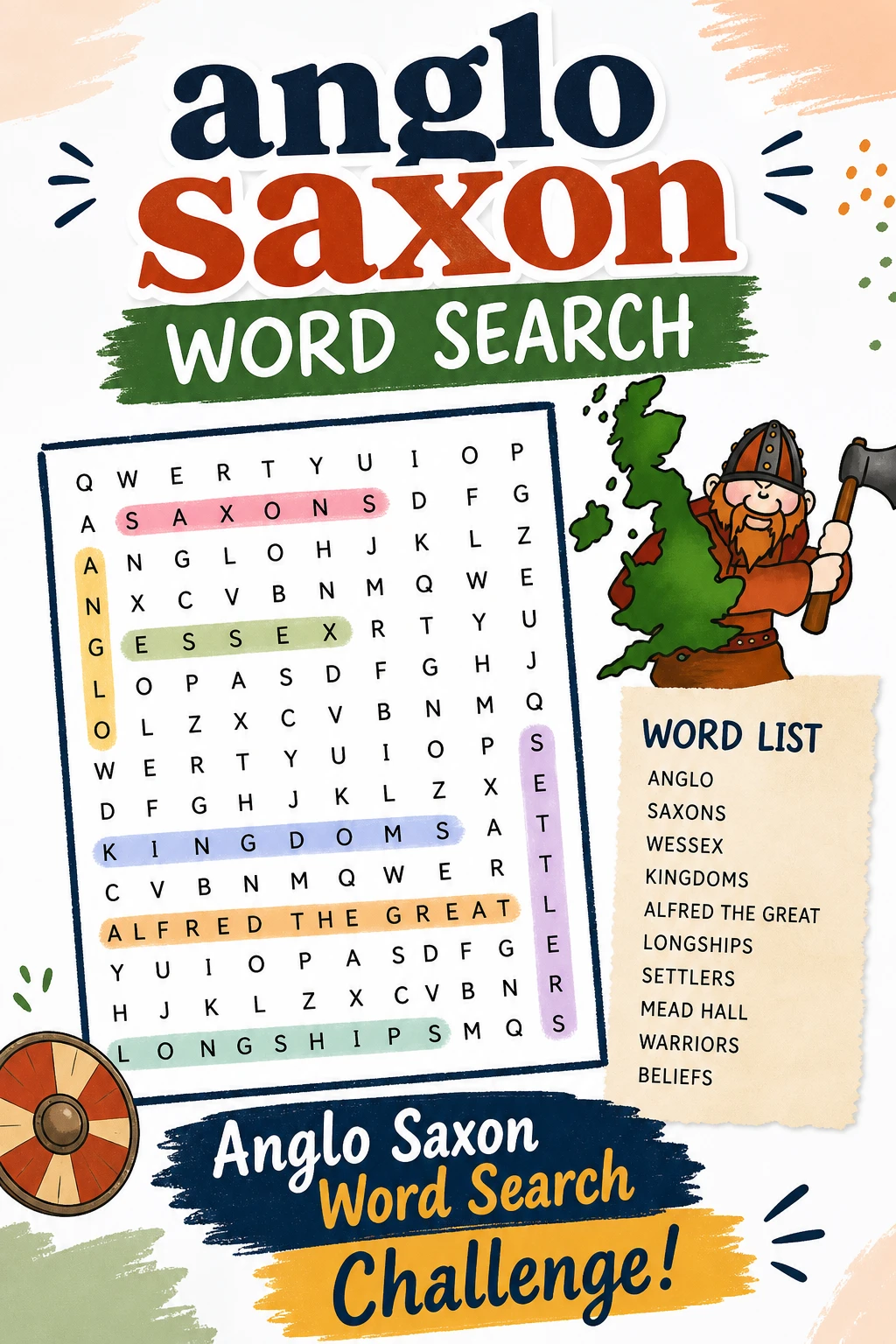
Start with a clear theme and vocabulary list to maintain focus and relevance in your puzzle.
Use software or manual methods to verify that all words fit properly without overlap issues.
Consider the solver’s age and skill level when choosing grid size and word difficulty.
Include a legend or word list with the puzzle to guide solvers and enhance usability.
You Might Also Like



Leave a Reply